

The release of the Kali Linux 2025.2 distribution has been presented, based on the Debian package base and designed for testing systems for vulnerabilities, conducting security audits, analyzing residual information, and identifying attack consequences. All original developments created for the distribution are distributed under the GPL license and are available through a public Git repository. ISO images sized at 646 MB and 4.2 GB are prepared for download. Builds are available for x86_64 and ARM64 architectures. Desktop environments Xfce, KDE, and GNOME are offered.
Kali offers a selection of tools for cybersecurity specialists, ranging from web application testing and wireless network penetration tools to programs for reading data from RFID identification chips. It includes a collection of exploits and around 400 specialized utilities for security testing, such as Aircrack, Maltego, SAINT, Kismet, Bluebugger, Btcrack, Btscanner, Nmap, p0f. Additionally, the distribution includes tools for password cracking (Multihash CUDA Brute Forcer) and WPA key cracking (Pyrit), using NVIDIA and AMD GPUs for acceleration.
In the new release:
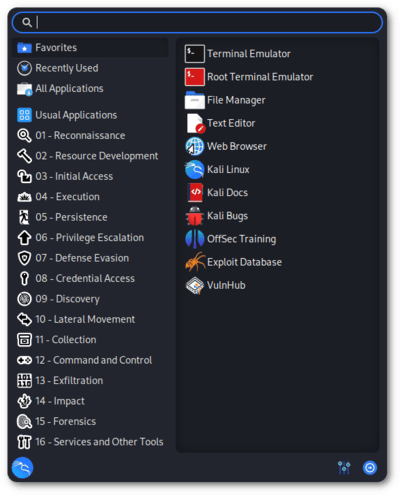
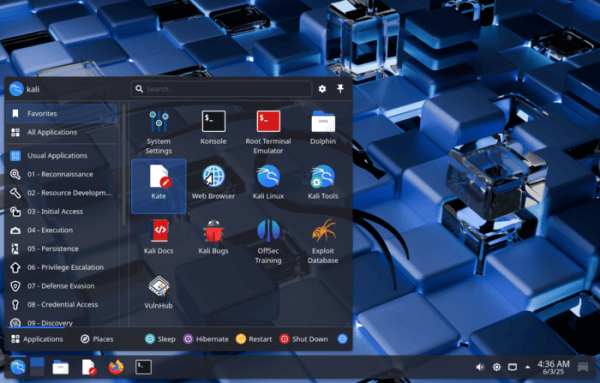
- The applications menu has been completely redesigned, with its structure aligned with the MITRE ATT&CK knowledge base classifier.

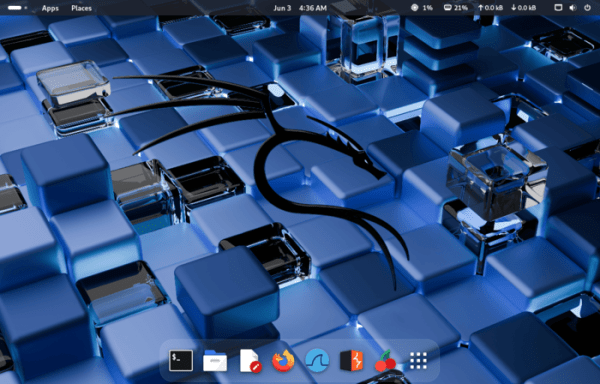
- The GNOME desktop environment has been updated to version 48.

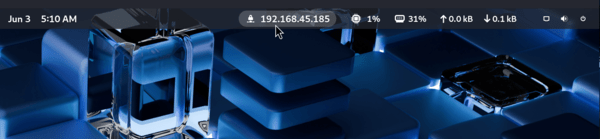
- A widget has been added to the GNOME session that displays the IP address of the current connection, which was previously included in the Xfce-based session. VPNThe KDE desktop environment has been updated to Plasma version 6.3.

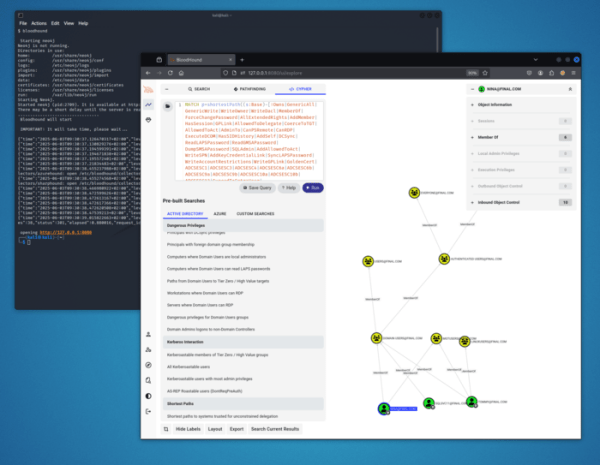
- The transition has been made from the BloodHound Legacy toolkit, which hadn’t been updated since 2023, to the BloodHound Community Edition, used for mapping connections in networks based on Active Directory or Azure controllers.

- The toolkit includes utilities: domain azurehound — a data collector in the Microsoft Azure environment for visualization using the BloodHound package.

binwalk3 — a toolkit for firmware analysis.
- bloodhound-ce-python — a Python-based collector for BloodHound.
- bopscrk — a dictionary generator for password cracking.
- chisel-common-binaries — ready binary builds of chisel.
- crlfuzz — a utility for checking vulnerabilities related to the injection of line feed or carriage return characters in HTTP headers and query parameters.
- donut-shellcode — generation of universal shellcode from memory contents.
- gitxray — data collection about repositories on GitHub and their contributors.
- gitxray — data collection about repositories on GitHub and their contributors.
- gitxray — data collection about repositories on GitHub and their contributors.
- ldeep — a utility for enumerating content via LDAP.
- ligolo-ng-common-binaries — ready-made binary builds of ligolo-ng.
- rubeus — a utility for low-level operations with Kerberos.
- sharphound — a data collector for BloodHound CE.
- tinja — a utility for testing web pages for template injection vulnerabilities.
- All graphical sessions now include the Xclip utility, allowing quick data placement in the clipboard from the terminal.
- The mobile environment has been updated for Android-based platforms — NetHunter, with a set of tools for testing systems for vulnerabilities. With NetHunter, it is possible to perform attacks specific to mobile devices, such as emulating the work of USB devices (BadUSB and HID Keyboard — emulating a network USB adapter that can be used for MITM attacks, or a USB keyboard performing character substitution) and creating fake access points (MANA Evil Access Point). NetHunter is installed in the host environment of the Android platform in the form of a chroot image, where a specially adapted version of Kali Linux runs.
The new version introduces the ability to conduct Wi-Fi attacks, frame injection, and capture WPA2 connection negotiation parameters using smartwatches based on bcm43436b0 chips, such as TicWatch Pro 3. The CARsenal toolkit (previously CAN Arsenal) has been updated for attacks on automotive information systems. Kernel options have been updated for smartphones like Xiaomi Redmi 4/4X (A13), Xiaomi Redmi Note 11 (A15), Realme C15 (A10), Samsung Galaxy S10 (A14, A15/exynos9820), and Samsung Galaxy S9.
- The builds for Raspberry Pi have been unified and ported to kernel Linux 6.12.
Source: opennet.ru
