

The MiniOS 4.1 distribution release is based on Debian and runs directly from USB drives. The graphical environment is based on Xfce. The distribution employs a modular architecture, allowing the creation of specialized configurations by including and excluding components to tailor the system for specific tasks. The release is available in three editions:
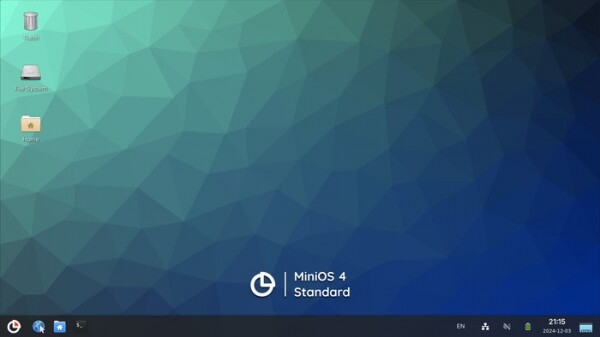
- Standard (i386, amd64, 675 MB) — an edition for everyday use and module management. It includes the Linux kernel 6.1.124 with AUFS support for hot-plugging modules.

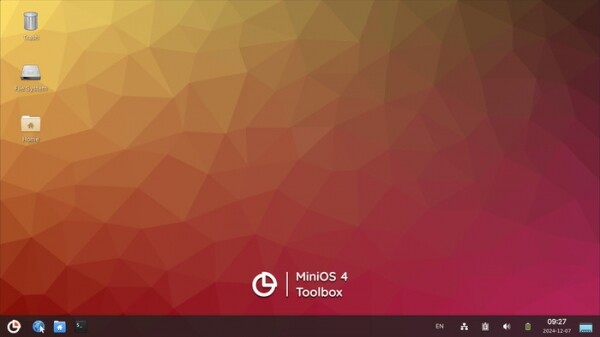
- Toolbox (amd64, 998 MB) — an edition for experienced users who require an extended set of tools for system diagnostics and recovery. In addition to the features in the Standard edition, it includes a suite of programs for system administration, network diagnostics, traffic analysis, disk diagnostics, and data recovery. Supported file systems include: Ext2/3/4, Btrfs, XFS, ExFAT, NTFS, ZFS, LVM, F2FS, JFS, ReiserFS. Supported compression utilities: ZIP, 7z, XZ, Zstd, LZ4, Bzip2, Pigz, Plzip, Lrzip, Pbzip2, Lzop. Virtualization based on QEMU-KVM with a graphical interface provided by Virtual Machine Manager. It includes a package with the Linux kernel from Debian (6.1.124) with Secure Boot support.
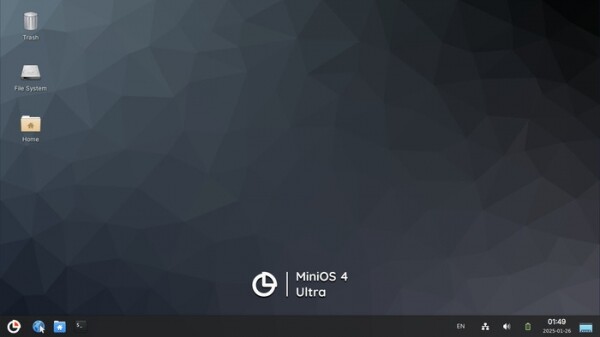
- Ultra (amd64, 1.5 GB) — complements the Toolbox capabilities with a set of office and multimedia applications, such as LibreOffice, GIMP, VLC, OBS Studio, and Blender. It also includes a platform for containerization with Docker and graphical utilities for package installation.
The most significant changes:
- The logic for copying the system into RAM during boot has been modified. The copying process occurs before the activation of the persistent storage, which ensures that changes are retained between reboots. New parameters "toram=trim" and "toram=full" have been added to manage the loading of necessary modules or the entire system. The ability to load and use persistent changes in RAM has been added.
- The ability to save data in raw images has been implemented, and storage in dynamic disk images (dynfilefs) placed in files has been improved. Automatic determination of the required storage size increases the efficiency of space utilization. Support for saving changes during installation using dd, Balena Etcher, and similar utilities has been added, as well as full support for data storage when booting using the Ventoy toolkit (both in disk images and on an additional partition).
- The graphical module 'xorg' has been replaced with 'gui-base', which includes basic libraries for GTK 2, GTK 3, and Qt 5, as well as necessary themes and icons for various desktop environments. This change has reduced the space required to create modules on top of the base graphical subsystem. The 'xfce-desktop' and 'xfce-apps' modules have been merged into a single 'xfce-desktop' module to simplify the structure.
- The ability to configure localization and keyboard settings during system installation, as well as through the minios.conf configuration file and kernel parameters, has been added.
- A revised edition of Ultra has been returned.
- The Toolbox and Ultra editions utilize the standard Debian kernel 6.1.0-30 (6.1.124) with Secure Boot support to ensure compatibility with more devices. The Standard edition continues to use kernel 6.1.124 with AUFS support, which is more suitable for enthusiasts. Kernels are interchangeable between editions.
Source: opennet.ru
