

The release of the MiniOS 5.1.0 distribution, based on Debian 13 'Trixie' and running directly from a USB drive, has been announced. The graphical environment is based on Xfce. The distribution uses a modular architecture that allows the creation of specialized configurations by excluding and adding components to tailor the system for specific tasks. The release is available in three editions:
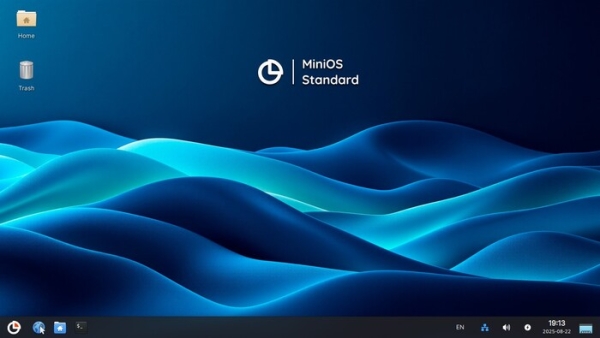
- Standard (amd64, 812 MB) — a compact build for everyday tasks. Characterized by high performance a sleek interface. It includes a web browser, file manager, text editor, archive manager, multimedia capabilities, and specialized MiniOS utilities for system installation, configuration, module management, and drive operations.

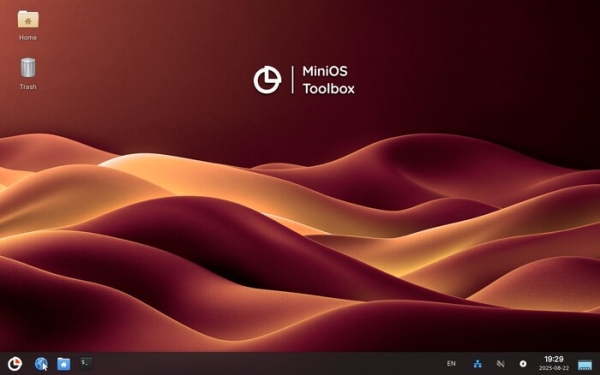
- Toolbox (amd64, 1.12 GB) — a specialized Linux distribution for servicing, diagnosing, and recovering computer systems. It contains tools for disk management, network diagnostics, data security, system testing, support for various file systems, and virtualization. It is intended for system administrators and technical specialists.

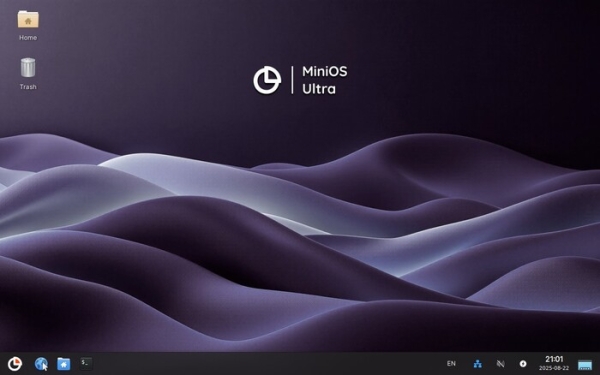
- Ultra (amd64, 1.66 GB) — an expanded set of software tools designed for both servicing and diagnosing computer systems, as well as addressing a wide range of office tasks. It includes all the features of Toolbox plus an office suite, multimedia applications for handling graphics, audio, and video, as well as containerization tools.
The most significant changes:
- The transition from PulseAudio to PipeWire has been made, providing modern management of audio and video streams, improved compatibility with Bluetooth devices, and low latency in audio output.
- The use of the SYSLINUX bootloader has been restored, and compatibility with Ventoy, a tool for creating bootable USB drives, has been reinstated. The boot menu has been localized into multiple languages, including Russian.
- Automatic system configuration has been implemented at startup:
- Automatic detection and application of the keyboard layout in X11 based on kernel parameters has been added;
- Automatic timezone configuration on boot has been introduced;
- The initialization scripts (live-config) have been optimized for faster startup.
- The functionality of the proprietary MiniOS utilities has been expanded:
- MiniOS Installer: automatic inheritance of language and keyboard settings from the Live session to the installed system has been implemented.
- MiniOS Session Manager: added export and import features for sessions in .tar.zst archive format, as well as the ability to convert saved changes between different operating modes;
- Drive Utility: added functionality to create ISO images from physical CD/DVD discs. A protection system has been implemented to block dangerous operations for mounted drives;
- MiniOS Configurator: an option to inherit configuration parameters from the kernel command line has been added.
- The package base and drivers have been updated. The firmware-mediatek package has been added to support modern MediaTek wireless adapters.
Source: opennet.ru
