

On the eighteenth anniversary of the project, the release of Ubuntu 22.10 "Kinetic Kudu" is available, which is categorized as an interim release, with updates being provided for 9 months (support will be available until July 2023). Installation images have been created for Ubuntu, Ubuntu Server, Lubuntu, Kubuntu, Ubuntu Mate, Ubuntu Budgie, Ubuntu Studio, Xubuntu, and Ubuntu Kylin (the version for China) as well as Ubuntu Unity.
Key Changes:
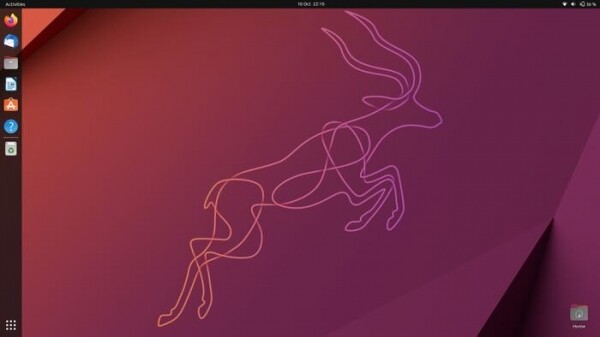
- The desktop has been updated to GNOME 43, which features a panel with buttons for quickly changing the most frequently used settings, continued translation of applications to use GTK 4 and the libadwaita library, the Nautilus file manager has been updated, hardware and firmware security settings have been added, and support for standalone web applications in the PWA (Progressive Web Apps) format has been restored.

- A transition has been made to use multimedia by default. server PipeWire for audio processing. To ensure compatibility, a layer called pipewire-pulse has been added, which enables all existing PulseAudio clients to continue working. Previously, PipeWire was used in Ubuntu for video processing when recording screencasts and for providing screen access. The implementation of PipeWire will allow for professional audio processing capabilities, eliminate fragmentation, and unify the audio infrastructure for different applications.
- By default, a new text editor "GNOME Text Editor" is offered, implemented using GTK 4 and the libadwaita library. The previously offered GEdit editor remains available for installation from the universe repository. GNOME Text Editor is similar in functionality and interface organization to GEdit, and it also offers a set of basic functions for text file editing, syntax highlighting, a document mini-map, and a tab-based interface. Notable features include support for dark theme styling and an automatic save option to protect against data loss due to crashes.
- The standard installation excludes the To Do application, which can be installed from the repository under the name endeavour. The GNOME Books application has been removed, and Foliate is suggested as a replacement.
- The Linux kernel has been updated to release 5.19. Versions of systemd 251, Mesa 22, BlueZ 5.65, CUPS 2.4, NetworkManager 1.40, Pipewire 0.3.57, Poppler 22.08, PulseAudio 16, xdg-desktop-portal 1.15, Firefox 104, LibreOffice 7.4, Thunderbird 102, OpenVPN 2.6.0-pre, Containerd 1.6.4, Runc 1.1.2, and Docker 20.10.16 have been updated. QEMU 7.0 and openvswitch 3.0 have also been included.
- To launch openssh, a systemd service has been enabled for socket activation (starting sshd when a network connection is attempted).
- The client libraries SSSD (nss, pam, etc.) have been switched to multi-threaded request handling rather than sequentially processing the queue by a single process. Support for authentication using the OAuth2 protocol has been added, implemented through the krb5 plugin and the oidc_child executable.
- Support for verification for TLS certificates and authentication using TLS has been added to the DNS server BIND and the dig utility.
- Support for the WEBP image format has been added to image processing applications.
- Support for 64-bit platforms Sipeed LicheeRV, Allwinner Nezha, and StarFive VisionFive, using the RISC-V architecture and available for purchase at prices of $17, $112, and $179 has been introduced.
- A service debuginfod.ubuntu.com has been added, allowing debugging supplied programs in the distribution without the need to install separate debug information packages from the debuginfo repository. With the new service, users can dynamically load debugging symbols from an external server directly during debugging. Debugging information is provided for packages from the main, universe, restricted, and multiverse repositories of all supported Ubuntu releases.
- In AppArmor, the ability to limit access to user namespace identifiers has been added. Administrators can explicitly define which applications and users can use the user namespace.
- In the Netplan system, used for storing network interface settings, support for InfiniBand, VXLAN, and VRF devices has been added.
- In the Live builds of the Ubuntu server edition, the Subiquity installer (22.10.1) has been updated, expanding the capabilities for automated installation, integrating with cloud-init, and improving keyboard handling.
- To enhance integration with Windows, the ability to use ldaps:// in cyrus-sasl2 for LDAP Channel Binding and digital signatures to verify integrity has been added.
- Improved builds for Raspberry Pi boards. Support for some external displays (DSI, Hyperpixel, Inky) has been added for Raspberry Pi. For Raspberry Pi Pico boards, the mpremote utility has been introduced to simplify development in MicroPython. A wrapper for using GPIO libraries in systems with Linux kernel 5.19 has been added. The raspi-config configurator has been updated.
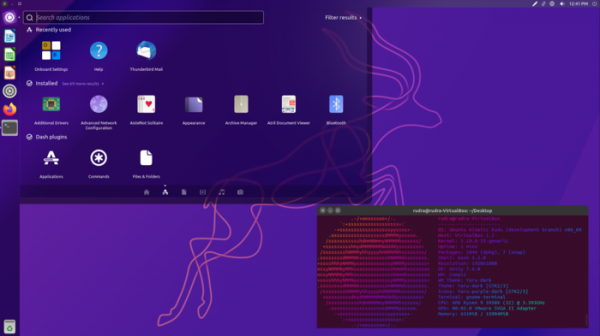
- The official editions of Ubuntu now include the Ubuntu Unity build. Ubuntu Unity offers a desktop based on the Unity 7 shell, built on the GTK library, optimized for effective use of vertical space on laptops with widescreen displays. The Unity shell was shipped by default from Ubuntu 11.04 to Ubuntu 17.04, after which it was replaced by the Unity 8 shell, which in 2017 was succeeded by the standard GNOME with the Ubuntu Dock panel.

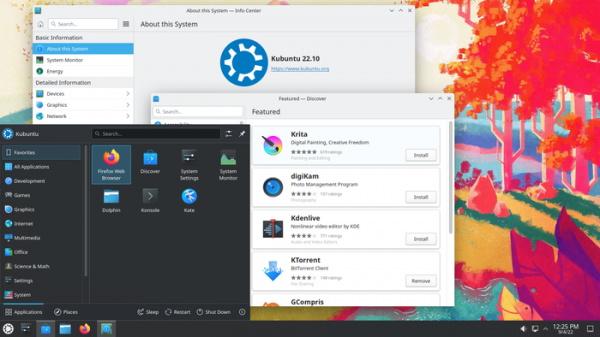
- Kubuntu features the KDE Plasma 5.25 desktop and the KDE Gear 22.08 application suite.
- Ubuntu Studio has upgraded to versions of Darktable 4.0.0, OBS Studio 28.0.1, Audacity 3.1.3, digiKam 8.0.0, Kdenlive 22.08.1, Krita 5.1.1, Q Light Controller Plus 4.12.5, Freeshow 0.5.6, and openLP 2.9.5. The installer now includes the ability to remove unnecessary components from the system.
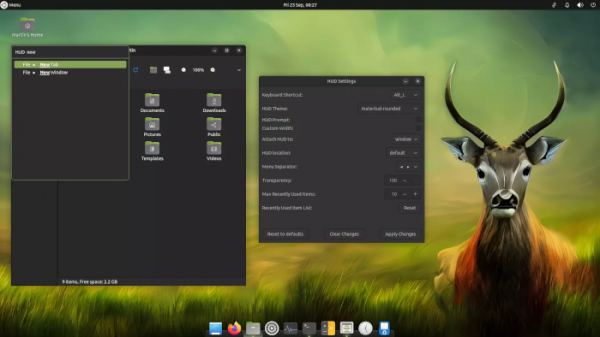
- Ubuntu MATE continues to ship with MATE Desktop 1.26.1, but the MATE Panel has been updated to branch 1.27 and includes patches that allow applets to be centered. Center alignment can be enabled in the MATE Tweak configurator. A separate screen for configuring the Heads-Up Display (HUD) quick search interface has been added. Included is a utility for managing user accounts, User Manager.
- Ubuntu Budgie features a new release of the Budgie 10.6.2 desktop. Applets have been updated. The budgie-menu with a traditional layout, a quick access area, and buttons for easy access to settings has been implemented. Fractional scaling support has been improved. The color profile management in the configurator has been redesigned. The default application set has changed: GNOME-Calculator has been replaced with Mate Calc, GNOME System Monitor with Mate System Monitor, Evince with Atril, GNOME Font Viewer with font-manager, and Celluloid with Parole. GNOME-Calendar, GNOME-Maps, and GNOME Screenshot have been removed from the delivery.
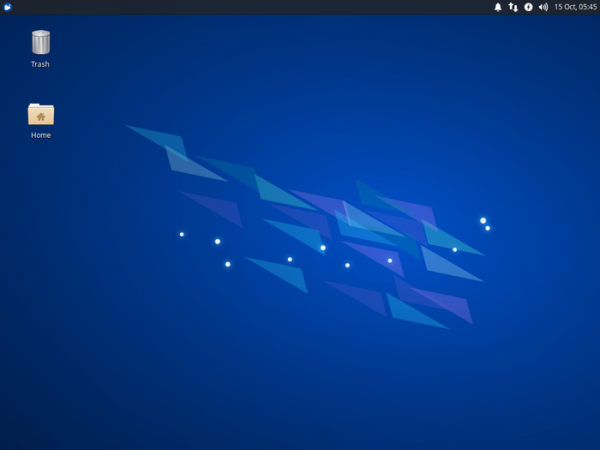
- In Xubuntu, the Xfce desktop has been updated to the experimental branch 4.17. The elementary-xfce theme has been upgraded to version 0.17. Updated versions include Catfish 4.16.4, Exo 4.17.2, Gigolo 0.5.2, Mousepad 0.5.10, Ristretto 0.12.3, Thunar File Manager 4.17.9, Xfce Clipman Plugin 1.6.2, Xfce Netload Plugin 1.4.0, Xfce Panel 4.17.3, Xfce Screenshooter 1.9.11, Xfce Settings 4.16.2, Xfce Systemload Plugin 1.3.1, Xfce Task Manager 1.5.4, and Xfce Whisker Menu Plugin 2.7.1.

Source: opennet.ru
