

After two years of development, the release of the open-source raster graphics editor Pinta 3.0 has been presented. Initially launched in 2010 as an attempt to create a simpler alternative to Paint.NET, it is built using GTK. The editor is designed for beginners and provides a basic set of tools for drawing and image processing. The interface has been simplified where possible. The editor supports an unlimited undo buffer, allows working with multiple layers, and includes a set of tools for applying various effects and correcting images. The Pinta code is released under the MIT license and is written in C# using Mono and the Gtk# wrapper. Binary builds are available for Linux (Flatpak, Snap), macOS, and Windows.
In the new version:
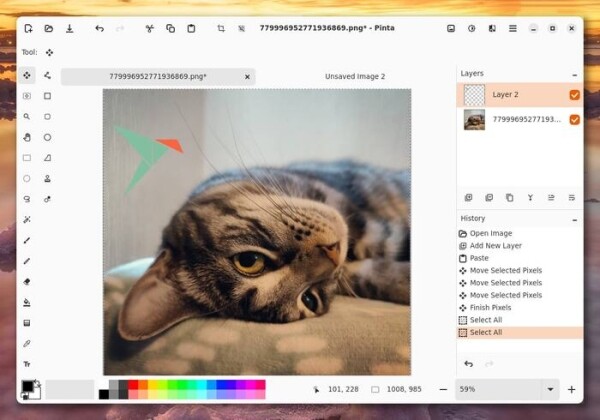
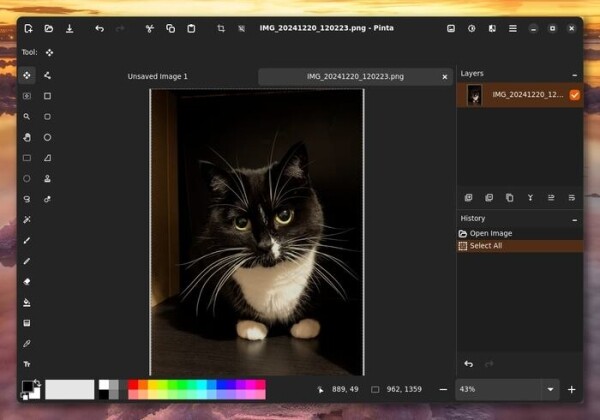
- The interface has been redesigned and optimized, now utilizing GTK4 and libadwaita libraries. The changes affect both the appearance, revamped according to GNOME HIG (GNOME Human Interface Guidelines), and the image editing process, which has become clearer for users familiar with common proprietary graphic packages.

- On the Linux platform, client-side window decoration has been included, allowing the toolbar and menu to be moved to the window header. The menu is divided into three sections, triggered by different buttons in the upper right corner of the window. An adaptive interface layout has been implemented, dynamically changing the arrangement of elements in the window based on the size and orientation of the screen. Integration with macOS and Windows desktop environments has been improved.
- A new set of symbolic icons has been introduced.
- A toggle switch between light and dark themes has been added to the menu. The theme can also be selected based on the light and dark mode settings in the system.
- Performance optimization has been carried out, enhancing the responsiveness of the interface.
- Gesture control support has been improved, such as adding the ability to pinch to zoom on trackpads.
- The built-in screenshot tool now supports the XDG portal Screenshot, granting access to the screen when launching the program in isolated mode. Support for Wayland has been enhanced.
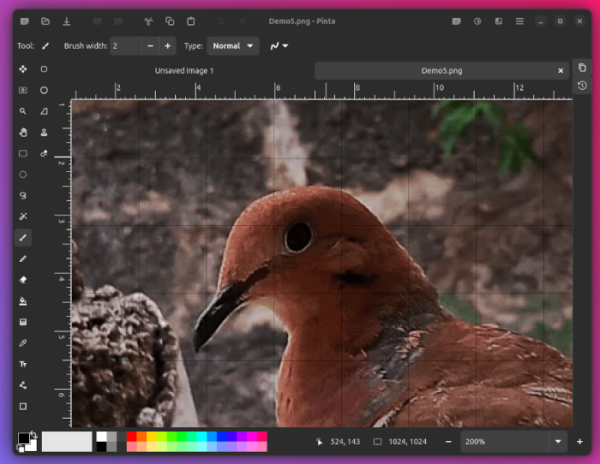
- A new implementation of a grid for aligning image elements has been proposed, allowing cell resizing.
- The option to hide the right toolbar has been added, freeing up additional horizontal space for the edited image. The left and top panels automatically adjust based on the window size; for example, when the window is minimized, tools are hidden and reorganized into two columns.

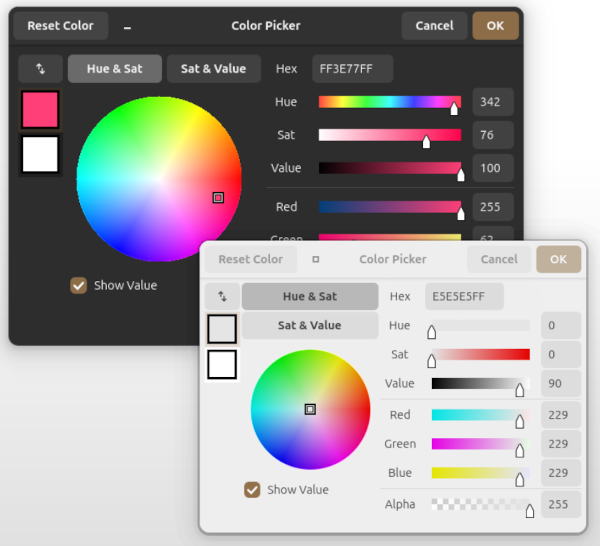
- The color selection interface has been revamped and is now available in both full and compact modes. RGB and HSV color components, as well as transparency, can be adjusted. Recently selected colors are saved in a separate palette.

- Keyboard management has been improved; for instance, the brush size can now be changed using the ‘[’ and ‘]’ keys.
- An ‘Offset Selection’ option has been added to the ‘Edit’ menu for resizing the selected area using sliders.
- A warning about layer merging has been added, displayed when attempting to save a multi-layer image in single-layer formats like PNG and WEBP.
- The text tool has improved compatibility with the Input Method Editor (IME) system.
- A mode for creating solid lines has been added to the ‘Curves’ tool.
- The ‘Stamp’ tool now preserves offsets between strokes.
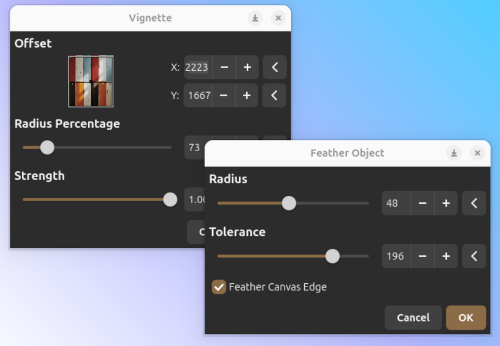
- New effects have been added: ‘Dithering’ (reducing color depth for a vintage look), ‘Voronoi Diagrams’ (geometric patterns), ‘Object Blur’ (smoothing edges), ‘Object Outline’ (adds borders around text and shapes), ‘Object Alignment’ (precise positioning of objects). The effects for creating fractals and clouds now support custom gradients.

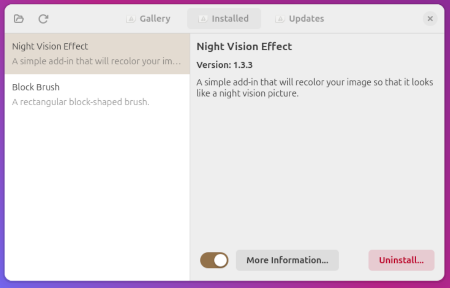
- Support for plugins that allow the addition of extra effects and formats has been resumed.

- The ability to scale using the nearest neighbor interpolation algorithm has been added.
- Support for exporting in PPM format has been added.
- A minimum of .NET 8.0 is now required for operation.
Source: opennet.ru
