

The release of the Nobara 41 distribution, based on the Fedora Linux 41 package base and including additional fixes for issues related to running computer games, streaming, and tasks related to content creation, has been announced. Nine installation images have been prepared for download: the official one with a styled KDE, additional ones with clean GNOME and KDE environments, Steam-HTPC for Steam Deck based on KDE, and Steam-Handheld for portable devices, as well as separate builds of the first four images with proprietary NVIDIA drivers.
The aim of the project is to provide a ready-to-use user environment that requires no additional actions after installation and addresses the main issues users face with Fedora. The distribution comes with proprietary components typically used on workstations, such as multimedia codecs and drivers, as well as packages that are missing from the official Fedora repository, such as OBS Studio, Steam, Lutris, and additional dependencies for Wine.
Among the advanced fixes offered by the distribution are the provision of patches to the Linux kernel to reduce gaming latency (Zenify), solutions for OpenRGB issues, use of the amdgpu driver with older GPUs, support for the Steam Deck console and Microsoft Surface device, improved compatibility with ASUS laptops, elimination of SimpleDRM incompatibility with NVIDIA drivers, support for Lenovo Legion laptops, inclusion of ashmem and binder for Waydroid, and resolution of issues when using Wayland with the Nouveau driver.
The package includes the latest releases of Mesa and Wine, built from the core projects' repositories. SELinux has been replaced with AppArmor. Patches have been added for Glibc, Flatpak, SDL2, Mutter, and xwayland. The Blender package includes support for FFmpeg and the HIP ray tracing library. Additional dependencies for Davinci Resolve have been installed. A large set of patches for OBS Studio has been included, among which are patches to resolve issues with game screen capturing using OpenGL and Vulkan, as well as patches for hardware encoding of H.264 and H.265/HEVC on AMD, NVIDIA, and Intel systems. The RPMFusion repository is activated by default.
In the new version:
- Transition to the Fedora 41 package base.
- The installer has been transitioned to use a fork of the Calamares installer, developed by the KaOS distribution. The new version is notable for the addition of an on-screen keyboard and additional options. The network access check has been removed — the Nobara installation images are self-sufficient and allow the system to be deployed in offline mode.
- In the Mesa builds, the latest stable drivers for the Vulkan API are enabled by default, and builds of such drivers from Git are packaged separately as mesa-vulkan-drivers-git. Different versions of the libgallium library have also been separated into packages — mesa-libgallium and mesa-libgallium-freeworld (the latter is compiled with x264/x265 codecs and resolves issues when installing mesa-va/vdpau-freeworld).
- The proprietary NVIDIA driver by default utilizes open modules for the Linux kernel.
- The distribution update interface (Nobara-Updater) has been improved, now supporting the installation of user-downloaded RPM packages, and the update availability indicator displayed in the system tray has been modified.
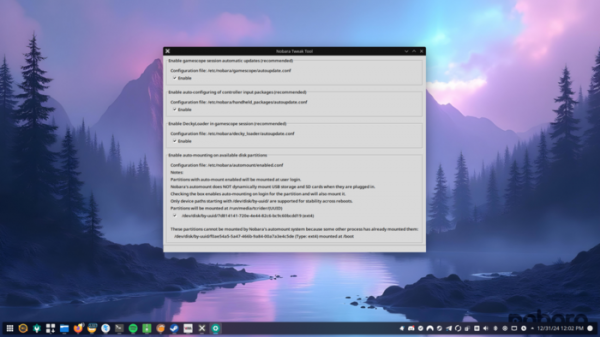
- A new utility called Nobara-tweak-tool has been added, providing settings for auto-updating editions for TV set-top boxes and portable devices, updates for DeckyLoader and automounting, as well as options for game controllers.

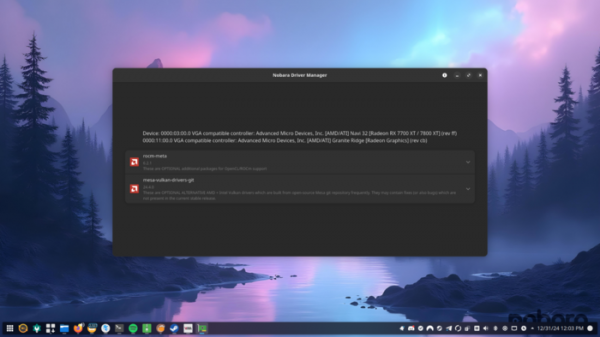
- The driver manager (Nobara-driver-manager) has added a driver for Broadcom wireless devices; a separate Bluetooth driver xpadneo has been implemented for Xbox Elite and Xbox Elite V2 controllers; the asusctl utility has been added for ASUS devices; AMD ROCm packages have been transitioned to use builds from Fedora; an option for installing the mesa-vulkan-drivers-git package has been proposed.
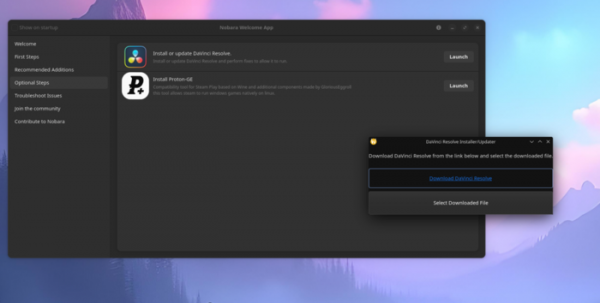
- The first launch screen (Nobara-welcome) has been updated with links to the Flatpak package discord-canary and the blender package from the Fedora repository. The installation interface for Davinci Resolve has been redesigned.
- Support for searching, installing, and removing packages in the Flatpak format has been added to the package manager Nobara-package-manager (yumex-ng). Repositories for stable and beta versions of Flatpak packages are enabled by default.

- In the editions for TV set-top boxes and portable devices, automatic updates are enabled by default, and there is now an indication of the auto-update process. The GRUB bootloader no longer displays the boot menu. Packages InputPlumber and DeckyLoader with plugins such as Web Browser, Decky Terminal, Wine Cellar, MangoPeel, ProtonDB Badges, QuickLaunch, and SimpleDeckyTDP are included.
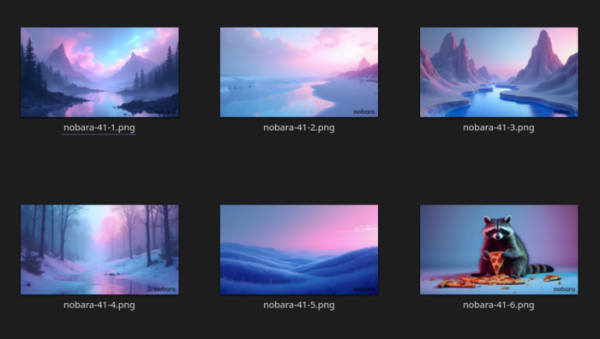
- New desktop wallpapers have been proposed.

- The Linux kernel package now includes the xpadneo bluetooth driver (for Xbox Elite and Xbox Elite v2). Patches for Lenovo Legion laptops have been temporarily removed due to issues with fan control on ASUS laptops (components for Lenovo Legion can be installed separately via the DKMS module).
Source: opennet.ru
