

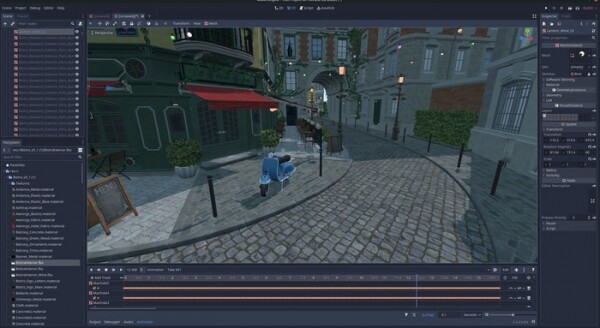
After 7 months of development, the release of the free game engine Godot 3.3 has been published, suitable for creating 2D and 3D games. The engine supports an easy-to-learn language for game logic tasks, a graphical environment for game design, a one-click game deployment system, extensive animation capabilities, and physical simulation processes, an integrated debugger, and a performance bottleneck detection system. The code for the game engine, game design environment, and associated development tools (physical engine, sound server, 2D/3D rendering backends, etc.) is distributed under the MIT license.
The engine's source code was opened in 2014 by OKAM Studio, after ten years of development of a proprietary professional-level product used to create and publish many games for PC, consoles, and mobile devices. The engine supports all popular desktop and mobile platforms (Linux, Windows, macOS, Wii, Nintendo 3DS, PlayStation 3, PS Vita, Android, iOS, BBX), as well as game development for the Web. Ready-to-run binary builds are available for Linux, Windows, and macOS.
A new rendering backend based on the Vulkan graphics API is being developed in a separate branch, which will be offered in the next release Godot 4.0, instead of the currently offered OpenGL ES 3.0 and OpenGL 3.3 rendering backends (support for OpenGL ES and OpenGL will be maintained by ensuring the old OpenGL ES 2.0/OpenGL 2.1 backend works on the new Vulkan-based rendering architecture). Transitioning from Godot 3.x to Godot 4.0 will require reworking applications due to API compatibility issues, but a long support cycle will be provided for the Godot 3.x branch, the duration of which will depend on user demand for the strict API.
Godot 3.3 branch is fully compatible with Godot 3.2 and continues the development of stable engine releases, which will be supported for an extended period. Initially, it was planned to release update 3.2.4 instead of Godot 3.3, but versions 3.2.x were perceived by users as corrective despite porting new features from the 4.0 branch, so the project transitioned to a classic semantic versioning scheme. In particular, an update in the third digit will now indicate only fixes, the second will denote the inclusion of new functionality, and the first will indicate changes affecting compatibility. The 3.x.x branch will be maintained alongside the 4.x.x branch until Godot 4.x is fully stabilized and adapted for all current hardware.
Godot 3.3 is notable for the addition of the following innovations:
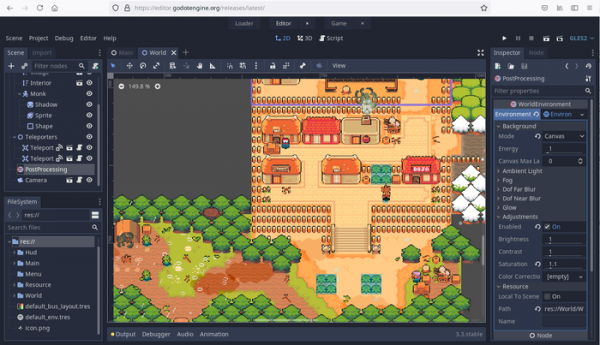
- A version of the editor has been prepared to work in a web browser.

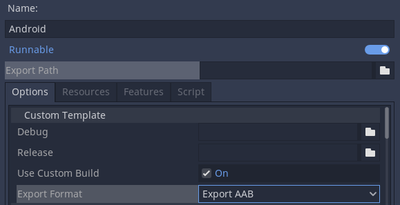
- The ability to export games for the Android platform in the AAB (Android App Bundle) format has been added, in addition to APK packages. The AAB format allows for the delivery of only the native libraries needed for operation on the current device (e.g., armeabi-v7a or arm64-v8a). For the Android platform, the ability to embed elements based on the Godot engine in applications as subcomponents (subview) utilizing part of the window has also been implemented. Support for screen cutouts (rounded corners and notches for the camera), mouse events, and input from external keyboards has been added.

- A new API has been proposed for building and distributing plugins for the iOS platform, allowing plugins (ARKit, GameCenter, InAppStore) to be moved to a separate repository and developed independently of the Godot engine. Previously, this API was implemented for the Android platform.
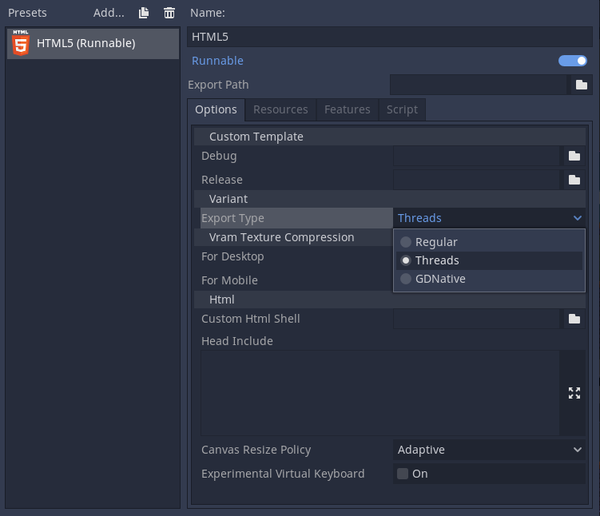
- The game export tools for the Web (HTML5 platform) have been improved. For browser-based games, support for multithreading and GDNative scripts has been added, but due to the limitations of the HTML5 platform, their implementation is incompatible with the native game variants. Additionally, the implementation of threads is tied to the SharedArrayBuffer API, which is not available in all browsers. Three separate export modes have been provided—Regular, Threads, and GDNative. The multithreaded profile has additionally included support for the AudioWorklet API, allowing for higher quality sound output without blocking the main thread. Support for gamepads and virtual keyboards has been significantly improved.

- Support has been added for building games for new Apple hardware equipped with the ARM M1 chip. Support for attaching digital signatures to executable files generated for macOS has been added.
- The upgraded API for multithreading, utilizing C++14 standard capabilities, has been transferred from branch 4.0, improving reliability across different platforms and optimizing performance.
- Optimization has been transferred from branch 4.0, using the BVH (Bounding Volume Hierarchy) structure instead of the Octree method for dynamic spatial partitioning during rendering. BVH is now used by default and resolves many performance issues.
- A unified implementation of 2D batching (Batching, an optimization to reduce draw call overhead by considering the spatial relationship between objects) has been implemented, which can be applied to both OpenGL ES 3 and OpenGL ES 2. This optimization now encompasses more objects, including lines and polygons.
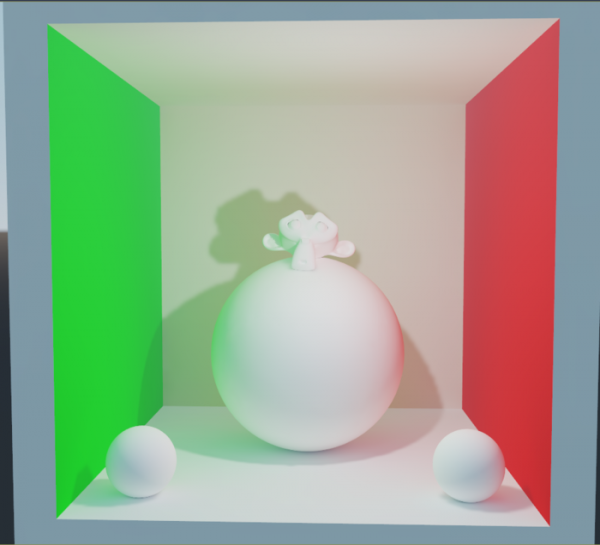
- A new lightmapper has been added, applying path tracing methods and supporting noise suppression through the oidn (Open Image Denoise) library. The new lightmapper uses CPU for calculations and resolves most of the quality issues found in the previous processor. Additionally, a GPU-based variant of the lightmapper has been prepared, but it is tied to the Vulkan API and will only be available in version 4.0.

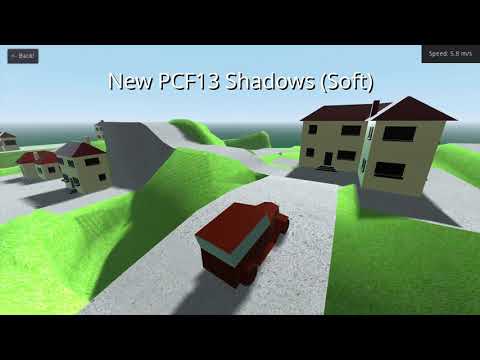
- Many rendering-related improvements have been ported from the Godot 4.0 branch, such as fast software skinning, optimized transformations of hidden 3D objects, customizable numbers of light sources for each object, and enhanced shadow rendering using the PCF filter.

- The physics simulation engine has improved collision handling for various types of impacts.
- The editor now includes full copy and paste capabilities for nodes, allowing transfers between different scenes.
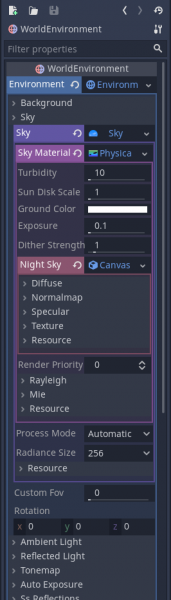
- The inspection mode has been improved with visual highlighting of subresources.

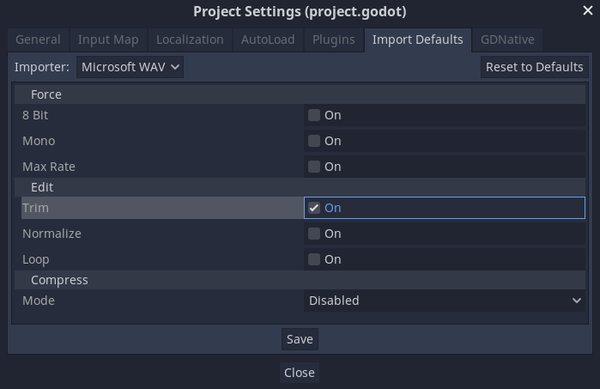
- Support for defining default settings for imported resources has been added.

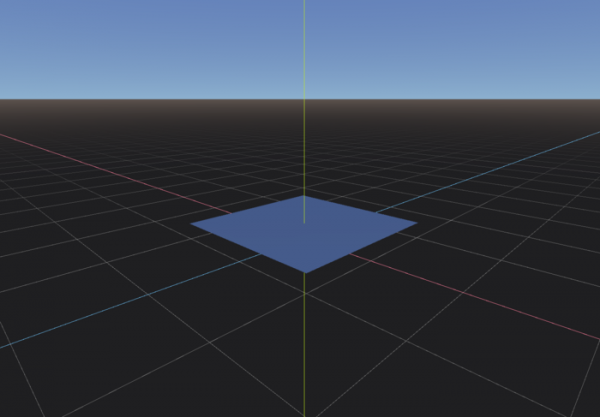
- Efforts have been made to enhance usability within the 3D editor, including the addition of an infinite dynamic mesh and significant improvements to rotation and selection via the gizmo.

- The collaborative tools now include protections against modifications to scenes already opened by other users (a warning is displayed if newer versions of opened files are detected upon saving).
- Import from FBX files has been improved.

- An OpenXR plugin has been added, supporting the eponymous standard for creating virtual and augmented reality applications. Support for the WebXR specification has been added to the HTML5 port for developing VR-based games.
- Support for loading and playing MP3 audio has been added (previously unsupported due to patents).
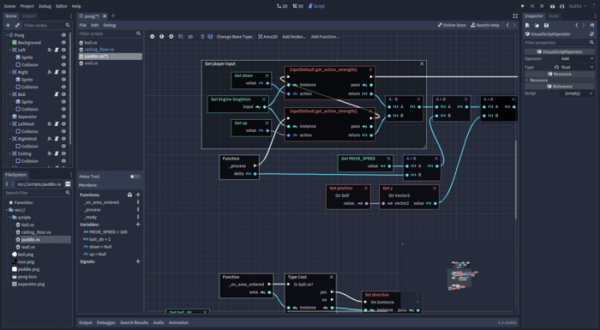
- GraphEdit now includes support for a mini-map of the entire structure, displayed in the bottom right corner, allowing for an overview of all nodes.


Source: opennet.ru
