

The release of the OpenSilver 3.2 project has been announced, continuing the development of the Silverlight platform and enabling the creation of interactive web applications using C#, F#, XAML, and .NET technologies. Applications compiled with OpenSilver can run in any desktop and mobile browsers that support WebAssembly. Development can utilize Visual Studio and the VS Code editor, which works on Windows, macOS, and Linux. The project code is written in C# and is distributed under the MIT license.
Initially, the OpenSilver project aimed to provide tools to extend the life of existing Silverlight applications after Microsoft ceased development and support for the Silverlight platform in 2021, as well as the discontinuation of browser plugin support. OpenSilver supports all the core features of the Silverlight engine, including full support for C# and XAML, as well as the implementation of most of the platform's API, sufficient for using C# libraries like Telerik UI, WCF RIA Services, PRISM, and MEF.
In its current form, OpenSilver has gone beyond being a layer for extending the life of Silverlight and can be viewed as an independent platform for creating new applications. For example, the project is developing an integrated development environment, providing support for new versions of C# and .NET platform, and ensuring compatibility with JavaScript libraries.
OpenSilver is based on the code of open projects Mono (mono-wasm) and Microsoft Blazor (part of ASP.NET Core), and for execution in the browser, it compiles applications into WebAssembly intermediate code. OpenSilver continues the development of the CSHTML5 project, which allows compiling C#/XAML/.NET applications into a JavaScript representation suitable for running in a browser, and expands its codebase with capabilities to compile C#/XAML/.NET into WebAssembly rather than JavaScript.
In the new version:
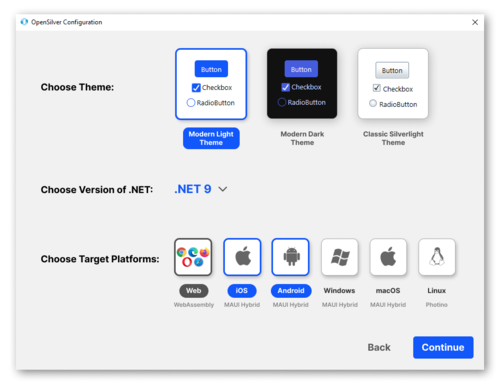
- Support for deploying applications based on the WPF (Windows Presentation Foundation) framework has been added for iOS, Android, Windows, macOS, Linux, and Web browsers, using a single shared codebase in XAML/C#. Mobile platform support is achieved through the integration of .NET MAUI Hybrid tools, allowing the use of WebView to display the interface while compiling business logic into native code. The MAUI framework can be used for accessing mobile platform APIs.

- Compatibility with the WPF (Windows Presentation Foundation) framework has been improved: support for RTL text rendering (right-to-left), event bubbling up through the element hierarchy, enhanced animation, the VirtualizingStackPanel API, and smooth scrolling on touch screens has been added.
- Tools for migrating existing codebases and adapting them to WPF capabilities specific to OpenSilver have been provided.
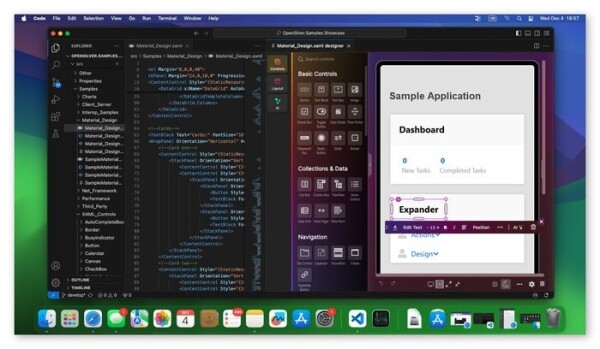
- Integration with the Visual Studio development environment and the VS Code editor has been enhanced. OpenSilver-supported extensions are now placed in the standard extension directories of Visual Studio and VS Code.

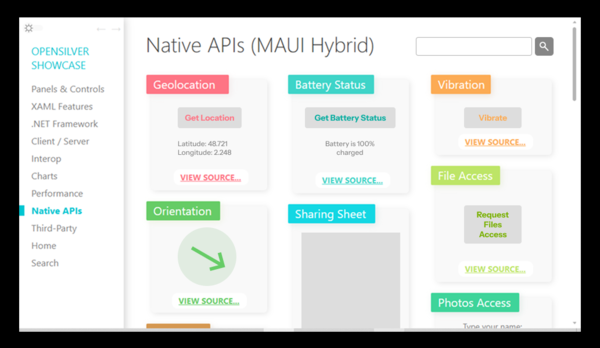
- A new ToDoCalendar application has been added, featuring an implementation example of a calendar-planner compiled for different device types. The Showcase demo application has been extended with capabilities for integration with mobile platforms, allowing access to APIs for managing sensors, orientation, vibration, and notifications, as well as for location determination and file access.

Source: opennet.ru
