

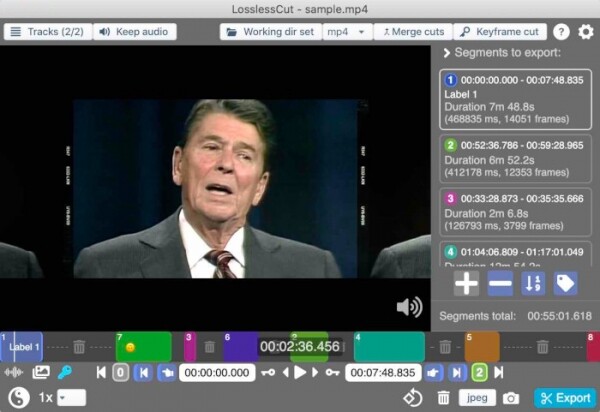
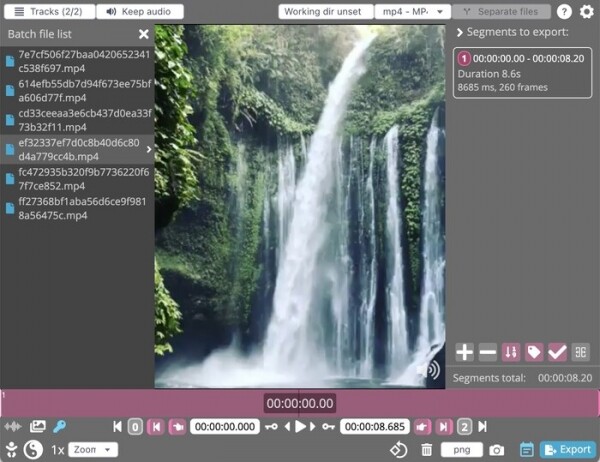
The release of LosslessCut 3.49.0 has been published, offering a graphical interface for editing multimedia files without re-encoding the content. The most sought-after feature of LosslessCut is trimming and cutting video and audio, for example, to reduce the size of large files recorded on action cameras or drones. LosslessCut allows you to select relevant segments of a recording and discard the excess, without the need for full re-encoding, while preserving the original quality of the material. Since the processing is done by copying existing data rather than re-encoding, the operations are performed very quickly. LosslessCut is written in JavaScript using the Electron platform and acts as an extension to the FFmpeg package. The developments are distributed under the GPLv2 license. Builds are prepared for Linux (snap, flatpak), macOS, and Windows.
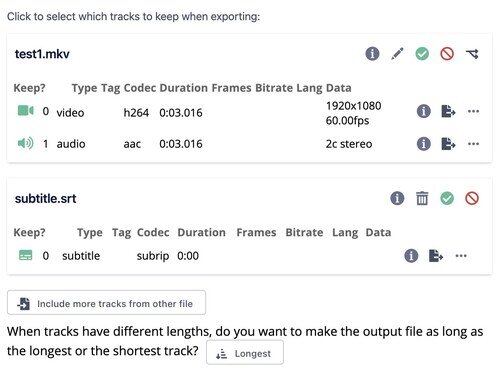
Without re-encoding, the program can also handle tasks such as attaching a soundtrack or subtitles to a video, cutting individual scenes from clips (for example, removing commercials from television recordings), saving fragments associated with tags/chapters separately, regrouping video parts, separating audio and video into different files, changing the type of multimedia container (for example, from MKV to MOV), saving individual video frames as images, creating thumbnails, exporting segments to a separate file, and modifying metadata (such as location data, recording time, horizontal or vertical orientation). It also includes tools for detecting and automatically cutting empty areas (black screens in videos and silent fragments in audio files) and adjusting to scene changes.
It is possible to connect fragments from different files, but the files must be encoded using the same codec and settings (for example, filmed with the same camera without changing settings). It is possible to edit individual parts with selective re-encoding of only the modified data while leaving the rest of the information in the original video untouched during editing. The editing process supports undo/redo functionality and displays the FFmpeg command log (standard operations from the command line can be repeated without using LosslessCut).
Key changes in the new version:
- Silence detection in audio files is provided.
- Customization options for detecting the absence of picture in the video have been provided.
- The ability to split video into separate segments based on scene changes or keyframes has been added.
- An experimental mode for scaling the timeline has been implemented.
- The ability to merge overlapping segments has been added.
- The snapshot creation feature has been improved.
- The settings page has been reorganized.
- Expanded capabilities for extracting frames as images. Modes for periodic image capture every few seconds or frames have been added, as well as capturing images when significant differences are detected between frames.
- The ability to interrupt any operation has been provided.
Source: opennet.ru
