

The release of GitBucket 4.37 has been presented, developing a system for collaborative work with Git repositories featuring an interface similar to GitHub and Bitbucket. The system is distinguished by its ease of installation, the ability to extend functionality through plugins, and compatibility with the GitHub API. The code is written in Scala and is available under the Apache 2.0 license. MySQL and PostgreSQL can be used as the database management systems.
Key features of GitBucket include:
- Support for public and private Git repositories accessible via HTTP and SSH;
- Support for Git LFS;
- An interface for navigating the repository with online file editing support;
- A Wiki for preparing documentation;
- An interface for handling issue messages;
- Tools for processing pull requests;
- A system for sending email notifications;
- A simple user and group management system with LDAP integration support;
- A plugin system with a collection of extensions developed by community members. Among the plugin functionalities are creating gist notes, publishing announcements, backing up, displaying desktop notifications, visualizing commit graphs, and rendering AsciiDoc.
In the new release:
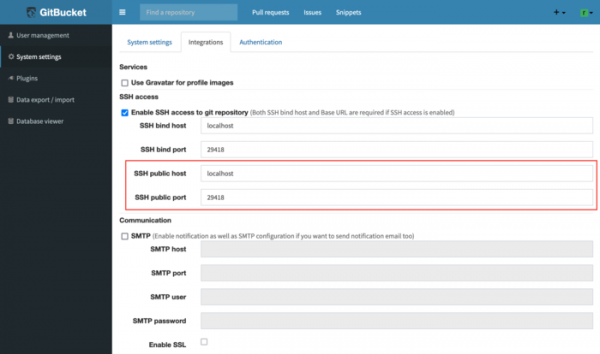
- The ability to set a custom URL in the settings for repository access via SSH has been provided, which can be used when users access GitBucket via SSH not directly, but through an additional proxy-server, redirecting client requests.

- The ability to use EDDSA keys for verifying digital signatures of commits has been added. Support is implemented through the update of the apache-sshd and bouncycastle-java components.
- The limits on the maximum password size (increased from 20 to 40 characters) and WebHook URL (from 200 to 400 characters) have been changed.
- The Web API has been expanded and integration with the Jenkins system improved. Additional API calls for working with Git (Git Reference API) and processing issue lists have been added, such as support for data on test releases (milestones) and the ability to perform operations for all issue entries at once.
Source: opennet.ru
