

After more than a year of development, the release of the open parametric 3D modeling system FreeCAD 0.20 has been published, featuring flexible customization and functionality expansion through plug-ins. The interface is built using the Qt library. Add-ons can be created in Python. It supports the saving and loading of models in various formats, including STEP, IGES, and STL. The FreeCAD code is distributed under the LGPLv2 license, utilizing Open CASCADE as the modeling core. Ready builds will be prepared soon for Linux (AppImage), macOS, and Windows.
FreeCAD allows users to explore different design options by changing model parameters and evaluating the work at various stages of the model's development. The project can serve as a free alternative to commercial CAD software such as CATIA, Solid Edge, and SolidWorks. Although FreeCAD is primarily aimed at mechanical engineering and product design development, the system can also be used in other fields, such as architectural design.
Key innovations in FreeCAD 0.20:
- The help system has been completely rewritten and is now a separate add-on called Help, displaying information directly from the project Wiki.
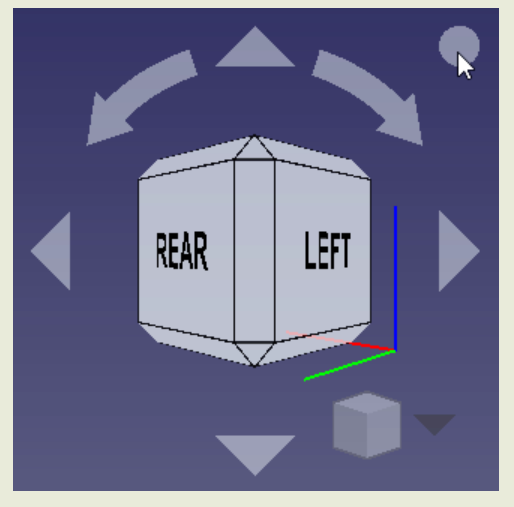
- The user interface has revamped the Navigation Cube, which now features edges for rotating the 3D view by 45%. An automatic rotation mode has been added to snap the 3D view to the nearest logical position upon clicking an edge. The settings now allow resizing of the Navigation Cube.

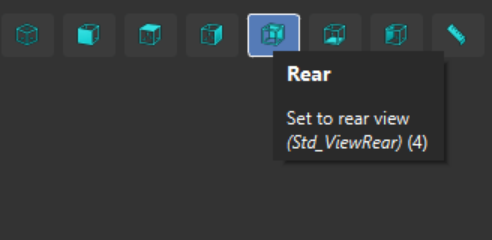
- Tooltips now display both the public and internal name of the command for easier information retrieval in the help section and the Wiki.

- A new command, Std UserEditMode, has been added to select the editing mode used when double-clicking an object in the element tree.

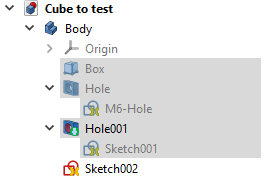
- The context menu shown in the element tree now includes the ability to add dependent objects to selected objects.

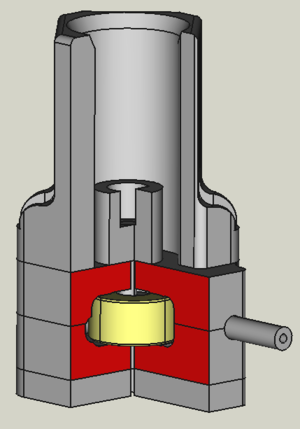
- A new tool, Section Cut, has been implemented to obtain non-hollow and permanent sections of parts and assemblies.

- Two new mouse navigation styles have been added, based on navigation in OpenSCAD and TinkerCAD.
- Settings now allow for changing the size of the coordinate system for the 3D view.
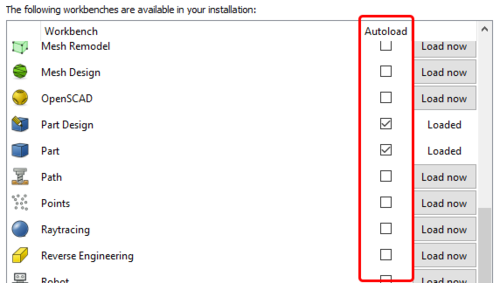
- The settings panel for workspaces now supports automatic loading of selected workspaces during FreeCAD startup.

- On the Linux platform, a transition has been made to use directories defined in the XDG specification for storing settings, data, and cache ($HOME/.config/FreeCAD, $HOME/.local/share/FreeCAD, and $HOME/.cache/FreeCAD instead of $HOME/.FreeCAD and /tmp).
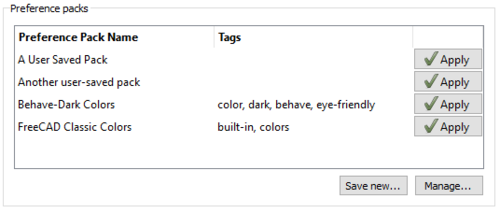
- A new type of add-on has been introduced: preference packs, which can distribute sets of configurations from user configuration files (user.cfg); for example, one user can share their settings with another. Preference packs can also include themes by adding Qt style files.

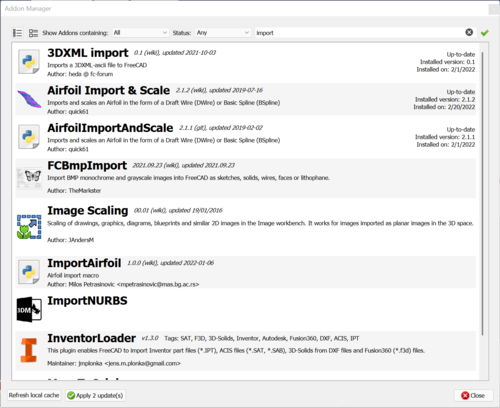
- The add-on manager now supports the distribution of preference packs, displays information from add-on metadata, improves support for add-ons whose code is hosted in third-party git repositories, and expands the search and filtering capabilities for add-ons.

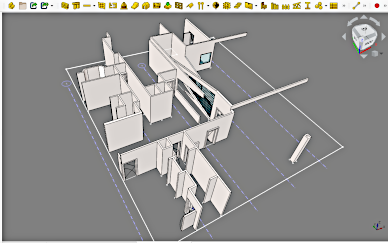
- The architecture design environment (Arch) has been enhanced. The 'Attach Feature' tool now allows for parametric placement of windows and fixtures in relation to walls. New properties for structural objects have been added. A new command for creating multiple architectural structures based on a base object has been introduced. Support for two-dimensional data such as lines and text has been implemented in the IFC import and export.

- In the 2D drawing environment (Draft), a Draft Hatch command has been added to hatch the faces of the selected object using templates from PAT files (AutoCAD). A command for adding named groups has also been introduced.
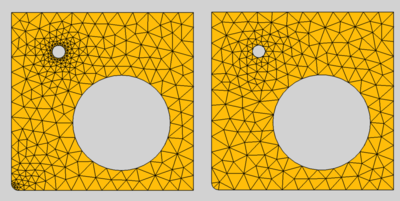
- The FEM (Finite Element Module) environment has been expanded, providing tools for finite element analysis that can be used, for instance, to assess the impact of various mechanical forces on the developed object (resistance to vibration, heating, and deformation). The Z88 Solver has been brought to a full-featured state for complex simulations. The Calculix Solver now enables bending analysis. New properties and the ability to recombine 3D meshes have been added to the Gmsh polygonal mesh generation tool.

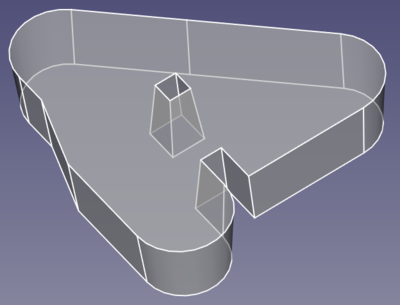
- The environment for working with OpenCasCade objects (Part) ensures proper support for the extrusion of internal structures.

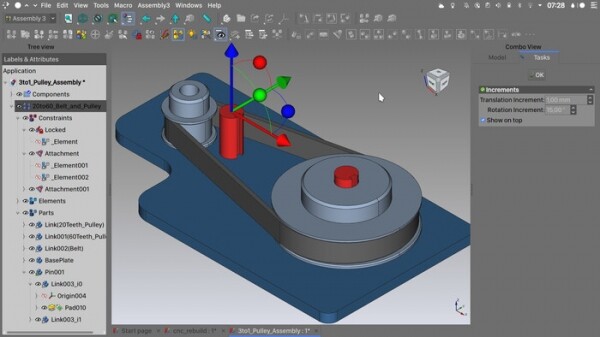
- The environments for creating templates (PartDesign), 2D sketches (Sketcher), managing spreadsheets with model parameters (Spreadsheet), generating G-Code instructions for CNC machines and 3D printers (Path), 2D modeling, and creating 2D projections of 3D models (TechDraw), and designing the operation of assembled multi-component structures (Assembly3 and Assembly4) have been improved.

- The migration of the project to Qt 5.x and Python 3.x has been completed. Builds with Python 2 and Qt4 are no longer supported.
Source: opennet.ru
