

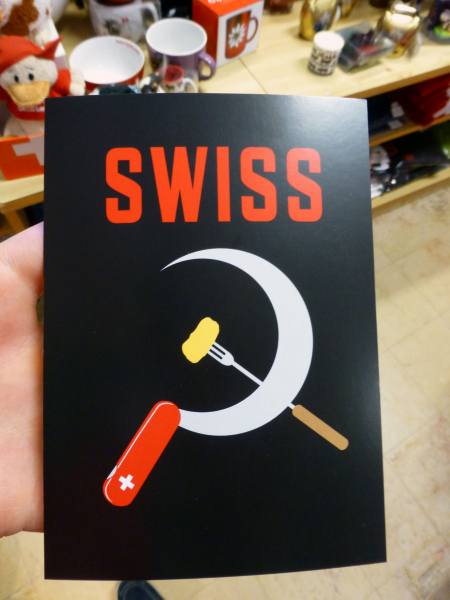
When visiting any country, it's important not to confuse tourism with emigration.
Popular Wisdom
In previous articles (, , ) we discussed the professional aspects of what awaits a young and still inexperienced university graduate when entering and during studies in Switzerland. The next part, which logically follows from the previous three, is to show and tell about everyday life, about and , which have proliferated on the Internet (most of which are nonsense), about Switzerland, and also to touch on the balance of expenses and income.
Disclaimer: Why did I even take on writing this article? There are indeed many 'success stories' on Habrahabr about how to emigrate, but very few about the reality that immigrants will face upon arrival. of the few examples that I liked, even though the author looks at the world through rose-colored glasses, IMHO. Yes, you can find something in the depths of Google Docs, which is periodically updated, with disparate advice, but that does not give a complete picture. So let's try to outline it!
Everything stated below is an attempt to reflect on the surrounding reality, meaning that in this article I'd like to focus on my own feelings from the journey and share my observations. I hope this will encourage someone to move to Switzerland, and others to create their own little piece of Switzerland in their specific yard.
So, let's take everything in order, make yourself comfortable, this will be a long read.
Caution, there is a lot of traffic under the cut (~20 MB)!
Well-known facts about lesser-known Switzerland
Fact #1: Switzerland is primarily a
In other words, the degree of independence of the individual cantons is quite high. It's somewhat like the USA, where each state has its own taxes, its own judicial systems, and so on, which are unified by some common rules.
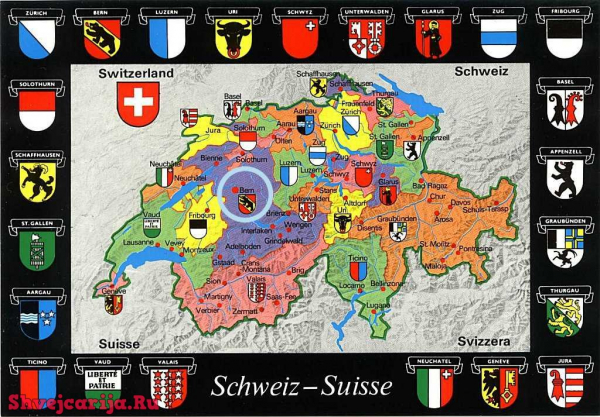
The 'political' map of Switzerland.
Certainly, there are affluent cantons - Geneva (banks), Vaud (EPFL + tourism), Zurich (large IT companies), Basel (Roche and Novartis), Bern (the largest and most developed), and then there are some , which is hard to find on the map, or Valais, whose residents are often regarded with disdain (there are many rural folk, politically correct 'children of consanguineous relationships,' and they generally joined the confederation). ).
Fact #2: Switzerland is a country of councils
Switzerland is essentially governed by councils, as I on the 100th anniversary of the Revolution. Yes, you heard right, the French word Conseil (council) and the German Beratung (advice, guidance) are, in essence, the very councils of people's deputies from the dawn of 'October, Socialist, Yours!'.
NB for the pedants: yes, I completely understand that, perhaps, this is a stretch and a hindsight, however, regarding their goals and tasks, the Council and Conseil coincide, namely to allow ordinary citizens to manage their locality, city, country and ensure the change of power.
These councils are of several levels: the Council of the district or 'village' — Conseil de Commune or Gemeinde, as they are called by , the City Council – Conseil de Ville, Council of the Canton – Conseil d’Etat, Council of Cantons – Conseil des Etats, Federal Council – . The latter is essentially the federal government. Overall, it’s all about councils. This situation was enshrined in the Constitution as far back as 1848 (that's right, Lenin was little and had curly hair at the time!).
The Soviet Union or L’Union des Conseils?For me, it was like thunder on a clear November day after 5 years of living in Switzerland. Unexpectedly, the years 1848, the first arrival of the 'nobleman' Ulyanov aka Lenin in Switzerland in 1895, i.e. half a century after the formation of the councils system, and 'Councils' aka Conseils. Moreover, Lenin lived in Switzerland for another 5 years from 1905 to 1907 (after the creation of ) and from 1916 to 1917. Thus, Ilyich had enough time (and at that time 5 years was quite a significant period!) not only for revolutionary activities, but also to study the local political system.
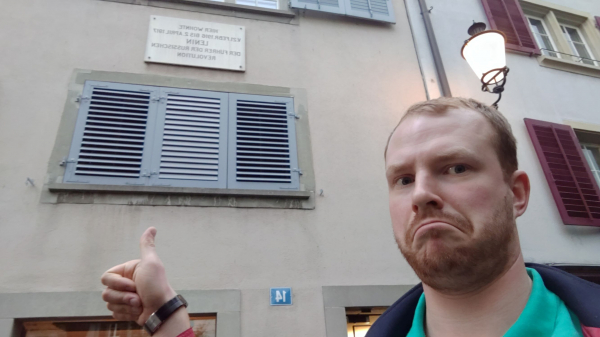
A commemorative plaque for the 'leader' in Zurich
We won't speculate on whether Lenin or any other revolutionary brought 'Councils' to Russia or whether they originated independently, but this system of councils turned out to be quite effective and was deployed after the October Revolution on the uncharted territory of 'fragments of self-rule', involving ordinary people: peasants, sailors, workers, and soldiers.
A couple of years after the country of councils in 1922, a state appeared on the map of the USSR, which, strangely enough, was also Con-by the federation, while the article about exiting it was so eagerly used by the union republics in the 90s. So, the next time you see a mention (after all, French is still the language of international diplomacy) or Soviet Union, consider whether it was truly Soviet or perhaps L’Union des Conceils?!
The essence of all this advice is to provide the entire population of the Confederation with the right to participate in the political life of the country and, in fact, to have direct democracy. Thus, politicians often have to combine regular jobs with roles in local government, meaning in some Council.
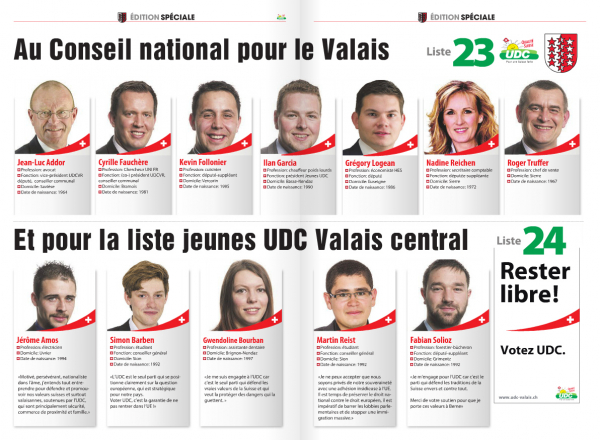
Here is one example of candidates: a cook (cuisinier), a driver, a dentist, and an electrician are available.
I appreciate that the Swiss not only take responsibility for their 'yard' but also consciously participate in the life of their village and town, possessing some innate and/or cultivated sense of responsibility.
Fact #3: The political system of Switzerland is unique
From fact #2, it follows that Switzerland is one of the very few countries in the world where direct democracy is possible and functioning. Yes, the Swiss love to express their will on any occasion - from whether to use artillery to trigger avalanches to whether to build houses from concrete or from more ecological wood (there are plenty of resources in the Swiss mountains, but this rumor harms the natural beauty, and it looks generally unsightly, while 'pretty' wood is a hassle).
The key point here is, in the frenzy of advocating for universal suffrage, to remember that Switzerland has just over 8 million inhabitants, and organizing a vote on any issue is relatively uncomplicated. Plus, gathering statistics is simple – sending a letter via mail with a login-password for entry and it’s done.
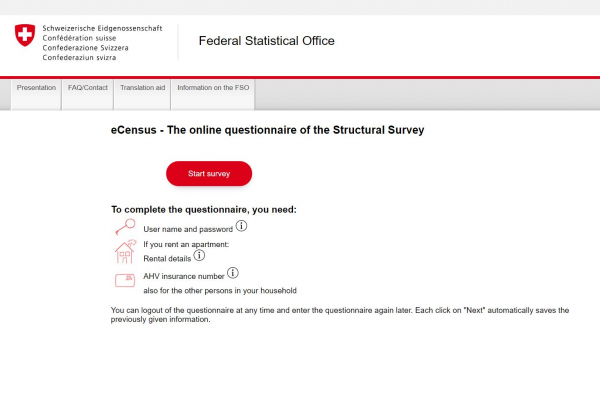
This is what the system for collecting statistics looks like. For voting, one still has to go to the polling stations, but only citizens have the right to vote.
By the way, this is very convenient and allows for the formation of useful statistical data every year. For example, demographic data from the last 150 years of Swiss history are in .
Fact #4: Military service in Switzerland is mandatory
However, the service itself is not about toiling away, continuously paying debts to the homeland from dawn till dusk, but rather a mandatory health camp for men up to 45 years of age. Indeed, the first 40 years of childhood are the toughest in a man's life! Even employers cannot refuse if an employee is called up for duty, and the time spent (usually 1-2 weeks) will be fully compensated.
Why a health camp? Soldiers go home on weekends, working strictly by the hour. For example, when an airplane was hijacked one early morning in neighboring Italy and directed toward Geneva, it so happened that the Swiss army didn't escort it due to the circumstances (working hours from 8 AM to 6 PM with a break from 12 to 1 PM). .
There is quite a persistent myth that all Swiss citizens are given weapons to take home after military service. Not everyone, only those who want it, and they do not get it for free; they purchase it at minimal prices, with storage requirements in place, not just under the bed. By the way, later on, they can shoot it at the range if they have serving friends.
from : since around 2008, they stopped issuing weapons to everyone indiscriminately. Special storage requirements (with the bolt separate) apply only to automatic weapons, i.e., during active service. After military service, the rifle is reconfigured to semi-automatic and can be stored like any other weapon ("not accessible to third parties"). As a result, the rifles of active soldiers rest in a stand for umbrellas by the entrance, while the bolts lie in a desk drawer.
The latest referendum (see fact #3) will obligate the federal government to implement European norms regarding arms management, effectively tightening possession regulations.
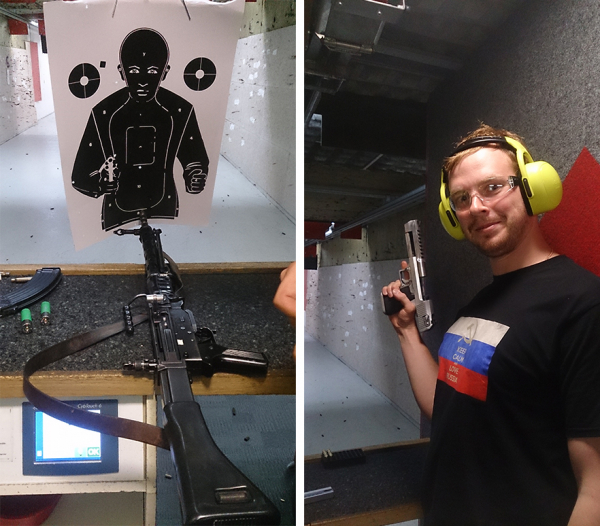
On the left: rifle of the Swiss army (killing power), on the right: satisfaction from shooting the B-1-4 (if you know what I mean) aka
Fact #5: Switzerland is not just cheese, chocolate, knives, and watches.
Many people think of Switzerland when cheese (Gruyère, Emmental, or Tilsiter), chocolate (usually Toblerone, as it is available at every duty-free), the army knife, and ridiculously expensive watches come to mind.
If you’re thinking about buying a watch, (brands such as Tissot, Balmain, Hamilton, and others included), up to 1,000 francs, almost all watches are made in the same factories, and the internals of all watches are roughly the same. Only starting from the upper range (Rado, Longines) do any 'features' appear.
In reality, Switzerland has a system where technologies are developed within the country and then exported, as the country is poor in resources. The most famous examples are Nestlé's powdered milk and Oerlikon's cut barrels (), which equipped the Wehrmacht and Krigsmarine during the Second World War. At the same time, the country has its own (ABB - power, EM Microelectronic - RFID, smart cards, components of smartwatches, and so on), its own manufacturing of complex components and assemblies, its assembly of trains (two-story , for example, are assembled near Villeneuve) and so on. As for the fact that Switzerland is home to a good half of the pharma industry – I will tactfully remain silent (Lonza in the new cluster in Sierre, Roche and Novartis in Basel and the surrounding area, DeBioPharm in Lausanne and Martigny, and a plethora of startups and smaller companies).and Fact #6: Switzerland is a kaleidoscope of climates
Switzerland has
its own Siberia icy rain and Awaiting the New Year: in Montreux it is still relatively warm, but in the mountains, snow has already settled.
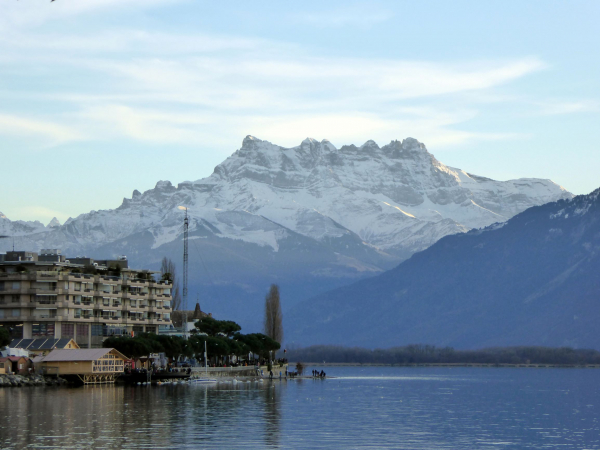
Interestingly, Switzerland is famous for its ski resorts, yet snow falls in most cities is not that much, so often the snow is not removed but just cleared for cars and pedestrians — they wait for it to melt. The highways, of course, must be cleared first, but only with the start of the workday. And now imagine a city with half a million residents, like Zurich, during such apocalypses…
An example is the snowfall in Sion in December 2017 – complete collapse. Even the train station platform was cleared over several days. Sion was unlucky twice in 2017-2018 – first it experienced
For example, the snowfall in Sione in December 2017 caused a complete collapse. It took several days to clear the platform at the train station. Sione faced two misfortunes in 2017-2018 – first, its , and then it was flooded in summer. Even our lab was affected. And I must point out, there was no Sobyanin involved.
In Switzerland, everything works like clockwork, but once the snow falls, it turns into Italy. (c) — my boss.
Therefore, in every building, there is a person responsible for clearing the surrounding area, usually the concierge, and there is simple equipment for cleaning (for example, ). In villages, residents with large vehicles have a special plow for this. Everything is cleared down to the asphalt or tiles; otherwise, it melts during the day and freezes at night. What prevents people in Russia from gathering and tidying up their own yards, or buying a small combine (~30k rubles) for these purposes, remains a mystery to me.
The story of one parking lot in RussiaIt so happened that about 8 years ago, I had a car, which I loved, and I kept a shovel in it to dig out my parking spots. So, in just one day in my quite affluent yard (SUVs from Mazda and Touaregs are the norm), I dug out 4 parking spaces in one daylight.
Just like in relationships, everything is defined not by who owes whom and what, but by what you have done for convenience and the common good. You have to start with yourself! And the Touaregs just drive their tracks in the yard and in the parking lot…
Fact #7: Universal 'Politeness'
Honestly, when was the last time you said 'good day' and 'thank you' to the service staff? In Switzerland, it’s as much a habit as breathing, intensifying in small villages. For example, here almost everyone will have to say bonjour / guten Tag / buongiorno (good day) at the start of a conversation, merci / Danke / gracie (thank you) after a service, and bonne journée / Tschüss / ciao (have a good day) when saying goodbye. Also, on hiking trails, everyone you meet will greet you — it’s amazing!
And this is not the American 'howdy,' where someone keeps an axe under their coat to chop you as soon as you turn away. In Switzerland, being a small country with a significant 'rural' population until recently, everyone greets each other, albeit out of habit, but more sincerely than in the USA.
However, it is important not to be misled by the hospitality and kindness of the Swiss. I would like to remind you that the country has some of the strictest naturalization laws, which include work life, language proficiency, and exams. They may seem kind on the outside, but there is a touch of nationalism within.
Fact #8: The Swiss village is more alive than ever.
Surprisingly, the fact is: in Switzerland, the village not only does not die out, but also develops and expands quite well. This is not about ecology and green pastures where goats and cows frolic; it's purely economic. Since Switzerland is a confederation, taxes (especially personal income tax) are paid at three levels: municipal (village/city), cantonal (‘region’), and federal. The federal tax is the same for everyone, but ‘manipulations’—in a good sense of the word—with the other two allow families living in a 'village' to significantly reduce their taxes.
We will discuss taxes in detail in the next part, but for now, let me note that if one resides in Lausanne, the conditional tax burden is about 25% per person. In contrast, for a remote village in the same Vaud canton, for example, Mollie-Margot, it will be around 15-17%. It's clear that you can't pocket all this difference, as you'll have to maintain your home, mow the lawn, and cover the commute to the city. However, housing prices are lower, the food is farm-fresh, and children have plenty of space to run around in the meadows.
And yes, the attitudes towards marriage here can be quite strange. Sometimes the taxes on a childless family can significantly exceed the tax on a single individual, which is why the Swiss are not in a hurry to rush to the local 'registry office.' After all, the economy should be efficient. There was even a referendum on this topic. But we will discuss taxes in the next part.
Transportation system
Overall, getting around Switzerland is convenient both by car and by public transport. Often, the travel time is comparable.
Trains and public transport
Strangely enough, for such a small country as Switzerland (almost twice the size of Tver Oblast and comparable to Moscow), the railway transport network is incredibly well-developed. Adding to this are PostAuto buses, which not only enable travel between remote villages but also deliver the mail. Thus, you can reach almost any point in the country from any other.
Swiss trains are the most train-like trains in the world, especially the double-decker ones.
To plan your route, just specify the departure and arrival stations in the SBB app. A couple of years ago, it was significantly updated, its functionality expanded, and it has become a fantastic travel assistant in the country.
A few words about the history of SBB.Long ago, Switzerland had many private companies that built, operated, and managed the movement of passengers and goods between cities. However, the chaos of capitalism (where they sometimes could not reach agreements, sometimes raised tariffs, and so on) came to an end in the early 19th century with the creation of a central coordinating state body – SBB, which quickly relieved ‘efficient owners’ of many problems and headaches by nationalizing all railway carriers.
Today, remnants of that former ‘luxury’ can be seen in the abundance of ‘subsidiary’ companies engaged in transport (MOB, BLS, and so on) that even paint trains in different colors. However, they only handle local transport, while SBB still manages everything on a global scale.
I immediately want to draw a parallel: SBB is analogous to Russia's RZD, but it's not quite the same. SBB is a ‘super-brain’ created to control and manage individual regional carriers, whereas RZD has a very complex structure where carriages are operated by one entity, contact networks by another, and the tracks by yet another. Hence, in my opinion, arise the problems of our railway communication.
Transport in Switzerland is incredibly expensive. If you buy tickets right from the machine without any special tricks, you can literally be left without pants! For example, a ticket from Lausanne to Zurich costs about 75 francs for a one-way trip in second class, taking 2 hours. Therefore, practically the entire population of Switzerland has subscriptions (AG, regional passes, demi-tariff, and so on). Friends working at SBB say that the number of different types of tickets reaches a thousand! Along with the SBB app, a universal RFID card was introduced – , which is not only an electronic version of travel cards, but you can also load a regular ticket or a ski lift ticket onto it. In general, it's very convenient!
The hypothesis about ticket prices or what demi-tariff has to do with itIMHO, SBB makes a clever move: they calculate the break-even price of tickets, add their 10%, and then multiply by 2 so that people buy this demi-tariff card for 180 francs a year. Let’s say 1 million such cards are sold annually (population ~8 million), because some people use regional passes, while others use AG. This gives us 180 million francs out of thin air.
Supporting this scenario is the fact that in 2017, SBB earned , which they distributed to holders of various SBB cards as bonuses, and also used to lower ticket prices during off-peak hours.
For teenagers, various discount programs are available, such as Voie 7 or Gleis 7 – up to 25 years old (renewal must be applied for one day before the birthday date) this card can be ordered for about 150-170 francs in addition to the half-price card (demi-tariff). It allows travel on all trains (buses, boats, and public city transport are not included) after 7 PM (yes, 19-00, Karl! 18-59 does not count!). An ideal way for a student to travel around the country.
However, while this article was being written, this card and another one, Seven25, was introduced, the cost of which has increased significantly.
In addition, SBB allocates so-called day tickets (carte journaliere) to municipalities, towns, and villages. Every resident of a particular municipality is entitled to several of these tickets throughout the year. The cost, quantity, and purchasing options vary for each municipality and depend on the number of residents. aka cities and towns are provided with so-called day tickets (carte journaliere). Every resident of each municipality is entitled to several such tickets throughout the year. The cost, quantity, and availability of purchasing vary for each municipality and depend on the number of residents.
from depend only on the number of residents (publicly available on the SBB website), and the residents of the commune decide at a general meeting whether to participate or not, and if they choose to participate, at what price to sell tickets to their fellow residents.
Examples of daily tickets and how to obtain themIn the commune of Geneva (a major city), 20-30 tickets will be available each day, but their cost is 45 CHF, which is quite expensive.
In the commune of Préverenges (a small village), there will be 1-2 tickets available per day, but they will cost 30-35 francs.
Also, the document requirements for purchasing these tickets vary from commune to commune: in some places, just an ID is enough, while in others, you need to confirm your residence at the address, for example, by bringing an energy or phone bill.
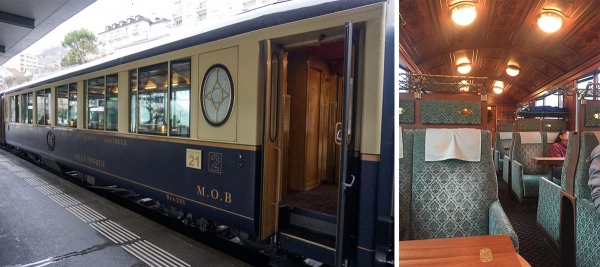
The "Belle époque" train on the Golden Pass line between Montreux and Lucerne
And yes, it's worth mentioning that all SBB travel passes, with rare exceptions, are valid on water transport, which is abundant on every Swiss lake. For instance, we've been enjoying the Geneva lake with cheese and wine on the luxurious "Belle époque" boats for a couple of years now.
Note for conspiracy theory enthusiasts (about Huawei)Of course, you need a reader to check tickets. The most universal reader is NFC in a smartphone. A couple of years ago, all conductors on the train had Samsung smartphones, and they say they lagged a lot and sometimes just froze, which is a disaster for a "conductor"—no schedule lookup, no help for those needing transfers. As a result, they switched to Huawei—everything works perfectly, doesn't lag, if you know what I mean...
And even without 5G networks...
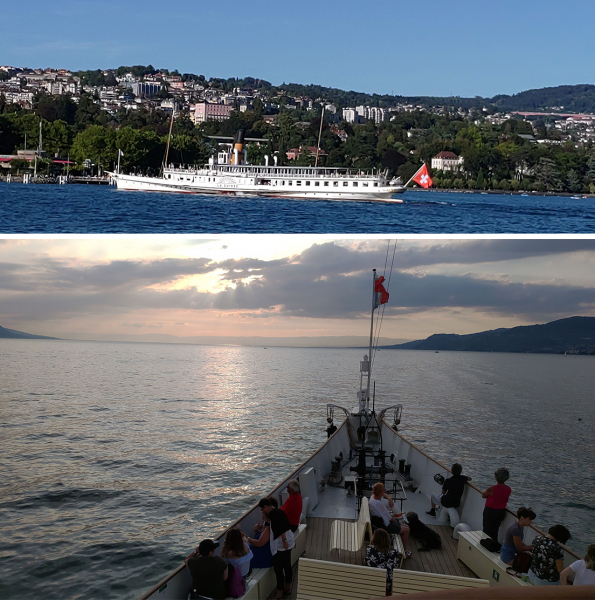
The "Belle époque" ship between Montreux and Lausanne
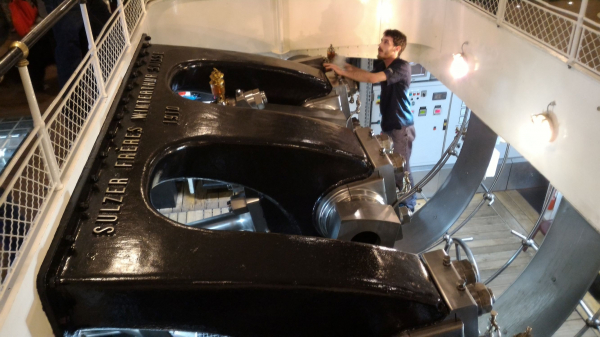
Inside some ships, steam engines have been preserved!
Although SBB is developing at an incredible pace (new infrastructure, digitalization, including displays—soon there will be hardly any old flip ones left, a new double-decker train in Valais, and so on), there remains a notable anachronism, where the ultra-modern can coexist with the ultra-old. For instance, special trains for fans from the 70s with "gravity-type toilets". Even some Zurich - Chur (IC3) trains are like that, not to mention the train to Davos, where some cars are old while others are ultra-modern.
Tips and tricks from SBB for attentive readers
- If you are traveling through Switzerland in second class and need to work, or if it’s crowded and you want to take a break, just hop into the dining car, order a beer or coffee for 6 francs, and enjoy the comfort. Unfortunately, this is only available on IC lines, and not all of them. In fact, part of this article was written in such dining cars.
- SBB has a program , where you can purchase both a ticket and a ski pass at a reduced price. Until recently, it also worked with various travel passes, such as the AG. Essentially, it provides a discount of about 10-15% off the ski pass price.
- On the GoldenPass line (MOB), there are three types of carriages: standard, panoramic, and Belle époque. It’s best to choose the last two or just Belle époque.
- Using the SBB app to buy tickets is very convenient. Sometimes, during peak hours, there’s a queue at ticket machines at the stations, and having such an app is a lifesaver. By the way, you can buy a ticket for anyone traveling with you.
Car vs Public Transport
This is a pressing question, and there’s probably no simple answer. In terms of cost, owning a car is slightly more expensive than 3,500 francs per year for AG in second class; additionally, traffic jams often occur (for example, in winter, everyone travels with skis from Valais to Lausanne and Geneva, and the delays can stretch for 20-30 km) or there can be disasters like in Zermatt in the winter of 2017/2018 (due to avalanches, traffic was completely paralyzed for a week).
With a car, you have to pay for insurance (similar to OSAGO, KASKO, TUV insurance, which includes roadside assistance, etc.), chip in for gas, and any minor breakdown turns into a quest and a budget drain.
And yes, a tip for travelers: upon entering Switzerland, it is necessary to purchase what is known as a vignette (~40 francs), which grants you the right to drive on highways for the calendar year – a sort of road tax. If you enter through such a highway, be prepared to buy the vignette right at the border point. So, if you rented a car in France and decided to pop into Geneva for a day, it’s better to find a smaller road for crossing the border.
However, I would highlight three categories where the answer is clear:
- Students and those under 25 can get two cards (demi-tariff and voie7) for around 350 francs, allowing them to easily travel between major cities.
- Single individuals living and working in major urban areas. This means they don't have to commute daily from some remote village served by a bus a couple of times in the morning and evening.
- Married people with children – at least one car is essential for the family.
On the other hand, my friend in Geneva got a car because it takes a lot of time to get around the city center by public transport, while the commute is just 15 minutes via the ring road.
Additionally, there are more and more cyclists, scooter riders, and bikers on the roads lately. This is related to the fact that scooter/motorcycle parking is usually free and there are plenty of spots scattered across the city.
Leisure and Entertainment
What to do for fun during such an unsettled yet work-free time? How is leisure time generally organized?
Cultural Program: theaters, museums, concerts, and cinema
Let's start with the main point – the dialectics of cultural life in Switzerland. On one hand, the country is located at the physical center of Europe at the crossroads from Italy to Germany and from France to Austria, meaning artists of all kinds and nationalities can visit. Moreover, the Swiss are well-off: 50-100 francs for a ticket to an event is a standard price, akin to dining out. On the other hand, the market itself is small – only about 8 million residents (~2-3 million potential customers). Therefore, there are many cultural events in general, but often it's just 1-2 concerts or shows in major cities (Geneva, Bern, Zurich, Basel) for all of Switzerland.
From this, it follows that the Swiss cherish their "local creations," such as the concert for students , held at EPFL, or various festivals (spring festival, St. Patrick's Day, etc.) involving local talent (sometimes even quite virtuoso).
Unfortunately, local cultural offerings, such as theater, are of very specific quality and type – appealing only to enthusiasts and language connoisseurs.
Sometimes there are events with a Swiss specificity, such as organ music in Lausanne Cathedral with thousands of lit candles. Events of this kind are either free or the entrance ticket costs about 10-15 francs.
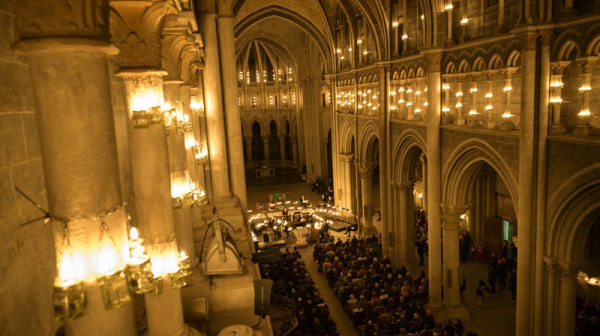
3700 candles, however.
Since Swiss culture is a culture of farmers (tillers, shepherds) and various craftsmen, the events here correspond to that. For example, the ascent and descent of livestock in the mountains, caves ouvertes (open cellar days for winemakers) or the grand celebration of winemaking – (the last one was around the early 90s, and it will be held again in July 2019).
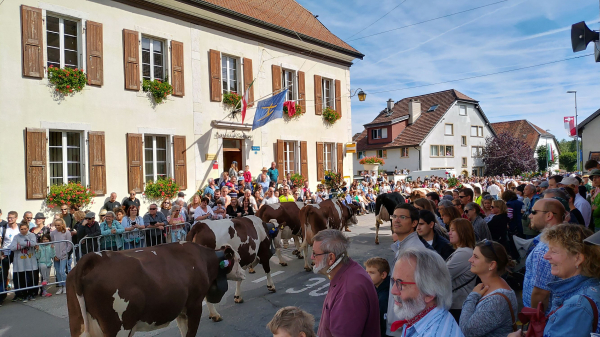
The autumn descent of cows from the mountains in the canton of Neuchâtel.
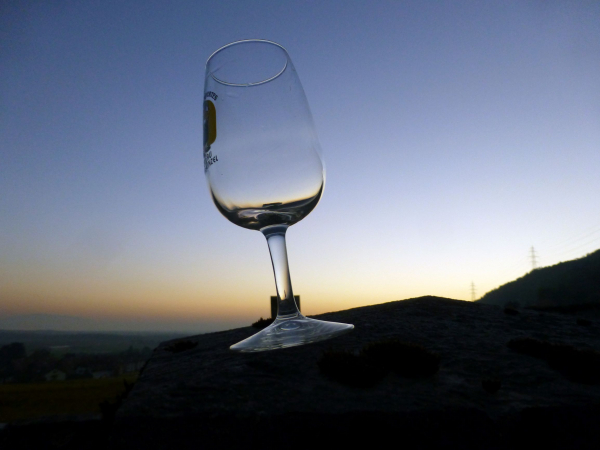
Sometimes such events end late at night.
There are museums, but the quality of them leaves much to be desired. For example, the doll museum in Basel can be leisurely visited in a couple of hours, and the ticket costs about 10 francs.
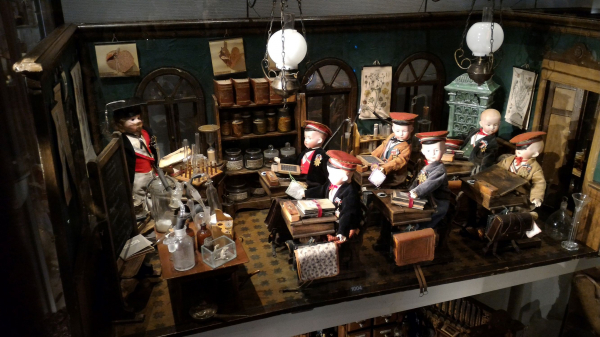
The young alchemists' class in the doll museum in Basel.
And if you feel like visiting and checking out the mineral and zoological museums, the money museum, the history museum of the canton, and also enjoying the art museum, it will cost you 35 francs. from : once a month, various museums can be visited for free (at least in Lausanne).
In addition, there is a library of the University of Lausanne in the building, so you can imagine what kind of 'Hermitage' awaits you. Therefore, if it's a museum in a castle, don’t expect tapestries from the 14th century; if it's a coin museum, you shouldn’t expect a collection from the Armory Chamber or the Diamond Fund; it’s better to anticipate the level of a local museum.
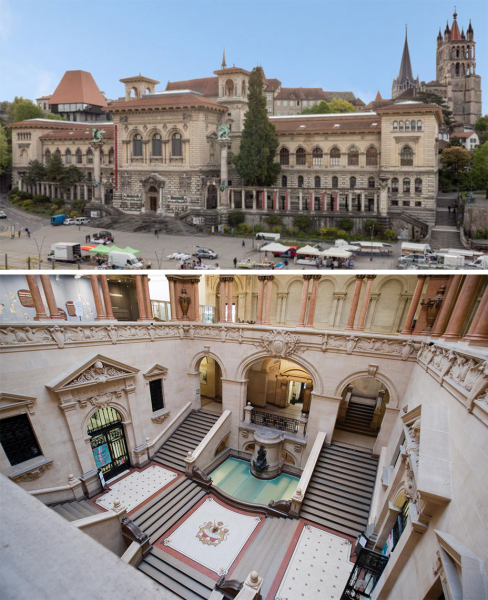
Ryumina Palace on Ripon square in Lausanne.
Yes, Lausanne is officially called the Olympic Capital; it hosts the IOC, various international federations, and so on, and consequently, there is an Olympic museum where you can see how torches have changed over the last century, for example, or reminisce about Misha '80.
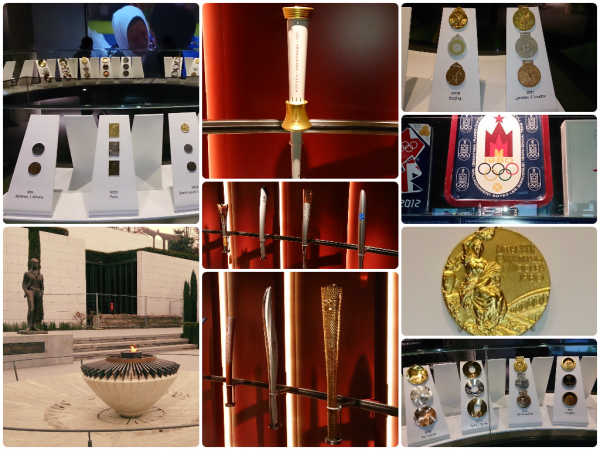
The World of the Olympics in Lausanne.
Briefly about cinema. It's nice that movies are often shown in their original voice with subtitles in one of the official languages of Switzerland.
The Russian community and events.
Interestingly, recently there has been an influx of Russian artists and Russian films (in the past, they brought over Leviathan and The Fool with Russian dubbing). If my memory serves me right, Russian ballet was definitely brought to Geneva as well.
Moreover, the extensive Russian community often organizes their own events: these include games like 'What? Where? When?', Mafia, and lectures (for example, ), as well as events like the 'Immortal Regiment', organized by volunteers with the support of the consular department, 'Total Dictation', and 'Soldatskiy Prival' by .
Additionally, there are numerous groups on Facebook and VK (sometimes with audiences of up to 10,000 people), where the principle of self-organization is in play: if someone wants to meet, connect, or organize an event—just set a date and time. Those interested will show up. In general, there's something for everyone.
Seasonal outdoor entertainment
Well, let’s now take a look at what seasonal entertainment is available in Switzerland apart from cultural events.
The beginning of the year – winter. As I mentioned earlier, Switzerland is famous for its ski resorts, which are scattered across the Alps in great numbers. There are very small ones with 20-30 km of slopes, equivalent to one or two lifts, and there are giants spanning several hundred kilometers with dozens of lifts, like the 4 Valleys (including the popular ), the Saas valley (the most famous among them is ), or some kind of .
Usually, ski resorts open in late December or early January, depending on the amount of snowfall, so almost every weekend from January to late February is dedicated to skiing, glacier hikes (snowshoeing), tubing, and other winter mountain fun.aka Villars-sur-Gryon right after a two-day snowfall
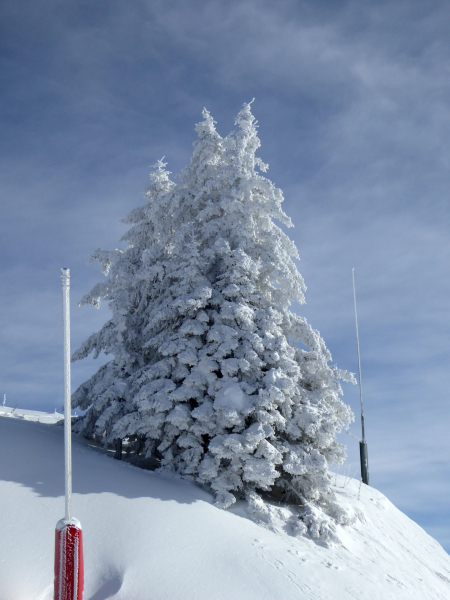
By the way, traditional cross-country skiing is still available (there's a free or almost free track in almost every mountain village), as well as ice skating (available in the mountains and in ice palaces in the cities).
By the way, traditional cross-country skiing is still an option (there is a free or almost free track in almost every mountain village), as well as ice skating (available in the mountains and in ice rinks in the cities).
The price for one day of skiing ranges from 30 (for small or hard-to-reach resorts) to nearly a hundred francs (98 to be exact, for Zermatt with the option to move to Italy). However, substantial savings can be made by purchasing passes in advance — two to three months, or even up to six months ahead. The same applies to hotels (if you plan to stay in one valley for several days), which often need to be booked several months in advance.
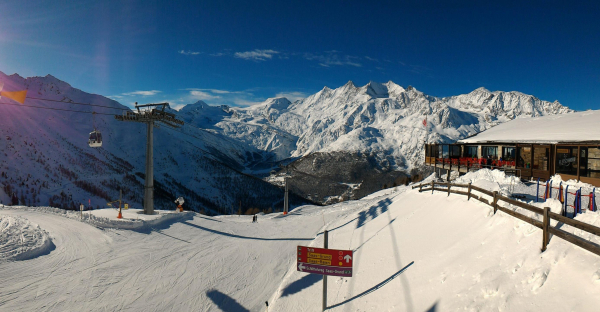
View of Saas Fee from Saas Grund
As for equipment rental, a complete set for skiing typically costs 50-70 francs a day, while cross-country skiing gear is around 20-30. This is not particularly cheap; for example, in neighboring France, a complete set of ski equipment costs about 25-30 euros (~40 francs). Therefore, a day of skiing, including transportation and meals, can cost between 100-150 francs. After experiencing it, skiers or snowboarders either rent equipment for the season (200-300 francs) or buy their own set (around 1000 francs).
Spring is a time of uncertainty. On one hand, by March, skiing in the mountains turns into water skiing; it gets too warm, and skiing isn’t quite enjoyable anymore. Drinking beer under a palm tree is enjoyable — yes.
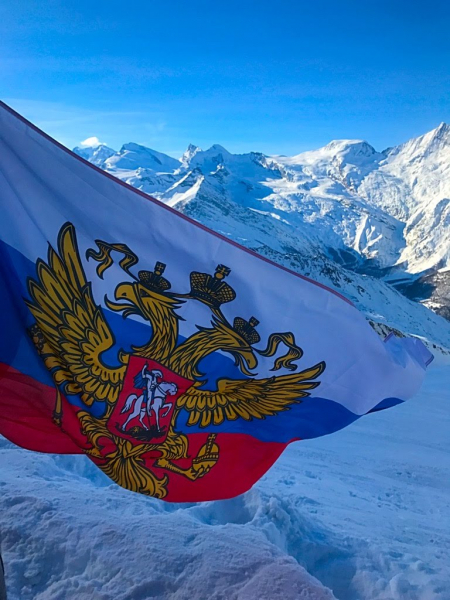
In April, there is a wonderful Easter (4 days off), which many use to travel somewhere. Often by the end of April, it becomes warm enough to hold the first marathons. from : for hiking enthusiasts, there are .
Yes, if you think that 10 or 20 km is nothing, and your soul craves a challenge, you can try . In this race, you not only have to cover a distance of 26 km but also climb to 3000 meters above sea level. In 2018, the record for women was 2 hours and 46 minutes, and for men – 2 hours and 26 minutes.
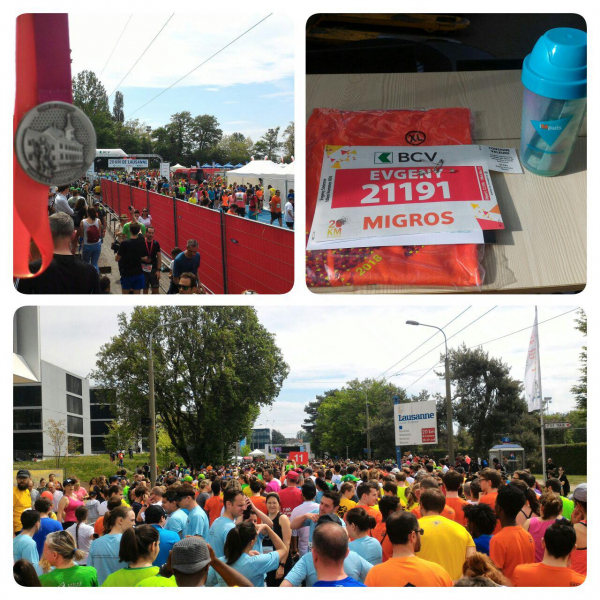
We sometimes run
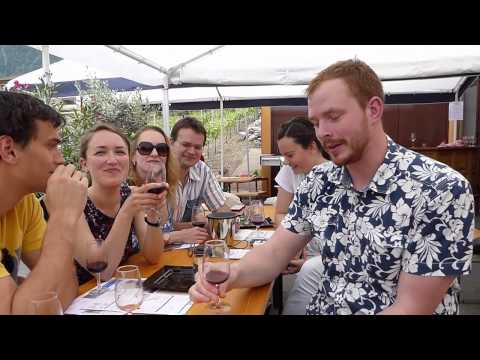
In May, the so-called caves ouvertes or open cellar days begin, when, for 10-15-20 francs for a nice glass, you can walk between wine producers (who keep it in those very "caves") and taste it. The most famous region is , which are protected by UNESCO. By the way, some wineries are located at a respectable distance, so you can take a nice stroll between them.
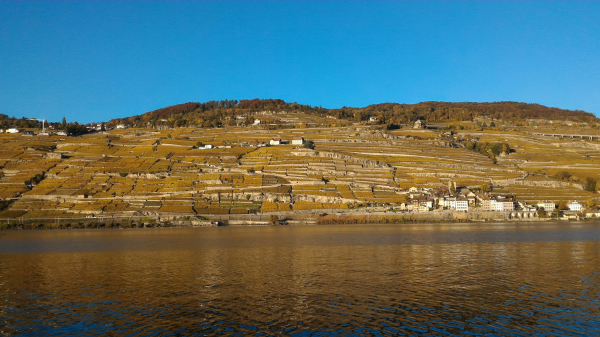
The very Lavaux vineyards
In Ticino (the only Italian-speaking canton), they say there are even . I don't know about the bike, but by the end of the day, it's hard to stand on your feet.
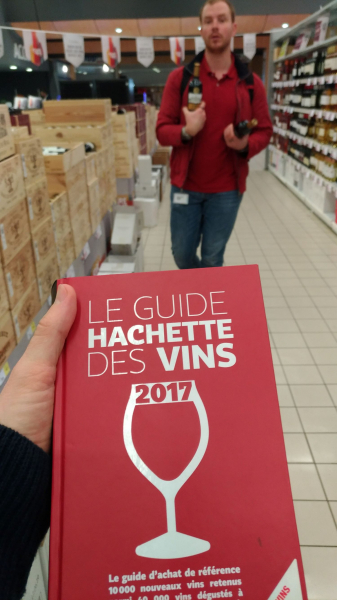
During such tastings, you can stock up on wine by placing a corresponding order right there with the winemaker.
The video is strictly 18+, and in some countries even 21+
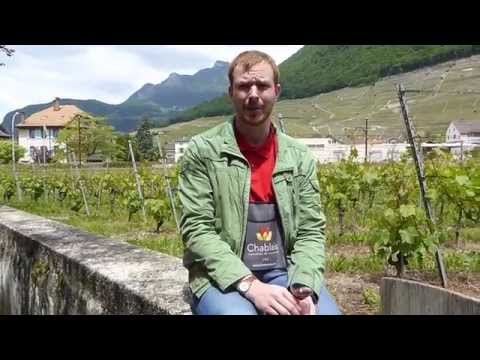
You can start going on hikes as early as May aka mountain hikes, usually not exceeding 1000-1500 meters. Any hiking route with elevation changes, approximate hiking time, difficulty, and public transport schedules can be found on a specialized site — . For example, near Montreux, there's a great , which was loved by L.N. Tolstoy, and along which daffodils bloom.
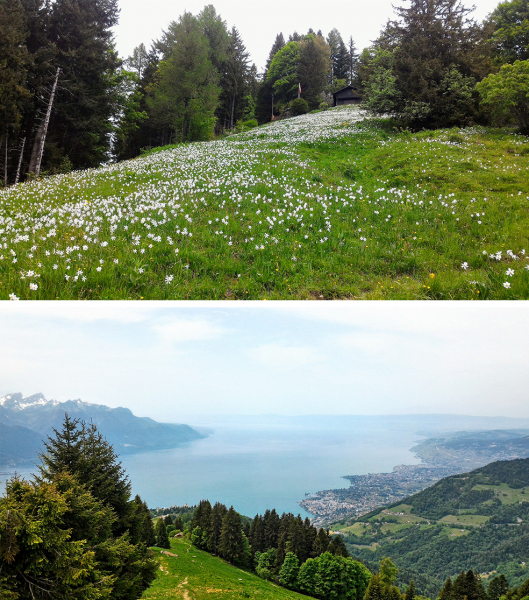
Flowering white daffodils in the mountains are a stunning sight!
Summer: hike-hike-hike and a little lake fun. All summer months feature mountain hikes of varying lengths, difficulties, and elevation changes. It’s almost like meditation: you can wander along a narrow mountain trail in complete silence. Physical exertion, oxygen deprivation, and stress combined with divine views provide a great opportunity to reset your mind.
The hike from Zermatt to the half-kilometer suspension bridge
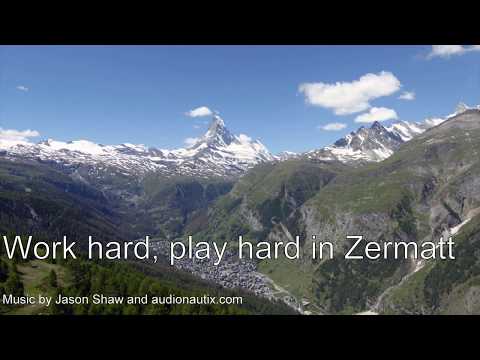
By the way, don't think that a hike is solely a rigorous ascent and descent; sometimes the route passes through lakes where you can definitely take a swim.
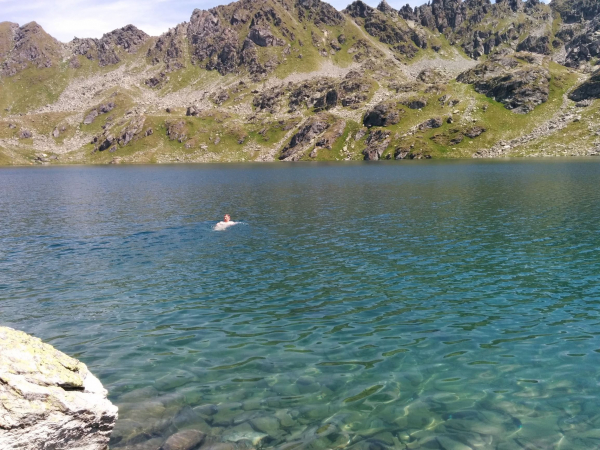
Lake. 2000 meters above sea level. Mid-July.
Since barbecues are particularly revered among Russian speakers, we organize a day of protein and fat by the lakeside about once a month. And, when someone brings a guitar, a soulful evening is unavoidable.
It's worth noting two aspects: on the one hand, the city organizes containers next to the barbecue areas, and on the other hand, the local authorities themselves set up and equip such places. For example, .
Another two strictly summer activities are rafting on a boat/mattress down 'mountain' rivers (the most famous one is from Thun to Bern) and summer leisure boats on Switzerland's many lakes.
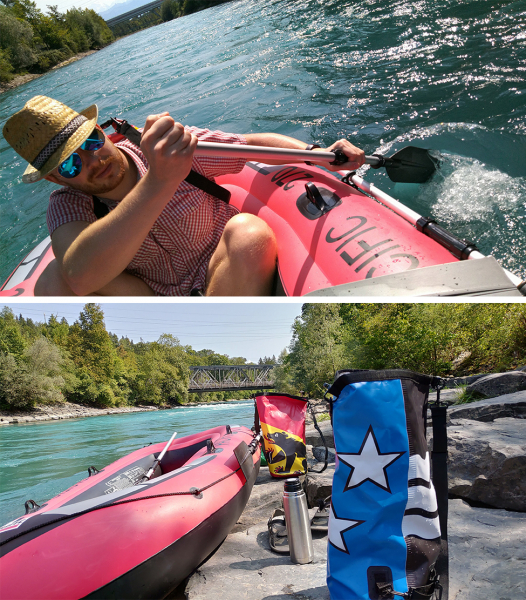
You can float down the mountain river from Thun to Bern at a speed of 10-15 km/h in about 4 hours.
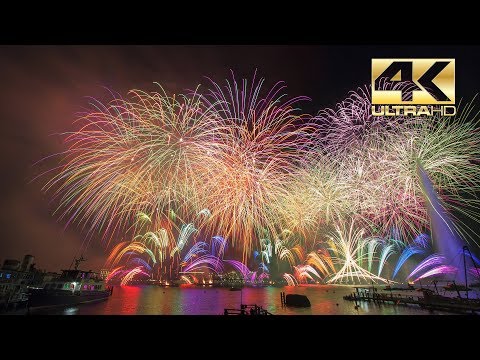
On the first of August, Switzerland celebrates the founding day of the state with numerous fireworks and bonfires around the lake. During the second weekend of August, wealthy Genevans sponsor the Grand Feu de Geneve, during which thousands of fireworks explode for an hour accompanied by music.
Full 4K video from last year
Autumn is a transition season, caught between summer and winter. The most ambiguous season in Switzerland, as one already longs for skiing after a hot summer, but the snow won’t arrive until December.
September is still a little bit like summer. You can continue with summer activities and participate in marathons. However, by mid-October, the weather begins to deteriorate to the point where planning becomes difficult. In November, the second season of open cellars begins, meaning drinking to cope with nostalgia for summer.
The food is traditional and the eateries are international.
It is also worth saying a few words about local food and cuisine. While stores are described in , here I would like to briefly describe the local cuisine.
Overall, the food is high quality and tasty, provided you don’t buy the cheapest from Dener. However, like any Russian person, I miss Russian products — buckwheat, good Hercules cereal (like monastery-style, coarse, as everything is intended for steeping in boiling water at best), cottage cheese (either DIY or a mix of cottage cheese and Serac from Migros), marshmallows, and so on.
The story of one buckwheatOnce, a Swiss man saw a Russian girl eating buckwheat and expressed his surprise, saying that they generally feed horses buckwheat, not girls. Usually green. Oh, the rickety Swiss...
Traditional dishes of Swiss (aka Alpine) cuisine are somehow based on cheese and local edible supplies (sausage, potatoes, and other vegetables) — fondue, raclette, and rösti.
Fondue is a pot of melted cheese into which everything that comes along is dipped.
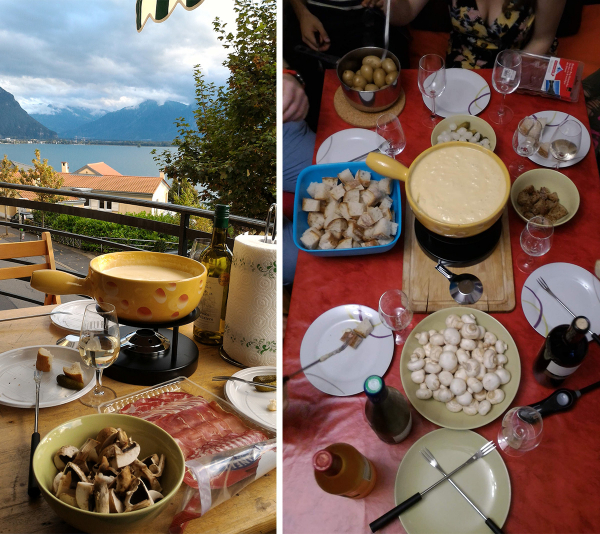
Raclette is a cheese that is melted layer by layer. Just recently .
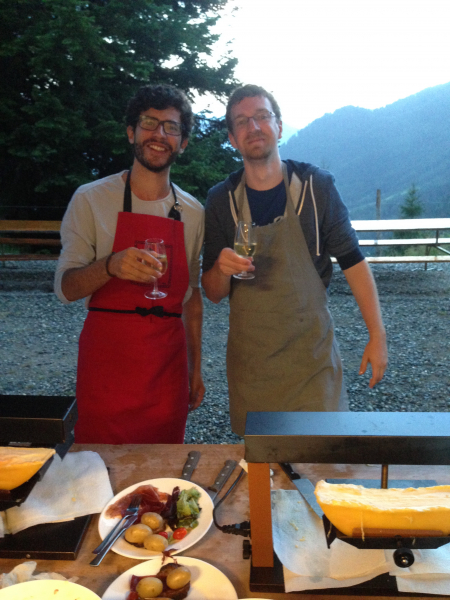
A spontaneous raclette program performed by native Swiss during the summer Olympics at our lab. August 2016.
Rösti is a dish that represents the 'rivalry' between the German and French parts of Switzerland, giving its name to the informal border between the two parts of the country — already mentioned .
Otherwise, the cuisine is not much different from its neighbors: burgers, pizza, pasta, sausages, grilled meat – a bit from all over Europe. But what's most interesting and amusing – I don’t even know why – is that Asian restaurants (Chinese, Japanese, and Thai) are extremely popular in Switzerland.
A secret list of the best restaurants in Lausanne (just in case someone might need it)Petit beef
Wok Royal
Eat me
La crêperie la chandeleur
Trois rois
Chez xu
Bleu lézard
Le cinq
Éléphant blanc
Buble tea
Café du grancy
Movenpic
Aribang
Ichi ban
Grappe d’or
Zooburger
Taco taco
Chalet suisse
Pinte bessoin
A limited contingent of 'Soviet' troops in the Swiss Confederation
And finally, it is necessary to describe the contingent that one will inevitably encounter in the mountainous meadow areas of the Swiss Confederation.
A significant plus is, of course, the cultural and national diversity: Tatars, Kazakhs, Caucasians, Ukrainians, Belarusians, and Balts – all of them have gathered here. Accordingly, celebrations of borscht, dumplings, or real pilaf, seasoned with Georgian wine – this is a multinational reality.
Let’s list the main groups (so to speak, in broad strokes) of the limited contingent of Soviet troops (95% were born in this country) in the Swiss Confederation in order of decreasing numbers. Among my friends, there are nearly all of the groups listed below.
Firstly, the overwhelming majority of the internet-active population belongs to the group of 'yajmothers'. Women who have moved to Switzerland, having a marriage with a Swiss citizen, actively discuss their 'children's' issues, share where to find a cosmetologist and makeup artist, as well as throw out provocative questions like 'What makes a Russian man better/worse than a Swiss one?'. There are even professional housewives who run entire groups on FB and VK. They live, make friends, get offended, and even fight in these groups and forums. Unfortunately, without them, these groups would not exist at all; there wouldn’t be quality content to attract new members. Nothing personal – just a statement of fact.
Secondly, students, postgraduates, and other temporarily relocated individuals in Switzerland. They come to study, sometimes stay to work in their field if they're lucky (see. about employment). Students have student parties and events where there are often internationals from all over the world. I think this is the happiest group because they have the opportunity and time not only to work but also to rest well. But that’s not certain!
Thirdly, expats who came to the country as established professionals. They often see nothing but work, busy with their careers and rarely attending social events. Unfortunately, their numbers are exceedingly small compared to the previous two groups.
Fourthly,, eternal seekers of a better life who can write a post about their job search full of grammatical errors and wait for someone to employ them. Let me remind you: the Swiss are somewhat nationalistic in this regard and don’t hand out work permits to everyone left and right.
Fifthly, new and not so new Russians, aka “oligarchs” who have a backup airfield in Switzerland.
It's hard to gather such a diverse group of individuals, but for common holidays and interesting events — Victory Day, New Year, or a barbecue by the lake — we can gather up to 50-60 people.
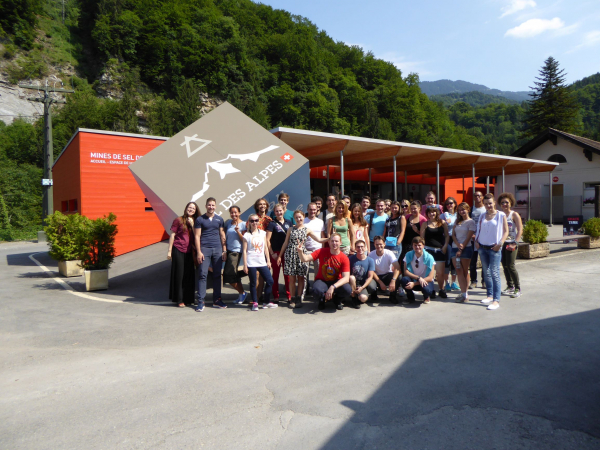
Visiting the salt mines in the town of Bex.
The continuation regarding the financial aspect will follow…
P.S.: I express my immense gratitude and appreciation to Anna, Albert (), Yura, and Sasha for the proofreading, valuable remarks, and discussions.
P.P.S.: A moment of advertising. Due to the latest trends in 'fashion', I would like to mention that MSU is opening a permanent campus this year (it has already been teaching for 2 years!) in collaboration with Beijing Polytechnic in Shenzhen. There is an opportunity to learn Chinese, as well as to obtain two diplomas right away (IT specialties from the VMC of MSU are available). More information about the university, specialties, and opportunities for students can be found .
A video for a visual representation of the ongoing chaos:
Source: habr.com
