A selection of 143 translations of Paul Graham's essays (out of 184)
Paul Graham is one of the most respected people among IT people, founders and investors. He is a first-class programmer (he wrote two programming languages), a hacker, the creator of the daring accelerator Y Combinator, and a philosopher. With his thoughts and mind, Paul Graham breaks into a wide range of areas: from predicting the development of programming languages for a hundred years in advance to human qualities and ways to fix / hack the economy. And he also realizes the importance of formulating his thoughts into text and sharing them with others.
When I started reading Paul Graham in 2015, my outlook on life changed. I consider his essays to be one of the most important texts that should be read as early as possible in order to form a way of thinking, a way of reasoning and presenting thoughts.
I was inspired to make the first selection of translations of Paul Graham's essays by colleagues from tceh.com (60 translations out of 176). The second is Edison Software (125 translations). The third is the PhilTech accelerator (134 translations and a few more in progress). Then there was a period (2017, 2018 and 2019) when Paul Graham didn’t write essays (but worked with children), but only tweeted a little and gave one video interview for a startup school. But in late 2019 and early 2020, he again began to publish deep texts that are interesting to think about. I bring to your attention links to new translations (upd from the last collection) and a complete list of all essays.
() () ()
() () () () () () ()
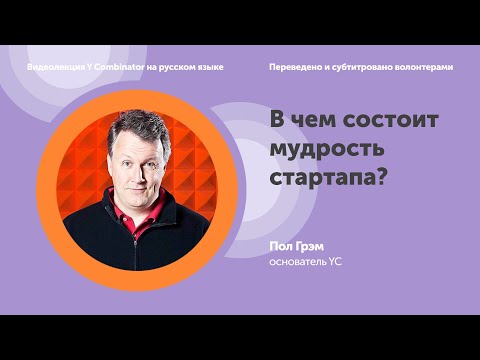
Bonus - video from startup school 2018 with Russian subtitles
There are many texts, Paul Graham himself suggests starting with:
()
(, , )
(, )
()
()
My personal top:
()
()
()
()
()
(, , with questions from the audience)
Complete list of essays in chronological order
(no translation) (no translation) (no translation) (no translation) () () () () (no translation) (no translation) () () (, ) (, ) () () () () () () () () () () () () () () () (, ) ( "". , , .) () () (, , ) (, ) (How to find a startup idea. Part part part part )) () (, ) () () () () () () () () () () (no translation) () (94%, ) () () (no translation) (no translation) () () () () (UPD 7 September. , on Giktimes) () () () () (no translation) () () () (no translation) () () (no translation) (no translation) (no translation) (no translation) () () () (25% ) () () () (no translation) () () () () () () () () () () () () () () () () () () () () (no translation) () () (, ) () (no translation) (no translation) () () () () (no translation) () () (no translation) () () (no translation) () () () () (no translation) (no translation) (no translation) () () () () () (no translation) () (no translation) () () (, , ) () (no translation) () () () () (no translation) () () () (no translation) (no translation) (no translation) () () () (, ) () () (.) () (no translation) (transfer , , ) (no translation) (, ) (, ) (no translation) () () (Revenge of the nerds, , , ) () () () (no translation) () ( , .) (no translation) () (to be popular, , ) (no translation) () ()
If you want to help with the translation, write to me in a private message or by email to magisterludi2016@yandex.ru
P.S.
Thanks to Paul Graham, I discovered Richard Hamming "and , as well as Robert Pirsig's "Zen and the Art of Motorcycle Maintenance" and Godfrey Hardy's "Apology of Mathematics".