

Human beings are always driven by a thirst for the unknown; they even have a special neurotransmitter—dopamine, which serves as a chemical motivator for acquiring information. The brain constantly requires a flow of new data, and even if this data is not essential for survival, the mechanism exists, and it would be a shame not to utilize it.
In the article below, I would like to summarize scientifically fascinating ways to travel to distant stars and galaxies that are currently available within the framework of scientific theories and hypotheses.
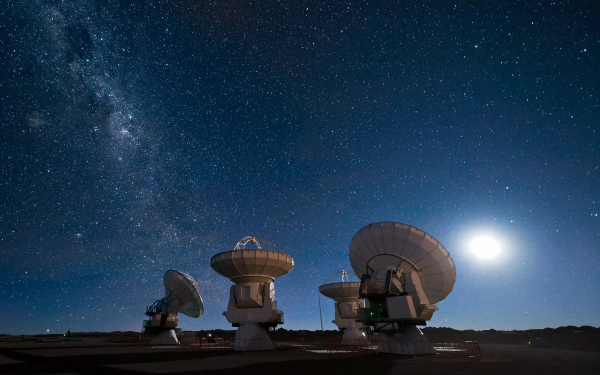
In the face of the cosmos, most human affairs appear trivial, even insignificant. Carl Sagan, 1980.
Every person at least once in their life has looked up on a warm summer evening and observed the stars. The depth of the cosmos attracts and inspires awe, sometimes temporarily, but for some, it lasts a lifetime.
What is out there? Is there life? And what wonders may exist on those countless worlds?
Certainly, the only way to go there and find out is to move through space-time to those distant stars, planets, nebulae, and indeed—GALAXIES.
But alas—time is not on our side. The farthest our transportation technologies have reached is just beyond the bounds of the solar system, thanks to the Voyager project’s automatic probes, including which was launched in 1977!
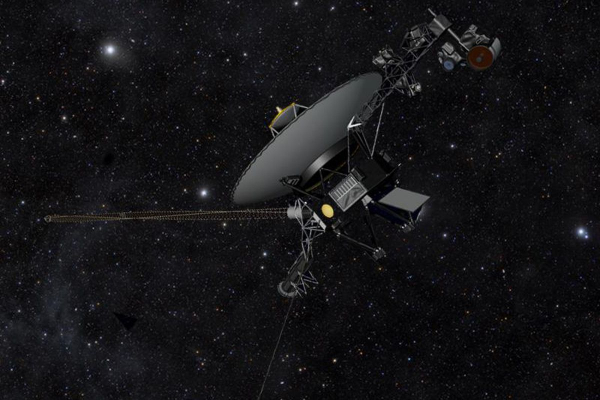
But to seriously consider other worlds, we need speeds at least equal to the speed of light, and ideally—superluminal.
What holds us back?
It's quite simple—all the fundamental laws of physics.
The Law of Causality
The essence is that an effect cannot precede its cause. No one has ever observed, for example, a duck falling dead before the hunter fired. At speeds exceeding 'c', the sequence of events becomes reversed, and the time tape rewinds. This can easily be understood from the following simple reasoning.
Let's assume we are on a spaceship moving faster than light. We would gradually catch up with the light emitted by a source at increasingly earlier moments in time. First, we would catch the photons emitted, say, yesterday, then those emitted the day before yesterday, then a week, a month, a year ago, and so on. If the light source were a mirror reflecting life, we would first see events from yesterday, then from the day before, and so forth. We could see, for example, an old man gradually turning into a middle-aged man, then into a young person, into a teenager, into a child… In other words, time would reverse, and we would be moving from the present into the past. Causes and effects would switch places.
Albert's Limitations
In addition to the problem of causality, nature imposed even stricter conditions: it is impossible to move not only at superluminal speeds but also at the speed of light — one can only approach it. The theory of relativity states that with an increase in speed three circumstances arise: the mass of the moving object increases, its size decreases in the direction of motion, and time on this object slows down from the perspective of an external "stationary" observer. At ordinary speeds, these changes are negligible, but as one approaches the speed of light, they become increasingly significant, and ultimately — at a speed equal to C — the mass becomes infinitely large, the object completely loses size in the direction of motion, and time on it stops. Therefore, no material body can reach the speed of light. Only light itself has that speed! (As well as the "omnipresent" particle — the neutrino, which, like the photon, cannot move at a speed less than C.
In general, besides what is described above, there are many problems, for example, at near-light speed, when an object with a mass of 1 kg collides with a grain of sand, the amount of energy released is enough to turn 10,000 tons of steel into steam in 1 second. If we compare this with the actual mass of a spaceship, the power of the explosion would equal or exceed the power of the nuclear processes occurring on the Sun.
But a wise person won't climb a mountain; they will go around it because laws are meant to be broken... just kidding, you can't break the laws, but science fiction (and pseudo-science) offers us ways to travel that allow us to circumvent the principles of physics.
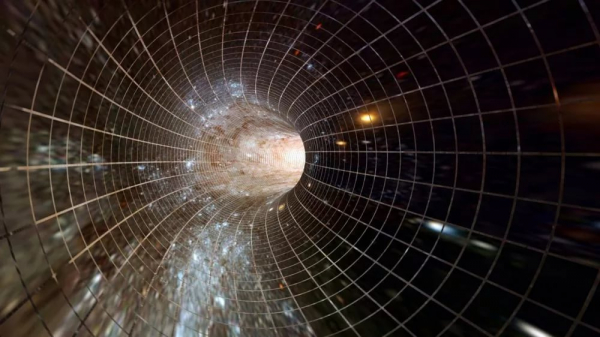
Methods of Faster-than-light Travel in Spacetime
Einstein-Rosen Bridges
, also known as wormholes, are perhaps the most famous means of interstellar travel — and likely do exist. Albert Einstein's general theory of relativity predicted the existence of wormholes, although they have yet to be discovered.
In simple terms, an Einstein-Rosen bridge is a tunnel in spacetime created by the warping of space-time. Massive objects, such as stars or black holes, bend spacetime like a bowling ball distorting a trampoline. A sufficiently massive object can bend spacetime enough to create a connection between two points that are normally far apart.
Imagine a sheet of paper with two points on it. You need to travel from one point to the other, and if you strictly move along the surface of the paper, it will take some time. However, if you fold the sheet so that the points coincide and poke it with a pencil, using the pencil as a tunnel (or bridge), you significantly shorten the distance between the points.
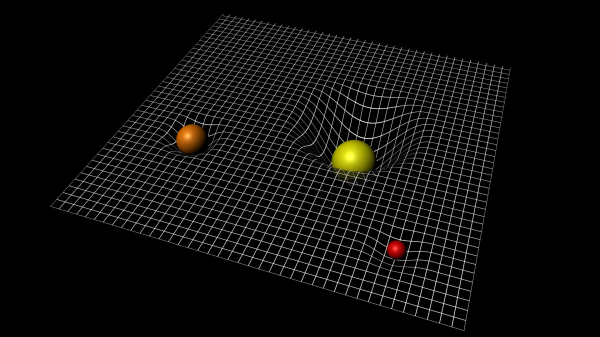
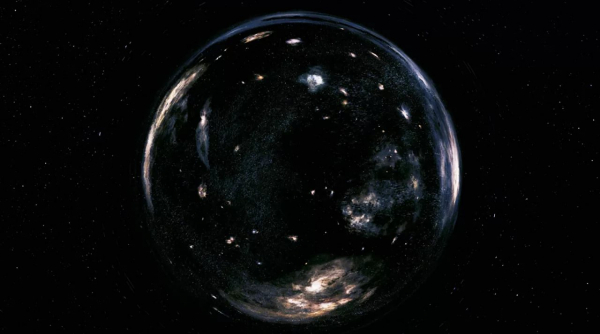
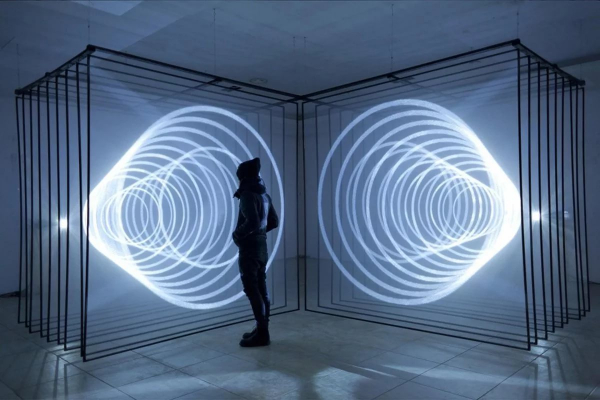
The entrance to a wormhole is often depicted as an entrance to a tunnel, which makes sense given the name. But this is a misleading representation. In the film "Interstellar," this moment is depicted correctly — from a three-dimensional observer's perspective, a wormhole should appear as a sphere.
Wormholes are an enticing method for interstellar travel because they do not require you to exceed the speed of light. Physics tells us that nothing can move faster than light. But with wormholes, it is possible to traverse vast interstellar distances without violating this law.
Warp Drive
Warp, an FTL technology, currently has to be realized. Warp can confidently be called the most realistic way to travel faster than light of all known methods. Although it currently exists only in the form of equations on paper, it concerns .
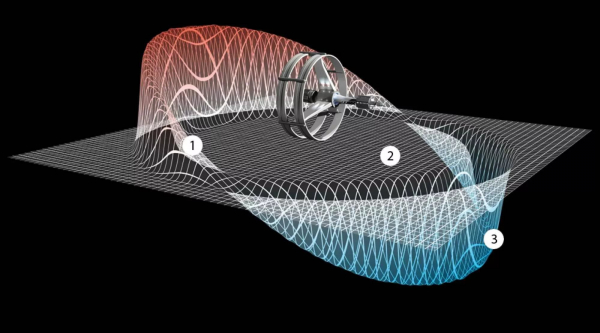
The principle of operation stems from how to bypass the Special Theory of Relativity, which postulates that nothing in space can move faster than the speed of light. The "pathway" is that this postulate does not apply to space itself, which can compress and expand under various influences, such as gravitational fields. The Warp drive compresses space in front of the ship and expands it behind the ship, moving a bubble of normal space forward along with the ship.
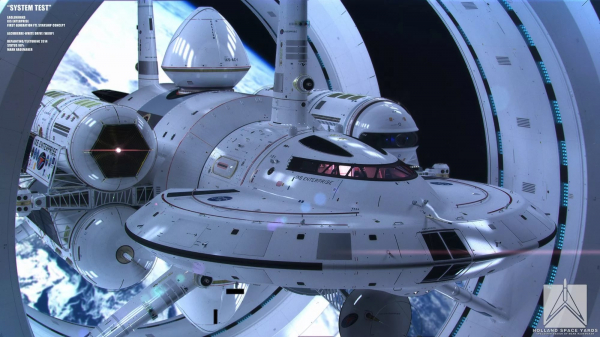
In the Star Trek universe, such drives achieve fairly modest speeds by science fiction standards—the journeys of the Enterprises were limited to a single sector of the galaxy near the Solar System (~1500 light years), taking years and leaving behind numerous white spots and unexplored areas.
Hyperspace
Recently, detailed experimental from the WMAP spacecraft about the temperature irregularities of the cosmic microwave background, which is one of the main observational objects in the study of our universe. An analysis of this data revealed a significant anomaly in the angular distribution of fluctuations in the cosmic microwave background at low harmonics. One explanation for this phenomenon is the theory that the topology of our universe differs from a three-dimensional plane or sphere. When considering the topology of our universe as a dodecahedron, theoretical calculations closely align with the experimental data.
"A flat topologically complex three-dimensional universe can only be constructed based on cubes, parallelepipeds, and hexagonal prisms. In the case of curved space, such properties belong to a wider class of figures. The angular spectra obtained in the WMAP experiment best align with the model of the universe shaped like a dodecahedron." Mikhail Prokhorov, Doctor of Physical and Mathematical Sciences, Senior Researcher in the Department of Relativistic Astrophysics at the Sternberg State Astronomical Institute.
Thus, the possibility of the existence of a hyperspace of the universe, in which our limited universe is present, is indicated by theories based on practical data about cosmic microwave background radiation. However, even if hyperspace exists, some special engine is required to move within that space.
Imagine that there is a valley in front of you, and you need to reach a point beyond the valley. Since you can only move across a flat surface (in 2-dimensional space), you will either have to circumvent the obstacle or descend into the valley, cross it, and then ascend again. But if you have an airplane that can move in 3-dimensional space, you will be able to reach your destination in a straight line.
Essentially, hyperspace has a different metric than ordinary 3-dimensional space, and movement within it resembles traveling through a wormhole, but tunnels can connect not just one, but multiple points leading to common 3-dimensional space. Moreover, the very act of moving in hyperspace will visually differ from moving through a wormhole (contrary to popular illustrations), as the three-dimensional structure of the universe will 'envelop' the traveler within the hyperspatial pathway. I think that if such travel is possible, it would be truly mesmerizing — visible stars, nebulae, or entire galactic clusters slowly spread out and stretch, changing color palettes as they shift into the cosmological redshift (?).
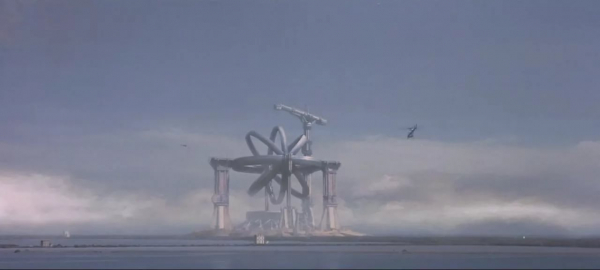
I believe the idea of hyperspace travel was successfully adapted in the 1997 film 'Contact' (based on Carl Sagan's novel, the film won a Hugo Award and ranked 2nd on NASA's list of the most scientifically accurate science fiction films). In it, a machine, whose blueprints were received through a signal from an extraterrestrial civilization captured by the film's protagonist, manipulated exotic energy and ultimately 'transported' a cabin with a person through the inner space of a sphere. Apparently, the cabin fell into hyperspace, into a 'tunnel' that was already created. As it turned out, there are countless such tunnels throughout the galaxy, all created by a more ancient civilization. This information comes from a representative of the race whose signal was captured by the protagonist. That's the deal, folks. Personally, this film is one of my favorites. But as practice shows, it's not to everyone's taste.
Non-material teleportation
We know that the most common explanation for teleportation is the instantaneous movement of a physical object in space over an arbitrary distance.
In this context, wormholes can also be used, but we've already talked about them, so let's discuss a fundamentally different approach.
We are interested in the teleportation of information about a substance, down to a quantum snapshot of its state.
The process is roughly as follows: Your body is placed in a machine at point A, which scans you down to subatomic particles and their quantum state, and then digitizes your copy. After this, the quantum state is transmitted as a single stream through standard communication channels. But there’s a problem – a ban on superluminal data transmission, according to the theory of relativity. On the other hand, if science proves the existence of hypothetical particles with negative or imaginary rest mass, such as tachyons, information about the object could be transmitted at superluminal speeds. Perhaps even using gravitational waves (?). After that, at point B, the person is reconstructed at the quantum level, and voilà – they are already at their destination. I won't delve into discussions about the 'soul' being destroyed in machine A, as I am an atheist and do not take that into account (sorry).
This method is advantageous because quantum teleportation of a material object does not require the distortion of space-time or the expenditure of immense amounts of energy. The problem, of course, lies in the initial delivery of the apparatus that will reproduce the object at point B. However, it can be delivered by longer means that do not limit themselves to one or several human lives.
Mass Nullification
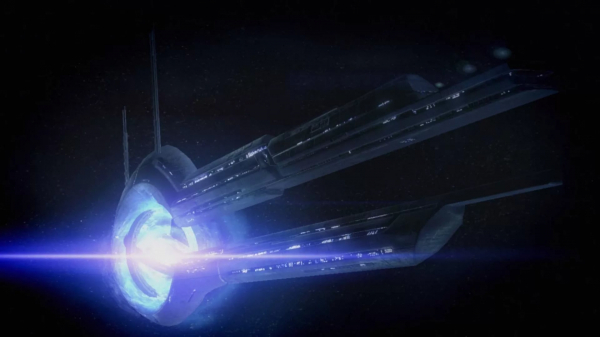
All the spaceships in the Mass Effect universe utilize the Zero Element in one way or another, which generates the designated Mass Effect, either by reducing the mass of objects around it or increasing it. This way, it’s possible to bend the Theory of Relativity and exceed the speed of light.
Regular travel between planets and nearby stars is facilitated by FTL engines, which can only reduce the mass of the ship. For interstellar travel over long distances, Mass Relays are used — massive stations constructed around dense cores made of element zero. Relays are typically linked to one or several other relays and can create corridors where mass effectively disappears, transporting the ship thousands of light years almost instantly.
Closed Timelike Curves
The last form of faster-than-light travel we will consider initially seems the least scientific.
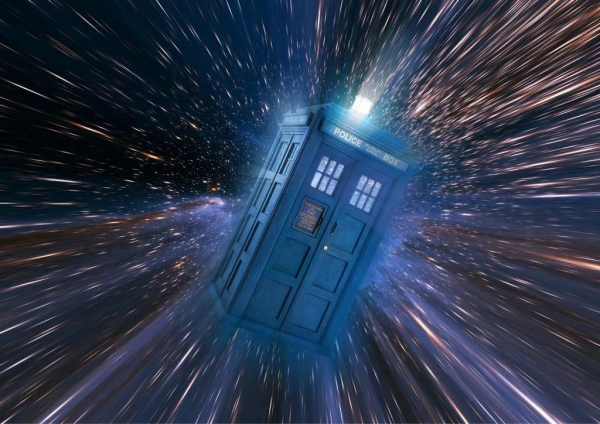
For 55 years, the series "Doctor Who" has narrated the adventures through time and space of the Doctor and his/her human companions. What means of transportation did they use? A large blue box known as the TARDIS (an acronym for Time and Relative Dimension in Space), which can take them anywhere and at any time they desire.
Built (or, rather, grown) by the ancient race of the "Time Lords," TARDISes are more magical than the technology of Mass Effect. As the Doctor himself explained, his transport is a "wobbly, timey-wimey thing." It seems that when moving in the TARDIS, there is some kind of delay — meaning it is closer to a hyperspace engine than to a teleporter. But essentially, the TARDIS disappears here, flies through a "time vortex," and appears there. That’s all you really need to know.
Or not? It turns out that the TARDIS has even more theoretical foundation than hyperspace.
In 2013, physicists Benjamin K. Tippett and David Tsang published a paper proposing the theoretical foundations for creating a real time machine, i.e., a way to travel to one's past. The article was titled «Traversable Achronal Retrograde Domains In Spacetime» (check out the acronym).
Tippett and Tsang describe a time traveler located in a bubble of spacetime that enters a (essentially the same as an Einstein-Rosen bridge). Within this curve, the traveler can go anywhere on their own timeline, while inside the bubble, time seems to flow normally.
The two physicists even suggested that timelike curves could be split and joined together, opening up the possibility to travel not only on one's own timeline but anywhere through time and space.
Well, that seems to be all I could offer you.
Surely I've missed something or even exaggerated into the realm of fantasy. So I'm looking forward to your versions in the comments.
Source: habr.com
