

Our company participates in large and small construction projects. We have already written about our construction projects on Habr How construction was done in the past

If we reduce the history of construction technology development to three stages in the spirit of 'came, saw, conquered', it results in: humanity discovered that metal can be made from ore, invented reinforced concrete, and built the bulldozer. The invention of most mechanisms that significantly accelerated construction occurred in the 20th century. Before that, manual labor remained the mainstay of construction. Wooden rollers, levers, and lifting mechanisms assisted workers. Typically, construction machinery was made on-site, and after the building was completed, it was dismantled.
Since all tools were basic and did not significantly affect productivity, construction could only be accelerated by additional labor, which was impossible without colossal budgets. Such funds were primarily allocated for the construction of temples and cathedrals. Here, as many people as necessary could be recruited to build in the shortest time. For instance, the Hagia Sophia in Constantinople (537 AD) was built in just 6 years, which was incredibly fast for a temple standing 55.6 m tall at the time. But for all 6 years, 10,000 workers toiled on it. That’s the price of a grand structure, which became a symbol of Istanbul. For over 1000 years, this cathedral remained the largest in the Christian world.
Not only labor was expensive, but also construction materials. Historians note that building religious structures was extremely costly. For example, American researcher Henry Kraus compared the building mortar to gold and used the metaphor in the title of his book Gold was the mortar: The economics of cathedral building. This book presents his research on the financing of the construction of some European cathedrals during the medieval period.
Not only labor was expensive, but also building materials. Historians note that constructing religious structures was very costly. For instance, American researcher Henry Kraus compared mortar to gold and used this metaphor as the title of his book, Gold was the mortar: The economics of cathedral building. This book presents his research on the financing of several European cathedrals during the medieval period.
Every country has its own 'golden' construction project – in Spain (the famous Sagrada Familia), in Cambodia (Angkor Wat), in China, and of course, in Russia. Such projects deserve to be added to the list of wonders of the world, and regardless of how long their construction takes, it ultimately comes to completion (for almost all of them).
So how long can the construction of a monumental project, worthy of becoming a masterpiece of world architecture, take?
The Great Wall of China – 2000 years
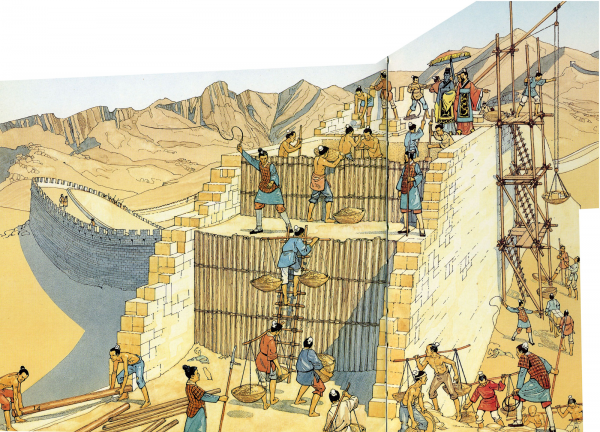
One of the most famous structures in the world, the construction of which took more than 2000 years. The wall crosses deserts and rivers, mountains and plains. Construction began in the 3rd century BC and was completed in the mid-17th century AD. At its peak, up to 300,000 people worked on the wall simultaneously, with a total of around 2 million people involved over the years.
The amount of raw materials used is measured in millions of tons. During construction, workers primarily sourced materials on-site. The walls were made of sand, and to ensure stability, the space between the two walls was filled with reeds and willow. In mountainous regions, the wall was constructed from unprocessed stone and various types of rock. Centuries passed, technologies improved, and new materials emerged. The last sections of the wall, built by the Ming dynasty, were constructed from brick and mortar – just like we do today.
Interesting fact: some believe that the wall can be seen from space, but this is a rumor that has been debunked multiple times.
Sagrada Familia – over 137 years
I'm sure this is the first structure that came to mind when you read the article's title. The project by Antoni Gaudí is still under construction. The first stone of the basilica was laid in 1882. At the time of Gaudí's death in 1926, the basilica was only a quarter complete, and it would be symbolic if construction were to finish on the 100th anniversary of his death.
The Sagrada Familia has , where you can find an optimistic forecast that the basilica may be completed in the 21st century. It is estimated that the structure is currently 70% complete and has reached a height of 90.1 meters (with a planned height of 172.5 m).
By the way, on this website, you can connect to a live camera at any time and check the progress of the construction or restoration yourself.
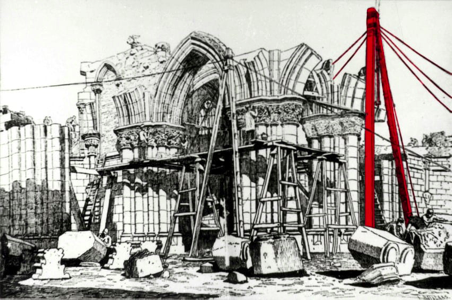
This archival drawing from 1892 depicts several hoists used during the construction of the Saint Family Temple crypt. This wooden structure represents a system of pulleys with ropes – such a type of crane was first used by the Romans and could lift up to 2.5 tons.
Interesting factThe authorities in Barcelona reported that there are no records of any permits being issued for the construction that was requested in 1885. And now, 137 years after the start of construction, the city has granted the builders a license valid until 2026. Let's keep our fingers crossed: they should be able to do it!
Angkor Wat (Cambodia) – 37 years
Angkor Wat was built between 1113 and 1150 AD. It is said that this temple was constructed not in 4 decades, but in 4 centuries, which is incorrect. The dating confusion arose because Angkor Wat was at the heart of the Khmer Empire – the city of Angkor, and some consider the years of the city's construction (which is indeed 400 years) as the years of the temple's construction.
The building is a three-tiered pyramid oriented to the west. The construction of the temple progressed from the center to the periphery. From any viewpoint, only three of the five towers are visible, making Angkor Wat a marvel of architecture even by modern standards.
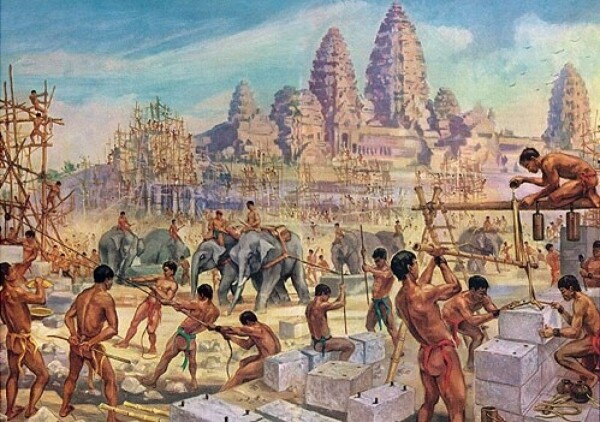
5 million tons of sandstone were transported by the workers from the nearest quarry 50 km away to construct the temple. About 300,000 people and 6,000 elephants participated in creating this architectural wonder, which are depicted in the illustration.
The Khmer structure represents a transitional phase in construction technique: bricks and stones reproduce the shapes and techniques of wooden architecture. For example, the carvings on the walls imitate bamboo screens.
Interesting factThe temple complex at Angkor Wat is so famous that Cambodians have even placed its image on their flag.
Cologne Cathedral – 632 years
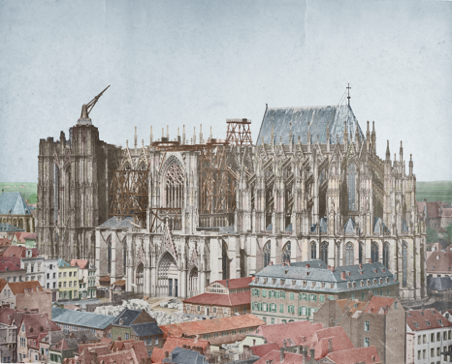
Six centuries is a prime example of the German approach: if it's worth doing, it's worth doing well, even if it takes a long time. When the cathedral, which began construction in 1248, was completed at the end of the 19th century, it stood as the tallest building in the world (157 m). Later, this record was surpassed by the cathedral in Ulm (161 m) and skyscrapers in the United States. It's important to clarify that the construction of Cologne Cathedral was not continuous over the entire 632 years: in 1437, work halted due to a lack of funds and technology. By that time, the walls, choir, south tower, and the foundation of the nave were completed, but the roof was poorly constructed and did not protect the interior of the church from the weather. To finish the cathedral in the 19th century, over 20 years were spent restoring the parts that had already been built previously.
Want to know how much the construction cost? In today's money, a total of over 1 billion euros was spent. More than 500 people worked in the cathedral workshop, utilizing the most modern construction technologies, such as a crawler lift system and steam engines.
Interesting fact: there are 11 bells installed in the cathedral, one of which () is the largest functioning bell in the world. It was cast in 1923 and weighs 24 tons.
Milan Cathedral – 579 years
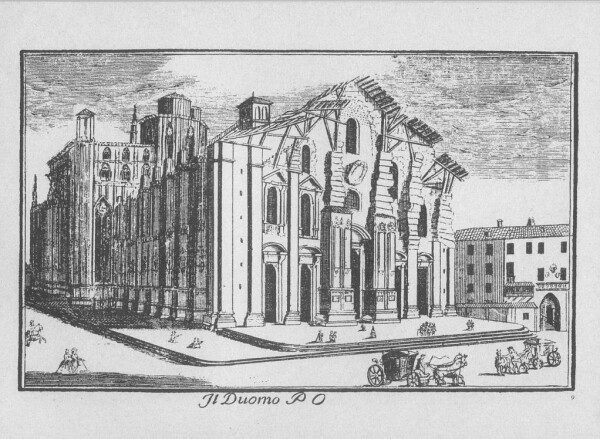
Who could compete with the Germans in the construction of tall buildings? Of course, the Italians. The largest cathedral by area in Europe and the fifth largest in the world, Milan Cathedral was founded in the same year that the great sculptor and artist of the Renaissance, Donatello (1386), was born and completed when The Beatles released ‘Rubber Soul’ (1965). The construction took an excessively long time even by Italian standards – 579 years. This led to the expression fabbrica del duomo (the construction of the cathedral) being used in the language. It signifies that something has taken an unusually long time to accomplish.
Seventy-eight architects from Europe participated in the construction. The building was originally intended to be made of terracotta bricks, but then condole marble from Lake Maggiore was used. This resulted in a non-uniform facade with pink, white, and light gray sections. Canals were specially dug in the city to transport the marble to the construction site.
The completion of the cathedral was aided by none other than Napoleon Bonaparte. In the early 1800s, after he conquered the city, he wished to be crowned specifically in the Duomo, which meant that construction had to be urgently finished. Before the coronation, the façade was completed urgently at his personal order.
By the way, around the same time that the Italians completed the Duomo di Milano, parts of the building that were constructed first required restoration.
A curious fact: construction did not end even after Napoleon's coronation. Work on beautifying the temple continued until the second half of the 19th century: new stained glass, sculptures, and other decorative elements were added. Only in 1965 was the construction finally completed.
Notre-Dame de Paris – 182 years
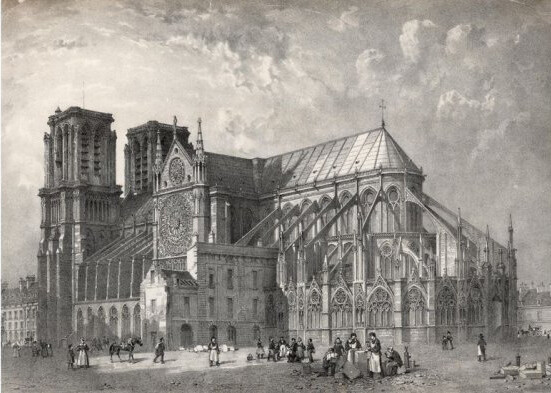
The first stone of the building was laid in 1163. The towers were completed in 1245, and the entire cathedral was finished in 1345. The differing styles (Gothic and Romanesque) and varying heights of the towers and the cathedral's western facade indicate that different architects were involved in the construction.
Notre-Dame de Paris became one of the first buildings in the world to utilize external supporting structures of an arched form – flying buttresses. They were not in the original design. However, the thin walls, built to a certain height, began to crack, which is why external supports were erected around the entire cathedral.
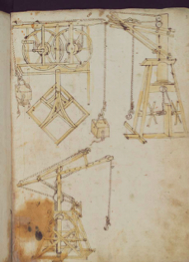
Notre-Dame de Paris was the first Gothic cathedral. This architectural style embodies an infinite aspiration towards the heavens. Until then, no one imagined that a church could be of such size, and the bell towers so high (69 m). Significant attention was paid to improving lifting mechanisms to construct this grand structure.
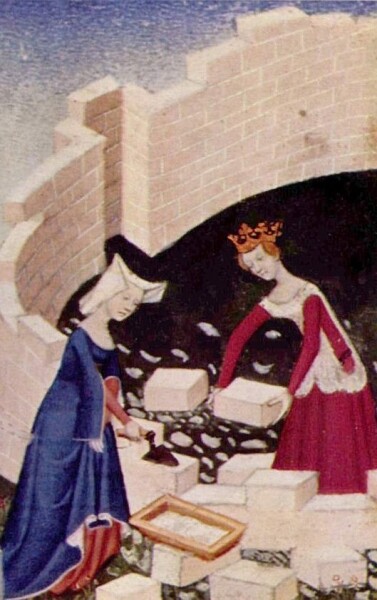
A curious fact: Tax reports from Paris for the years 1296 and 1313 mention the existence of two female stonemasons, a tiler, and a plasterer. Therefore, it is quite possible that women builders participated in the construction of the cathedral.
On April 15, 2019, the whole world watched as Notre-Dame de Paris burned. Due to the intense fire, the spire, roof, and clock were lost. The ceilings from the 19th and 13th centuries were damaged. Restoration work is currently underway, which experts believe will take at least 5 years.
* * *
Unlike in the past, the economic resources of the region no longer significantly affect the speed of construction: long-term projects can pop up in both Vladivostok and Moscow. The reasons are as old as time – changes in leadership, currency fluctuations, dishonesty from the managing company, environmental obstacles discovered at the construction site, etc. It is not difficult to determine who is at fault for a construction halt in each specific case, but what to do with the project afterward is often completely unclear. In reality, there aren't that many options: long-term projects can be left 'as is' and transformed into creative clusters, observation decks, or sites for base jumping. One might try to finish the construction at all costs. Or, one could demolish everything and start a new construction project in its place. Modern builders should analyze the mistakes of their predecessors more frequently to avoid repeating them in their work. And if the construction is still dragging on, let’s hope that something outstanding is being built.
Which of the modern buildings do you consider to be a work of art? How long did they take to build?
Source: habr.com
