

Following the detailed description of the architecture of the upcoming Intel 11th generation (Gen11) integrated graphics, new information about its performance has appeared online. A well-known leak source, known as Tum Apisak, has discovered benchmark results for Intel's new generation integrated graphics in the database of the game Ashes of the Singularity.
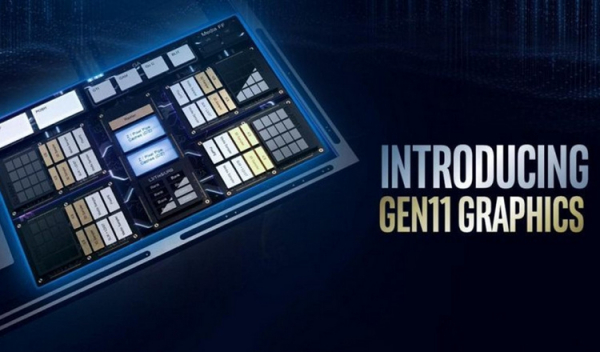
First, let's recall that the integrated graphics processors of the Intel 11th generation class GT2, used in processors for the mainstream segment, will include up to 64 execution units (EUs). In comparison, the current integrated Intel GT2 GPUs only have 24 EUs. Therefore, the performance increase in the 11th generation integrated graphics will be achieved not only through architectural changes but also due to the increase in processing units.
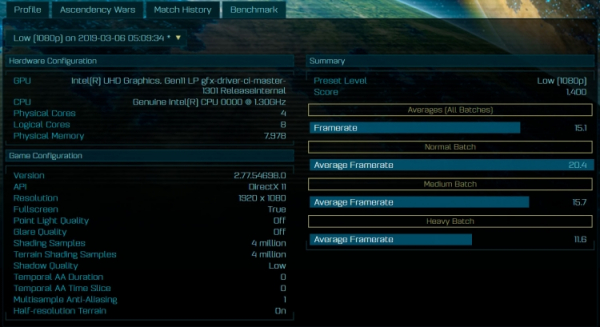
Unfortunately, the Ashes of the Singularity test does not specify the characteristics of the processor that was tested, only noting that it was a chip with four cores, eight threads, and Intel Gen11 graphics. At Full HD resolution (1920 × 1080 pixels) with low graphics quality settings, the new Intel integrated graphics achieved an average frame rate of 15.1 FPS.
In comparison, the current Intel UHD Graphics 620 can only provide 9.9 FPS under the same conditions, while the more advanced UHD Graphics 630 reaches 11.9 FPS. It’s even more interesting to compare the newcomer with AMD’s integrated graphics. The Vega 10 GPU of the mobile Ryzen 7 2700U turns out to be slightly slower at 14.9 FPS, but the full-fledged Vega 11 integrated graphics in the desktop Ryzen 5 2400G can deliver 29.3 FPS. It's also worth noting that NVIDIA's discrete graphics cards, the GeForce MX130 and MX150, achieve 22.6 and 25.6 FPS, respectively.
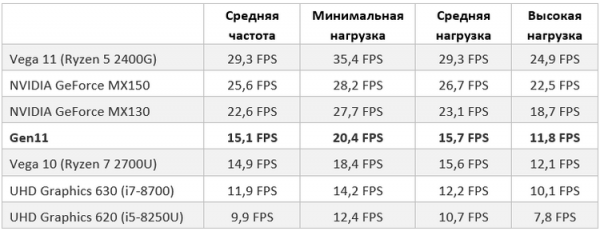
Thus, in the mobile segment, Intel has indeed achieved parity with the integrated graphics of its competitor. The difference between the Vega 10 and the tested Gen11 is only 1.34%. However, the new Intel is lagging behind the desktop Vega 11 by 94%, and nearly 50% behind the discrete GeForce MX130.
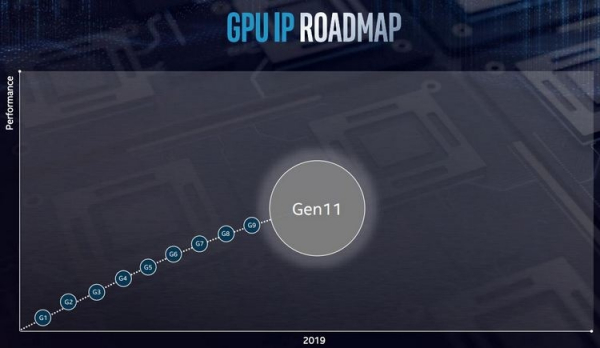
Of course, it is fair to note that the integrated graphics from Intel are still in development, and only an engineering sample of the processor with the new graphics has been tested here. Furthermore, the drivers clearly have not yet received the necessary optimizations and refinements. And of course, performance can't be judged by a single test. However, the fact that Gen11 already significantly surpasses the current integrated graphics from Intel inspires certain hopes.
Source: 3dnews.ru
