

Anna Antonenko, who specializes in embedded systems development and also works on the BOSS (BEAM-based Operating System with Security) in her spare time, published the results of reverse engineering the Yamaha PSR-E433 synthesizer. During her work, an obfuscated shell interface was discovered in the synthesizer, allowing the execution of custom code at the firmware level. Access to the shell interface is achieved by sending MIDI packets with SysEx messages, which can be transmitted when the synthesizer is connected via USB port. The insights gained from the reverse engineering regarding the chip and firmware, as well as code samples and debugging dumps, are available on GitHub.
Interest in reverse engineering arose a few years ago when Anna decided to clean the synthesizer's insides of dust and satisfy her curiosity by wanting to see the device's internals. The board contained the YAMAHA SWL01U chip, about which detailed information could not be found online. A couple of months ago, Anna came across a manual for a similar model of synthesizer that included the pinout for this chip. Anna disassembled the device once again and began experiments using the available pins on the board for the JTAG debugging interface and the UART port.
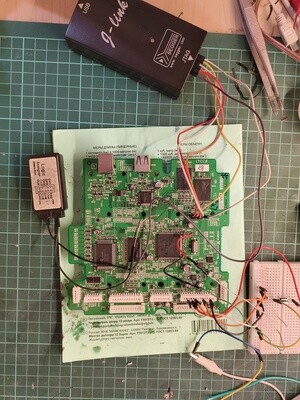
Using the OpenOCD debugger, connecting to JTAG, and conducting experiments revealed that the board uses a chip with an ARM7TDMI core. By studying the memory layout in the debugger, it was possible to dump the contents of the firmware stored in the ROM and Flash memory. After that, the firmware images were analyzed using the Ghidra reverse engineering tool.
Vaadates püsivara eraldatud tekstilisi andmeid, on märgatud hulka stringe («help, «info», «ver», «logout» jne), mis meenutavad käsurea käsku. Nende stringide viidatud uurimine võimaldas leida koodi, mis kutsub esile funktsioone käskude töötlemiseks, meenutades sisenemisliidest ja käsurea liidest. Samuti leiti, et liidese aktiveerimiseks on ette nähtud käsk «login», millele tuleb edastada parool «#0000». void shell_run_command(char* command_input) { if (shell_login_state == 0) { if (shell_compare_command(command_input, «login») == 0) { shell_ask_passwd(); // prindib «passwd? » shell_login_state = 1; } } else if (shell_login_state == 1) { if (shell_compare_command(command_input, «#0000») == 0) { shell_login_ok(); // prindib «login OK» shell_login_state = 2; } else { shell_print(«Passwd Error\r»); shell_login_state = 0; } } else { // teostage käsk } }
Püsivara edasine uurimine näitas, et käske töödeldakse pakettidena, mis algavad alati samade 8 baitide andmetega ja lõppevad koodiga 0xf7. Kuna väline suhtlemine sünteesijaga toimub ainult läbi MIDI ja MIDI spetsifikatsioonis on ette nähtud eriline teenindustüüp SysEx sõnumite jaoks, arvati, et just seda võiks kasutada käskude edastamiseks. Oletust kinnitas ka see, et SysEx sõnumid ja liideses tõlgitavad paketid algasid ühe koodiga 0xf0, millele järgnes tootja identifikaator 0x43 (Yamaha).
Hüpoteesi testimiseks kirjutati Python-skript, mis tõlkis sisendandmed MIDI protokolli pakettideks. Ja meetod töötas: login passwd? #0000 login OK > help logout help ? info ver stack perf-on perf-off perf-disp d dp d xxxxx d/s xxxxx m ADDRESS DATA m/b ADDRESS DATA m/w ADDRESS DATA m/l ADDRESS DATA > info DevelopName PSR-E433 DevelopNumber #3341 Main DevelopNumber #3341 Make data & time MAY 16 2012 19:00:57 J/E Select English >
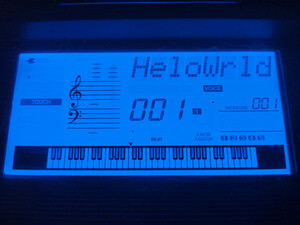
Käsku «help» saates kuvatud vihkes, muu hulgas sisaldusid käsud mälusisule muutmiseks. Nende käskude abil oli võimalik laadida mälu suvaline kood ja edastada sellele juhtimine, asendades tagasikutsumise pärast käsu täitmist stack'i kasutatava näidiku. Eksperimendi käigus paigutati kasutamata mälupiirkonda assamblee keeles kirjutatud lihtne rakendus, mis kuvab „HeloWrld“ 8-tähelisel LCD-ekraanil. Programm oli vormistatud tavalise MIDI-failina, mille edastamine seadmesse oli piisav.
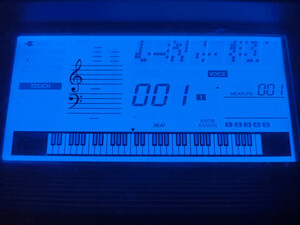
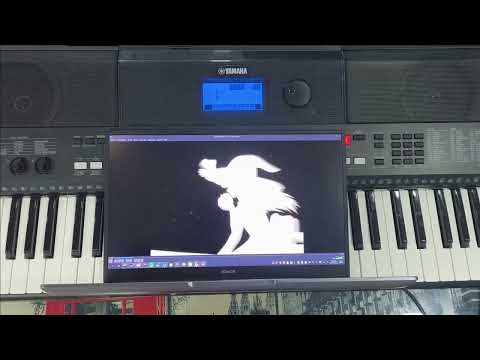
Pärast seda algas töö graafika väljundite uurimise kallal LCD-ekraanile, mille kulminatsiooniks oli koodi ettevalmistamine, mis kuvaks suvalist pikslisisut sünkroonselt koos Bad Apple video esitamisega välisseadmest (demovideo).
Allikas: opennet.ru
