

A FMX 2019 graphic conference currently taking place in Stuttgart, Germany, dedicated to animation, effects, games, and digital media, Intel made an extremely interesting announcement regarding future graphics accelerators of the Xe family. As announced by Jim Jeffers, the chief engineer and leader of Intel's rendering and visualization enhancement team, hardware support for ray tracing acceleration will be implemented in Intel's graphics solutions. Although the announcement primarily refers to computing accelerators for data centers rather than future consumer GPU models, there is no doubt that hardware support for ray tracing will also appear in Intel's gaming graphics cards since they will all be based on a unified architecture.
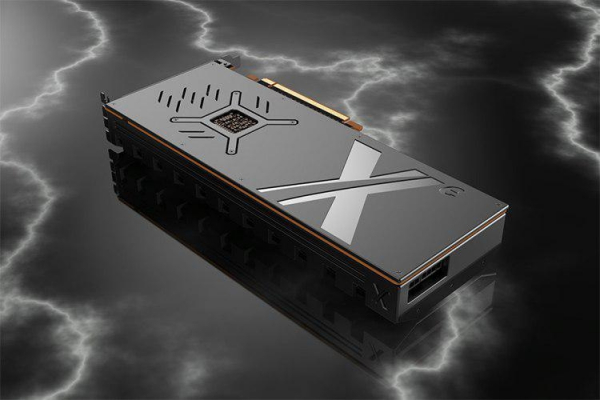
Back in March of this year, the chief developer of the graphics architecture, David Blythe, promised that Intel Xe would strengthen the company’s offerings by adatközpontok accelerating a wide range of operations, including scalar, vector, matrix, and tensor operations, which may be in demand for various computational tasks as well as for calculations related to artificial intelligence. Now, another important capability is added to the list of what the Intel Xe graphics architecture will be capable of - hardware acceleration of ray tracing.
"I am pleased to announce today that the promising plan for developing the rendering capabilities of the Intel Xe architecture for data centers includes support for hardware acceleration of ray tracing through the API and Intel Rendering Framework libraries," Jim Jeffers stated in a corporate blog. According to him, adding such functionality to future accelerators will create a more cohesive computing and software environment, as the demand for physically accurate rendering continues to grow not only in visualization tasks but also in mathematical modeling.
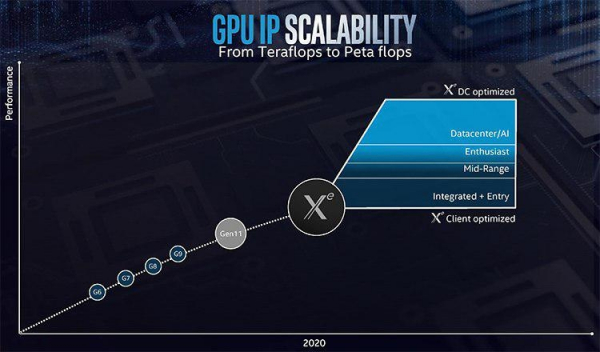
Érdemes megjegyezni, hogy a hardveres ray tracing támogatásának bejelentése egyelőre csak magas szintű. Vagyis jelenleg annyit tudunk, hogy az Intel egyértelműen be fogja vezetni ezt a technológiát, de konkrét információk arról, hogy mikor és hogyan érkezik a cég GPU-jaira, még nincsenek. Ráadásul ez csak az Intel Xe architektúrára alapozott számítási meghajtókról szól. Ez a megközelítés teljesen indokolt, hiszen a szakembereknek nem kevésbé fontos a gyors ray tracing, mint a játékosoknak. Az Intel Xe architektúra állítólagos skálázhatósága és a különböző célpiacok számára ígért unifikációval együtt logikus várni, hogy a ray tracing támogatása előbb-utóbb elérhetővé válik a jövőbeli Intel játékvideokártyák számára is.
Forrás: 3dnews.ru
