

A Massachusetts Institute of Technology research group continues to work successfully in a very interesting direction. Nine years ago, the MIT staff published a report in the journal Nature Communications , in which they announced the development of an interesting technology for straightening polyethylene molecules. In its normal state, polyethylene, like other polymers, resembles a mash of countless clumps of stuck-together spaghetti. This makes the polymer an excellent thermal insulator, but scientists have always desired something unusual. Wouldn't it be great to create a polymer that could conduct heat as well as metals? To achieve this, all that is needed is to straighten the polymer molecules so they can carry heat through mono-channels from the source to the dissipation point. The experiment was successful. The scientists managed to create individual strands of polyethylene with excellent thermal conductivity. However, this was not enough for industrial implementation.
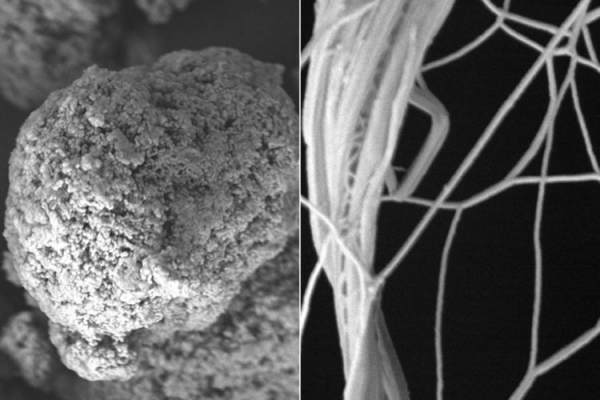
Today, the same group of scientists from MIT published a new report on thermally conductive polymers. A lot of work has been done over the past nine years. Instead of producing individual fibers, the researchers a pilot installation for producing film-like thermally conductive coating. Moreover, for creating the conductive films, they used ordinary commercial powdered polyethylene intended for industry instead of the unique raw material used nine years ago.
In the pilot installation, powdered polyethylene is dissolved in a liquid and then the mixture is sprayed onto a plate cooled with liquid nitrogen. After that, the workpiece is heated and stretched on a rolling machine to form a thin film, as thick as wrapping paper. Measurements showed that the thermally conductive polyethylene film produced in this way has a thermal conductivity coefficient of 60 W/(m·K). For comparison, this figure is 15 W/(m·K) for steel and 0.1–0.5 W/(m·K) for regular plastic. Diamond boasts the best thermal conductivity at 2000 W/(m·K), but surpassing metals in thermal conductivity is also a significant achievement.
A hővezető polimerek számos más fontos tulajdonsággal is rendelkeznek. Például a hő szigorúan csak egy irányba vezethető. Képzelje el a laptopokat vagy okostelefonokat, amelyek a processzoroktól hőt vezetnek el aktív hűtőrendszer nélkül. A hővezető műanyagok másik fontos alkalmazási területe lehet az autók, hűtőberendezések és egyéb területek. A műanyag nem rozsdásodik, nem vezeti az áramot, könnyű és tartós. Az ilyen anyagok életbe lépése lendületet adhat több iparág fejlődésének. Reméljük, hogy erre a fényes napra nem kell még kilenc évet várni.
Forrás: 3dnews.ru
