

Ko te whāinga o tēnei tuhinga he whakangawari i te whirihoranga o te ratonga DHCP mō te VXLAN BGP EVPN me te DFA fabric mā te whakamahi i a Microsoft Windows Server 2016 / 2019.
I roto i ngā tuhinga whaimana, ko te ratonga DHCP e hangai ana ki a Microsoft Windows Server Ko te 2012 mō te wheketere kua whirihorahia hei SuperScope, kei roto ko te puna Loopback (i roto i tēnei puna, ko te mea nui ko te tango i ngā wāhitau IP katoa mai i te puna (wāhitau IP kāore i whakaurua = puna)) me ngā puna mō te tuku wāhitau IP mō ngā whatunga tūturu (ko te mea nui i konei ko te kaupapa here e whirihorahia ana, e tātarihia ana ngā ID Arawhiti Whakawhiti DHCP, ā, kei roto i tēnei ID Arawhiti Whakawhiti DHCP te VNI mō te whatunga, arā, mō tētahi atu puna, ka paku rerekē tēnei ID Arawhiti Whakawhiti DHCP).
To configure DHCP on Windows server.

1. Create a super scope. Within the super scope, create scope B, S1, S2, S3, …, Sn for the subnet B and the subnets for each segment.
2. In scope B,  specify the 'Exclusion Range' to be the entire address range (so that the offered address range must not be from this scope).
3. For every segment scope Si, specify a policy that matches on Agent Circuit ID with value of '0108000600XXXXXX', where '0108000600' is a fixed value for all segments, the 6 numbers "XXXXXX" is the segment ID value in hexadecimal. Also ensure to check the Append wildcard(*) check box.
4. Set the policy address range to the entire range of the scope.
Kei roto i tenei tuhinga nga whakautu ki nga patai e whai ake nei:
Tuhinga
-
- ( & )
-
-
Whakataki
Kei roto i tēnei wāhanga ngā raraunga pūtake katoa: Ngā tohutohu mō te whirihora i ngā taputapu whatunga, ngā RFC e whakamahia ana i roto i ngā mōkihi DHCP i roto i ngā wheketere eVPN, he aratohu tohutoro ki te whanaketanga o ngā tautuhinga tūmau DHCP i runga i a Microsoft. Windows Server 2012 i roto i ngā tuhinga Cisco. Waihoki, he kōrero poto mō Superscope me te Kaupapahere i roto i te ratonga DHCP i runga i ngā tūmau Microsoft. Windows Server.
Me pehea te whirihora DHCP Relay i runga i te VXLAN BGP EVPN, papanga DFA
Ko te whirihora i te Relay DHCP i runga i te papanga VXLAN BGP EVPN ehara i te kaupapa matua o tenei tuhinga, na te mea he maamaa noa. Ka whakaratohia e ahau nga hononga ki nga tuhinga me te kaipahua mo nga tautuhinga i runga i nga taputapu whatunga.
He tauira mo te whakarite Relay DHCP ki runga Nexus 9000V v9.2(3)
service dhcp
ip dhcp relay
ip dhcp relay information option
ip dhcp relay information option vpn
interface loopback10
  vrf member VRF1
  ip address 10.120.0.1/32 tag 1234567
interface Vlan12
  no shutdown
  vrf member VRF1
  no ip redirects
  ip address 10.120.251.1/24 tag 1234567
  no ipv6 redirects
  fabric forwarding mode anycast-gateway
  ip dhcp relay address 10.0.0.5
  ip dhcp relay source-interface loopback10
Ko nga RFC e whakatinanahia ana i roto i te mahi o te ratonga DHCP Relay i roto i nga papanga VXLAN BGP EVPN
RFC#6607: Kōwhiringa-iti 151(0x97) - Tīpakonga Ipurangiroto Mariko
•	Sub-option 151(0x97) - Virtual Subnet Selection (Defined in RFC#6607)
Used to convey VRF related information to the DHCP server in an MPLS-VPN and VXLAN EVPN multi-tenant environment.
Ko te "ingoa" o te VRF kei reira te kaihoko ka tukuna.
RFC#5107: Kōwhiringa-iti 11(0xb) - Whakakore ID Tūmau
•	Sub-option 11(0xb) - Server ID Override (Defined in RFC#5107.)
The server identifier (server ID) override sub-option allows the DHCP relay agent to specify a new value for the server ID option, which is inserted by the DHCP server in the reply packet. This sub-option allows the DHCP relay agent to act as the actual DHCP server such that the renew requests will come to the relay agent rather than the DHCP server directly. The server ID override sub-option contains the incoming interface IP address, which is the IP address on the relay agent that is accessible from the client. Using this information, the DHCP client sends all renew and release request packets to the relay agent. The relay agent adds all of the appropriate sub-options and then forwards the renew and release request packets to the original DHCP server. For this function, Cisco’s proprietary implementation is sub-option 152(0x98). You can use the ip dhcp relay sub-option type cisco command to manage the function.
Ka whakamahia te kōwhiringa ki te whakarite kia tukuna e te kiritaki he tono ki te whakahou i te rīhi wāhitau ki te wāhitau IP e whakamahia ana i tenei kōwhiringa. (I runga i te Cisco VXLAN BGP, ko EVPN te kuaha taunoa a te kiritaki Anycast wāhitau.)
RFC#3527: Kōwhiringa-iti 5(0x5) - Tīpakonga Hononga
Sub-option 5(0x5) - Link Selection (Defined in RFC#3527.)

The link selection sub-option provides a mechanism to separate the subnet/link on which the DHCP client resides from the gateway address (giaddr), which can be used to communicate with the relay agent by the DHCP server. The relay agent will set the sub-option to the correct subscriber subnet and the DHCP server will use that value to assign an IP address rather than the giaddr value. The relay agent will set the giaddr to its own IP address so that DHCP messages are able to be forwarded over the network. For this function, Cisco’s proprietary implementation is sub-option 150(0x96). You can use the ip dhcp relay sub-option type ciscocommand to manage the function.
Wāhitau o te whatunga e hiahia ana te kiritaki ki tetahi wahitau IP.
Te whanaketanga o ngā tuhinga Cisco e pā ana ki te whirihoranga DHCP i runga i a Microsoft Windows Server 2012
I whakauruhia e ahau tenei waahanga na te mea he pai te ahua o te kaihoko:
Ko nga tuhinga anake e whakaatu ana me pehea te whirihora i te Relay DHCP ki nga taputapu whatunga.
Hei whirihora i te DHCP ki runga Windows Server I whakamahia e te tau 2012 tētahi atu tuhinga:
Ko tenei tuhinga e tohu ana ko ia whatunga/VNI e hiahia ana ki tana ake paihere SuperScope me ona ake huinga wahitau Loopback:
If multiple DHCP Scopes are required for multiple subnets, you need to create one LoopbackX per subnet/vlan on all LEAFS and create a superscope with a loopbackX range scope and actual client IP subnet scope per vlan.
Ngā tautuhinga kua tāpirihia Windows 2012 Tūmau i roto i te tuhinga mō te whakatū i ngā taputapu whatunga. Me whakamahi kotahi SuperScope mō ia pokapū raraunga mō ngā puna wāhitau katoa, ā, ko tēnei SuperScope te rohe pokapū raraunga:
Create Superscope for all scopes you want to use for Option 82-based policies.
Note
The Superscope should combine all scopes and act as the administrative boundary.
Ko nga mea katoa ka tino whakamaramatia:
Let us assume the switch is using the address from subnet B (it can be the backbone subnet, management subnet, or any customer designated subnet for this purpose) to communicate with the Windows DHCP server. In DFA we have subnets S1, S2, S3, …, Sn for segment s1, s2, s3, …, sn.

To configure DHCP on Windows server.

1. Create a super scope. Within the super scope, create scope B, S1, S2, S3, …, Sn for the subnet B and the subnets for each segment.
2. In scope B,  specify the 'Exclusion Range' to be the entire address range (so that the offered address range must not be from this scope).
3. For every segment scope Si, specify a policy that matches on Agent Circuit ID with value of '0108000600XXXXXX', where '0108000600' is a fixed value for all segments, the 6 numbers "XXXXXX" is the segment ID value in hexadecimal. Also ensure to check the Append wildcard(*) check box.
4. Set the policy address range to the entire range of the scope.
DHCP i roto i a Microsoft Windows Server (te tirohanga whānui me te kaupapa here)
Superscope is an administrative feature of a DHCP server that can be used to group multiple scopes as a single administrative entity. Superscope allows a DHCP server to provide leases from more than one scope to clients on a single physical network. Scopes added to a superscope are called member scopes.
He aha te SuperScope - he mahinga ka taea e koe te whakakotahi i nga puna maha o nga wahitau IP ki roto i te waahanga whakahaere kotahi. Hei panui ki nga kaiwhakamahi i runga i te whatunga tinana kotahi (i roto i te VLAN kotahi) nga wahitau IP mai i nga puna wai maha. Mēnā i tae mai te tono ki tētahi puna wāhi noho hei wāhanga o te SuperScope, ka taea te hoatu ki te kiritaki he wāhitau mai i tetahi atu Scope kei roto i tenei SuperScope.
The DHCP Server role in Windows Server 2012 introduces a new feature that allows you to create IPv4 policies that specify custom IP address and option assignments for DHCP clients based on a set of conditions.

The policy based assignment (PBA) feature allows you to group DHCP clients by specific attributes based on fields contained in the DHCP client request packet. PBA enables targeted administration and greater control of the configuration parameters delivered to network devices with DHCP.
Ngā Kaupapahere – ka taea e koe te tuku wāhitau IP ki ngā kaiwhakamahi i runga i te momo kaiwhakamahi, i te tawhā rānei. Ka whakamahia e ngā miihini Cisco ngā kaupapahere i roto i Windows Server 2012 mō te tātari mā te VNI (Tautuhi Whatunga Mariko).
Ko te waahanga matua
Kei roto i tenei wahanga nga hua o te rangahau, he aha i kore ai e tautokona, he pehea te mahi (arorau), he aha nga mea hou me pehea te awhina o tenei mea hou i a tatou.
He aha i kore ai e tautokona e Microsoft? Windows Server 2000/2003/2008?
Microsoft Windows Server Kāore ngā putanga 2008 me ngā putanga o mua e tukatuka i te Kōwhiringa 82, ā, kāore hoki e tuku i te kete whakahoki me te kore he Kōwhiringa 82.
- Ka tukuna te tono mai i te kiritaki ki te Broadcast (DHCP Discover).
- Ka tukuna e te taputapu (Nexus) te putea ki te tūmau DHCP (DHCP Discover + Option 82).
- Ka whiwhi te DHCP Server i te kete, ka tukatuka, ka whakahokia, engari kaore he whiringa 82. (DHCP Offer – without option 82)
- Ka whiwhi te taputapu (Nexus) i tetahi kete mai i te tūmau DHCP. (DHCP Offer) Engari karekau e tuku i tenei kete ki te kaiwhakamahi mutunga.
Raraunga hongi - kei te wātea Windows Server 2008 me te kiritaki DHCPWindows Server I te tau 2008 ka whiwhi tono mai i ngā taputapu whatunga. (Kei roto i te rārangi te Kōwhiringa 82)
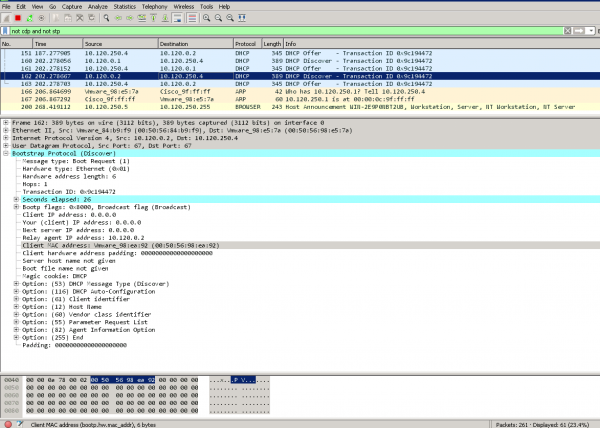
Windows Server Ka tukuna he whakautu e 2008 ki ngā taputapu whatunga. (Kāore te Kōwhiringa 82 i roto i te rārangi o ngā kōwhiringa i roto i te kete.)
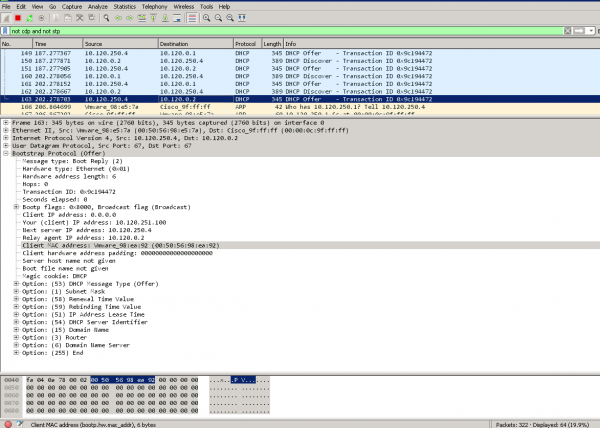
Tono mai i te kiritaki - Kei te noho a DHCP Discover, kei te ngaro te tuku DHCP
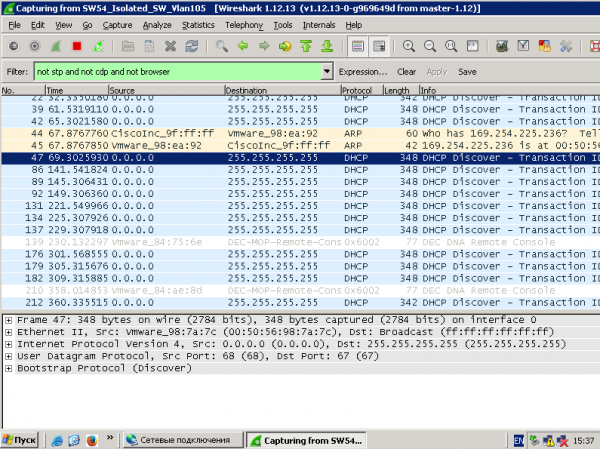
Nga tatauranga mo nga taputapu whatunga:
NEXUS-9000V-SW-1# show ip dhcp relay statistics
----------------------------------------------------------------------
Message Type             Rx              Tx           Drops
----------------------------------------------------------------------
Discover                  8               8               0
Offer                     8               8               0
Request(*)                0               0               0
Ack                       0               0               0
Release(*)                0               0               0
Decline                   0               0               0
Inform(*)                 0               0               0
Nack                      0               0               0
----------------------------------------------------------------------
Total                    16              16               0
----------------------------------------------------------------------

DHCP L3 FWD:
Total Packets Received                           :         0
Total Packets Forwarded                          :         0
Total Packets Dropped                            :         0
Non DHCP:
Total Packets Received                           :         0
Total Packets Forwarded                          :         0
Total Packets Dropped                            :         0
DROP:
DHCP Relay not enabled                           :         0
Invalid DHCP message type                        :         0
Interface error                                  :         0
Tx failure towards server                        :         0
Tx failure towards client                        :         0
Unknown output interface                         :         0
Unknown vrf or interface for server              :         0
Max hops exceeded                                :         0
Option 82 validation failed                      :         0
Packet Malformed                                 :         0
Relay Trusted port not configured                :         0
DHCP Request dropped on MCT                      :         0
*  -  These counters will show correct value when switch
receives DHCP request packet with destination ip as broadcast
address. If request is unicast it will be HW switched
NEXUS-9000V-SW-1#
He aha a Microsoft? Windows Server He tino uaua te whakarite mō te tau 2012?
I Microsoft Windows Server Kāore anō kia tautokona te 2012 e te RFC#3527 (Kōwhiringa 82 Kōwhiringa-iti 5(0x5) — Kōwhiringa Hononga)
Engari kua whakatinanahia te mahinga Kaupapahere.
Pehea e mahi ana:
- Microsoft Windows Server I te tau 2012 he puna-nui (SuperScope) kei roto ko ngā wāhitau Loopback me ngā puna mō ngā whatunga tūturu.
- Ko te kowhiringa o te puna wai mo te tuku i tetahi wahitau IP ka taka ki SuperScope, na te mea i puta mai te whakautu mai i te DHCP Relay me te wahitau Loopback Source kei roto i te SuperScope.
- Ma te whakamahi i te Kaupapahere, ka tohua e te tono mai i te Superscope te waahanga mema kei roto te VNI kei roto i te Kōwhiringa 82 Waahanga 1 Agent Circuit ID. (“0108000600”+ 24 paraka VNI + 24 paraka kaore au i te mohio, engari ko te hongi e whakaatu ana i nga uara o te 0 i tenei mara.)
Te whakangawaritanga o te tatūnga a Microsoft Windows Server 2016 / 2019?
I Microsoft Windows Server Kua whakatinanahia te mahi RFC#3527 2016. Koia tēnei Windows Server Ka taea e te tau 2016 te kite i te whatunga tika mai i te huanga Kōwhiringa 82 Kōwhiringa-iti 5(0x5) — Kōwhiringa Hononga
E toru nga patai ka ara ake:
- Ka taea e taatau kaore he Superscope?
- Ka taea e taatau ki te kore Kaupapahere me te huri i te VNI ki te ahua hautekauono?
- Ka taea e taatau te mahi me te kore he Scope for Loopback DHCP Source address?
Q. Ka taea e taatau kaore he Superscope?
A. Ae, ka taea te hanga i nga waahi i te waahi o nga wahitau IPv4.
Q. Ka taea e taatau ki te kore Kaupapahere me te huri i te VNI ki te ahua hautekauono?
A. Ae, ko te kowhiringa whatunga kei runga i te Kōwhiringa 82 Suboption 0x5,
Q. Ka taea e taatau te mahi me te kore he Scope for Loopback DHCP Source address?
A. Kāo, kāore e taea. Nā te mea i Microsoft Windows Server Kua whai mana te parenga i ngā tono DHCP kino mai i te tau 2016/2019. Ko te tikanga o tēnei, ko ngā tono katoa mai i ngā wāhitau kāore i roto i te puna o te tūmau DHCP ka kiia he kino.
 Note
All relay agent IP addresses (GIADDR) must be part of an active DHCP scope IP address range. Any GIADDR outside of the DHCP scope IP address ranges is considered a rogue relay and Windows DHCP Server will not acknowledge DHCP client requests from those relay agents.

A special scope can be created to "authorize" relay agents. Create a scope with the GIADDR (or multiple if the GIADDR's are sequential IP addresses), exclude the GIADDR address(es) from distribution, and then activate the scope. This will authorize the relay agents while preventing the GIADDR addresses from being assigned.
Ko ērā. hei whirihora i runga i a Microsoft Windows Server Ko te puna DHCP 2016/2019 mō te papanga VXLAN BGP EVPN me:
- Waihangahia he puna mo nga wahitau Relay Puna.
- Waihangahia he puna mo nga whatunga kiritaki
He aha te mea kaore e tika ana (engari ka taea te whirihora ka mahi ka kore e pokanoa ki te mahi):
- Waihanga Kaupapahere
- Waihanga SuperScope
Hei tauira:He tauira mo te whakatu i tetahi tūmau DHCP (e rua nga kaihoko DHCP tuuturu - kua hono nga kaihoko ki te papanga VXLAN)
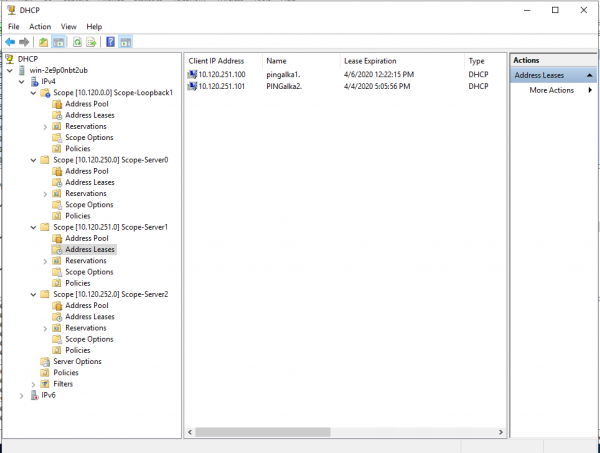
He tauira mo te whakarite i te puna wai kaiwhakamahi:
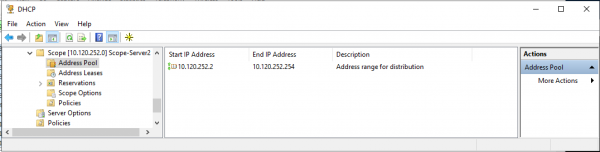
He tauira mo te whakatu i tetahi puna wai kaiwhakamahi (kua tohua nga kaupapa here - hei tohu kaore i whakamahia nga kaupapa here mo te whakahaere tika o te puna):
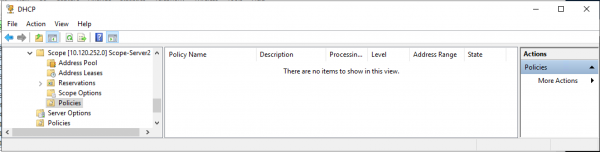
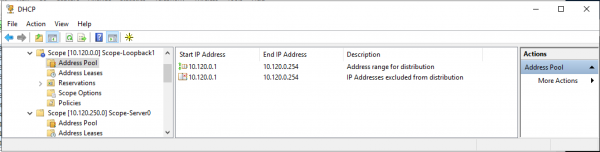
He tauira mo te whirihora i tetahi puna mo nga wahitau Relay DHCP Relay (te awhe o nga wahitau mo te tukunga e tino rite ana ki te whakakore i te puna wahitau):
Te whakatū i te ratonga DHCP i runga i a Microsoft Windows Server 2019
Te whirihora i te puna mo nga wahitau Loopback (puna) mo te Relay DHCP.
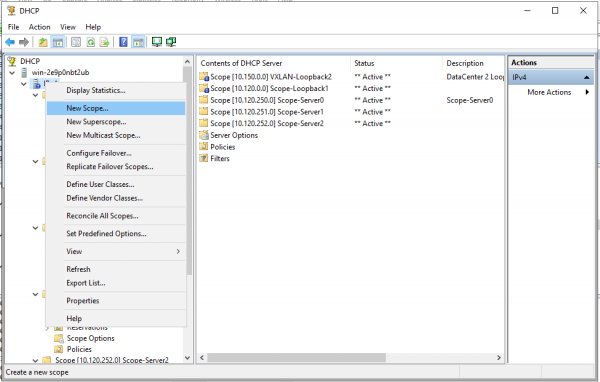
Ka hangaia e matou he puna hou (Scope) i te waahi IPv4.
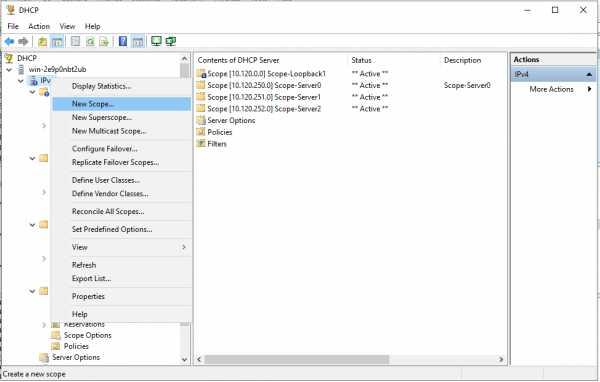
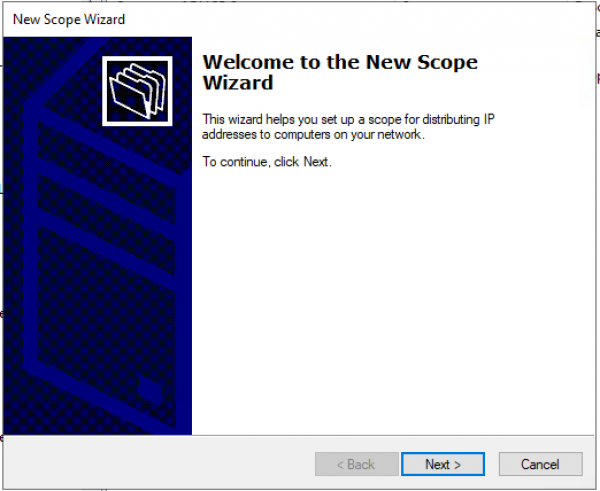
Ruānuku waihanga puna. "Whai muri >"
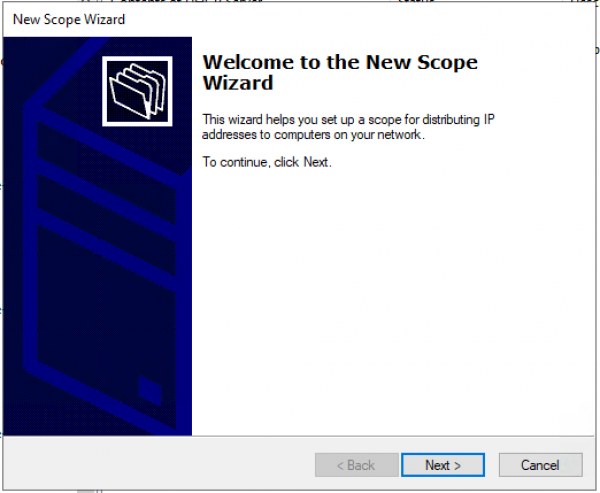
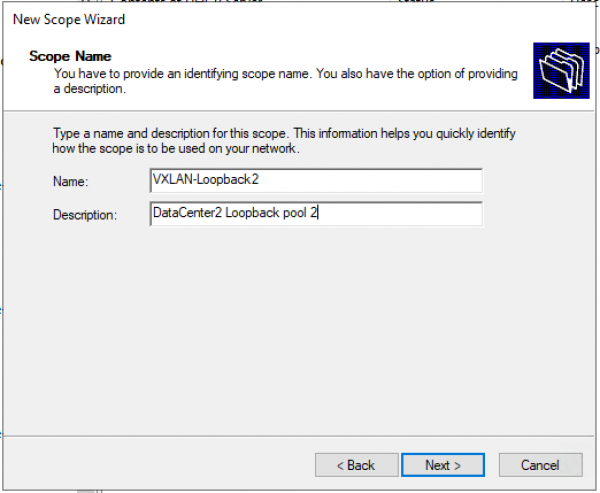
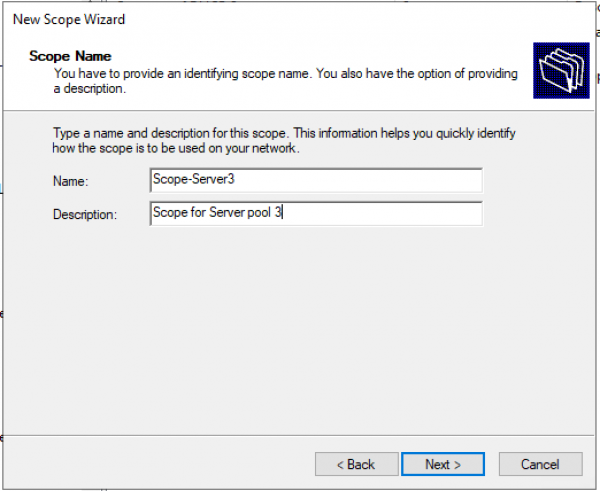
Whirihorahia te ingoa puna me te whakaahuatanga o te puna.
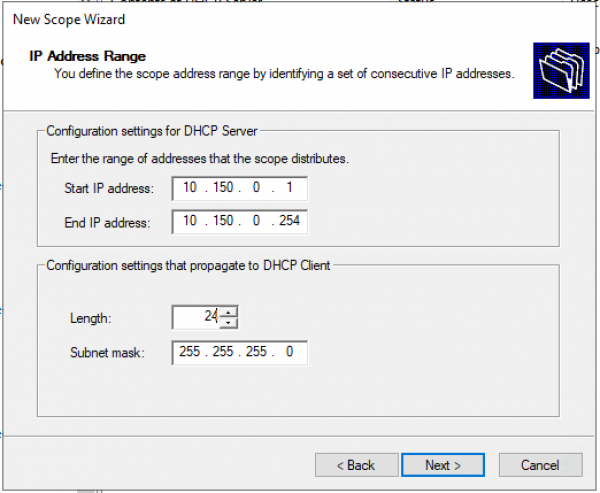
Tautuhia te awhe o nga wahitau IP mo Loopback me te kanohi mo te puna.
Te taapiri rereke. Me tino rite te awhe whakakore ki te awhe poka wai.
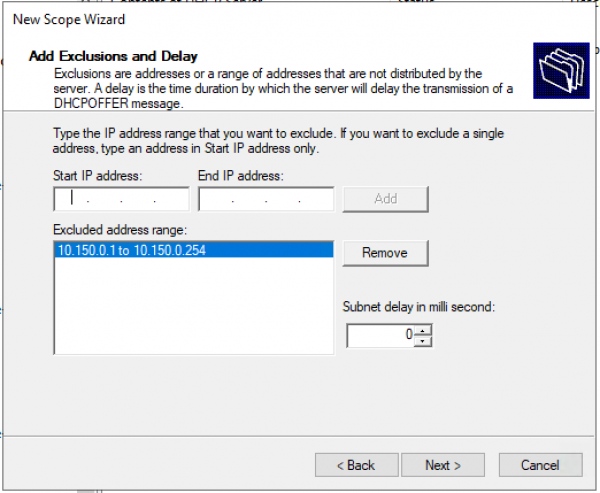
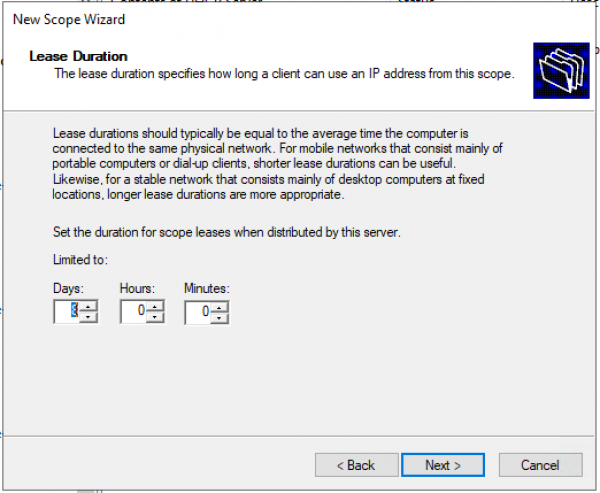
Te wa reti. "Whai muri >"
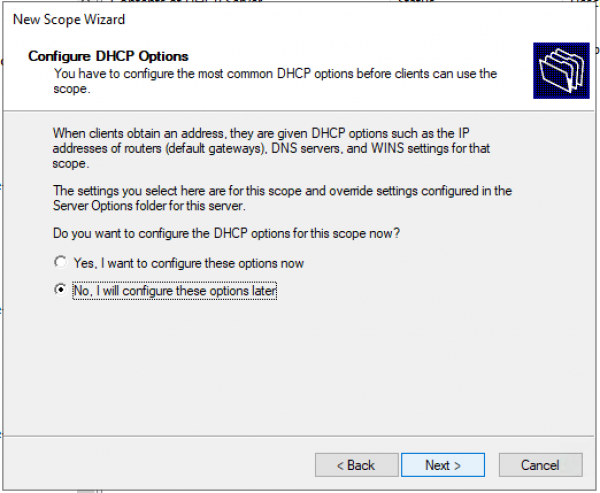
Uiui: Ka whirihorahia e koe nga whiringa DHCP inaianei (DNS, WINS, Gateway, Domain) ka mahia ranei e koe i muri mai. He tere ake te whakautu kaore, katahi ka whakahohe i te puna wai. Ka haere ranei ki te mutunga me te kore e whakakii i nga korero ka whakahohehia te puna wai i te mutunga o te ruānuku.
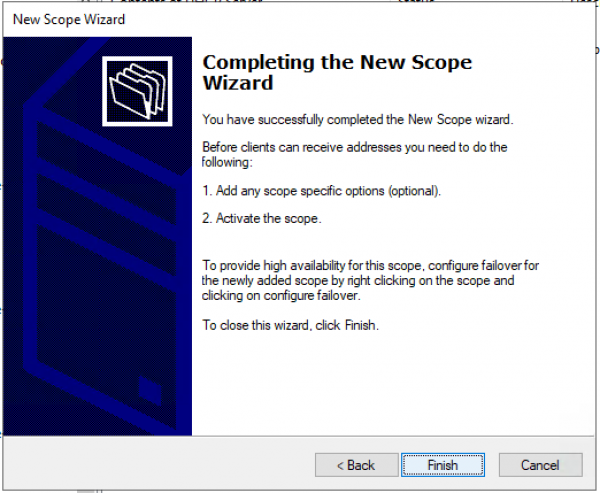
Ka whakapumautia e matou kaore i te whirihorahia nga whiringa karekau ano te puna kaukau. "Whakaoti"
Ka whakahohehia e maatau te poka wai. — Select Scope and in the context menu — select “Whakahohe”.
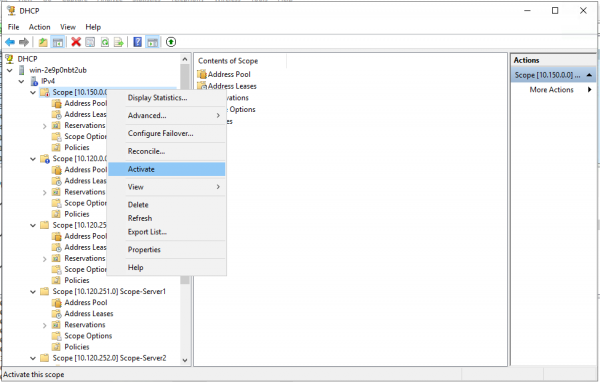
Ka hangaia e matou he puna mo nga kaiwhakamahi / tūmau.
Ka hangaia e matou he puna hou.
Ruānuku waihanga puna. "Whai muri >"
Whirihorahia te ingoa puna me te whakaahuatanga o te puna.
Tautuhia te awhe o nga wahitau IP mo Loopback me te kanohi mo te puna.
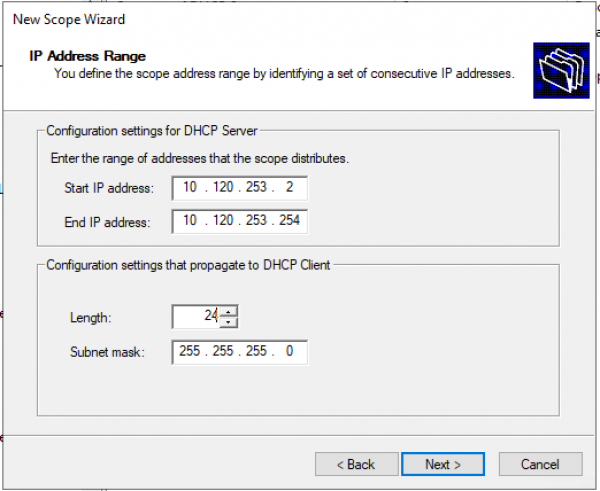
Te taapiri rereke. (Karekau he rereke e hiahiatia ana ma te taunoa) "Next >"
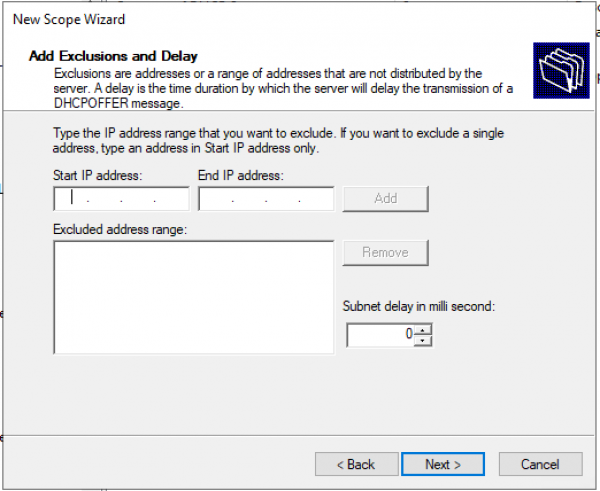
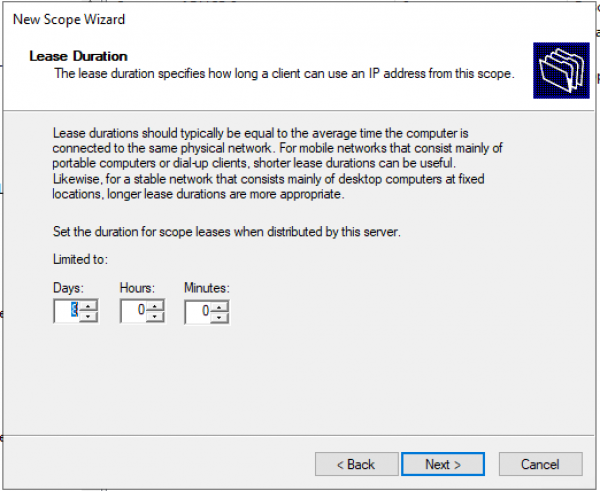
Te wa reti. "Whai muri >"
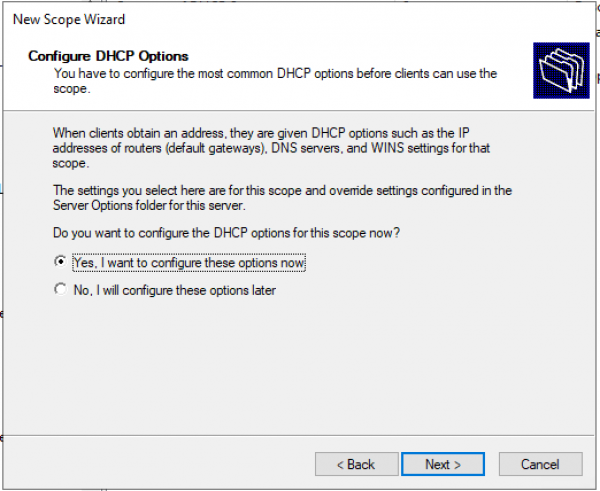
Uiui: Ka whirihorahia e koe nga whiringa DHCP inaianei (DNS, WINS, Gateway, Domain) ka mahia ranei e koe i muri mai. Me whakarite inaianei.
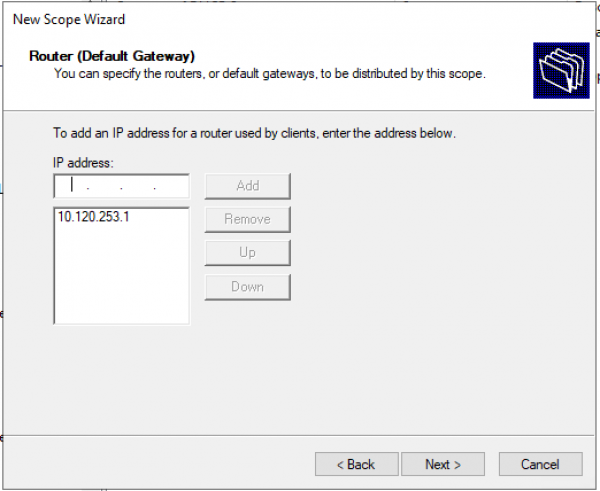
Whirihorahia te wahitau kuaha taunoa.
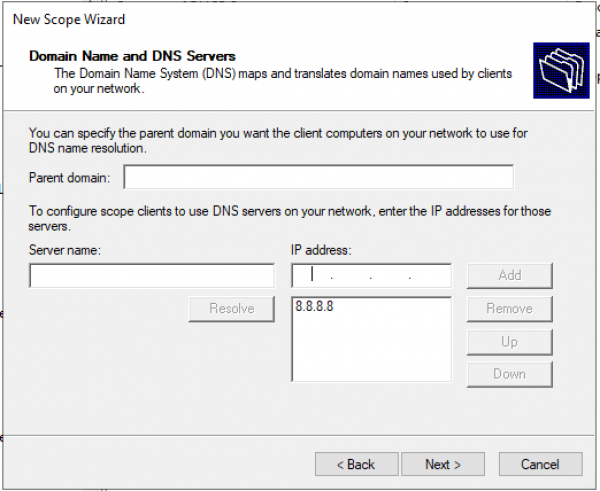
Ka whirihorahia e matou te rohe me nga wahitau tūmau DNS.
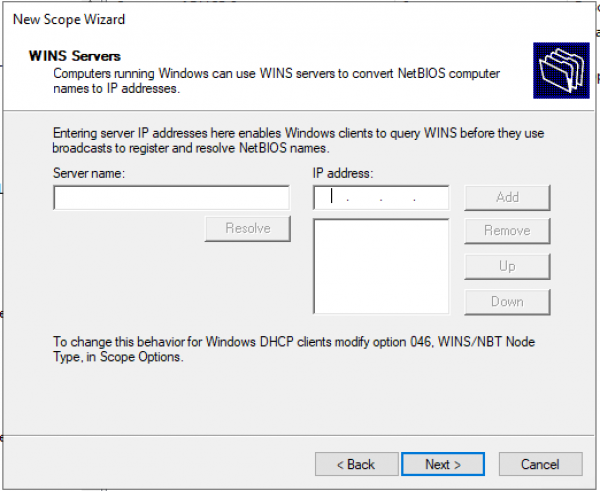
Te whirihora i nga wahitau IP o nga tūmau WINS.
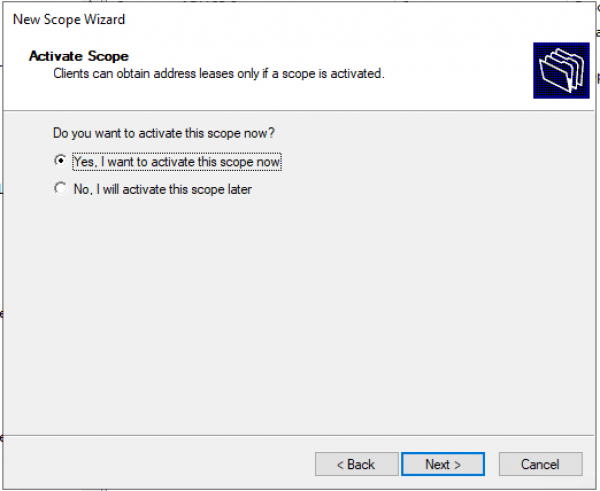
Whakahohenga whanui.
Kua whirihorahia te puna. "Whakaoti"
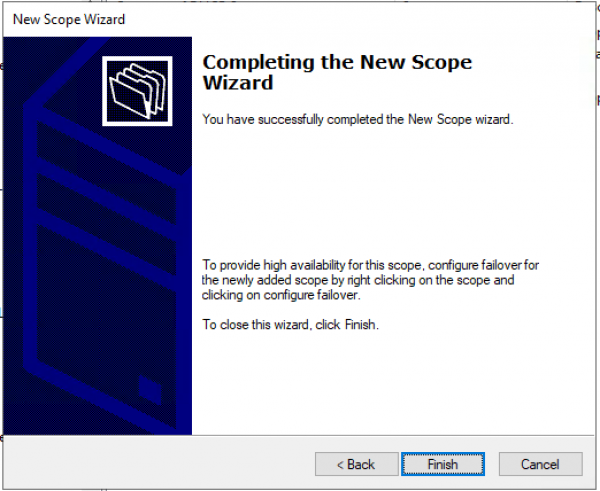
mutunga
Whakamahia Windows Server Ka whakaitihia e te tau 2016/2019 te uaua o te whirihora i tētahi tūmau DHCP mō tētahi papanga VXLAN (me tētahi atu papanga rānei). (Kāore he take ki te tohatoha i ngā ID Arawhiti Whatunga/Kaiwhakahaere motuhake ki ngā tohunga IT hei whirihora i ngā tātari.)
Ka mahi te whirihoranga mō Windows Server 2012 i runga i ngā tūmau hou o te tau 2016/2019 – āe, ka mahi.
Kei roto i tenei tuhinga nga tohutoro mo nga putanga e 2: 7.X me 9.3. Ko tenei na te mea ko te putanga 7.0(3)I7(7) he putanga Cisco Suggested, a ko te putanga 9.3 te mea tino hou (tae noa ki te tautoko i te Multicast ma te VXLAN Multisite).
Te rarangi o nga puna
Source: will.com

