

Internet Explorer 6 was very popular in its time. It's hard to believe, but 10 years ago it held a fifth of the market. It was used both in Russia and abroad, predominantly by government agencies, banks, and similar organizations. It seemed that 'the sixth' would never end. However, YouTube accelerated its demise. And this happened without approval from the management.

Former employee Chris Zacharias , how he inadvertently became the 'gravedigger' of the popular browser. He explained that in 2009, many web developers were unhappy with Internet Explorer 6 because it required creating their own versions of websites. But the management of major portals ignored this. So, the YouTube engineering team decided to take action themselves.
The essence is that the developers added a small banner that the system displayed only in IE6. It informed users that they were using an old browser and suggested updating to more current versions. They were confident that their actions would go unnoticed. The fact is that the old YouTube developers had privileges that allowed them to make changes to the service without approval. Those privileges remained even after Google acquired the video service. Moreover, almost no one at YouTube was using Internet Explorer 6.
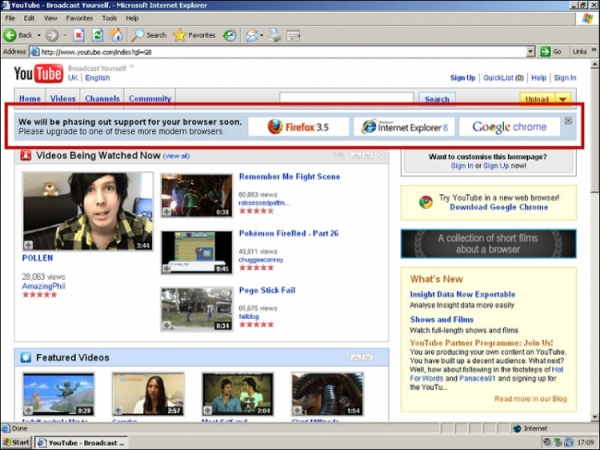
However, just two days later, the head of public relations approached them because users had started reporting about the banner. While some wrote panicked emails asking, 'When will Internet Explorer 6 come to an end?', others supported YouTube as a promoter of new and safer browsers. The company’s lawyers only checked if the banner violated antitrust rules and then calmed down.
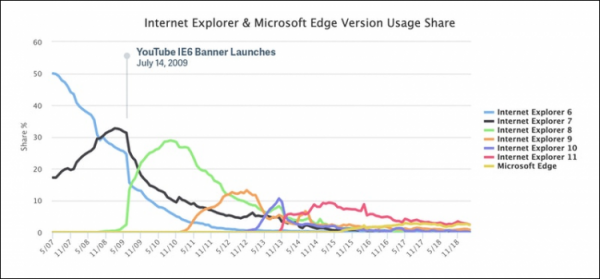
The most interesting part began afterward. The management found out that the engineers acted without approval, but by that time Google Docs and other Google services had already implemented this banner in their products. Employees from other divisions of the search giant genuinely believed that the YouTube team simply copied the implementation from Google Docs. Finally, this idea began to be copied by other resources unrelated to the search engine, after which abandoning Internet Explorer 6 became only a matter of time.
