

Razmišljanja o tome odakle dolazi želja za polaganjem sertifikata AWS Solutions Architect Associate.
Motiv prvi: 'Sekire'
Jedan od najkorisnijih principa za svakog profesionalca je 'Poznaj svoje alate' (ili u nekoj od varijacija '»).
Već dugo smo u oblacima, ali do određenog trenutka to su bile samo monolitne aplikacije sa bazama, postavljene na EC2 instancama — jeftino i praktično.
Ali postepeno nam je postalo tesno unutar monolita. Prešli smo na 'sečenje' u dobrom smislu – na modularizaciju, a zatim i na sada popularne mikrousluge. I vrlo brzo na toj osnovi 'cveta sto cveća'.
Da ne idemo daleko, projekat logovanja aktivnosti koji trenutno vodim obuhvata:
- Klijente u vidu raznovrsnih aplikacija našeg proizvoda – od neprohodnih kutaka zapostavljenog legacya do ultramodernih mikrousloga na .Net Core.
- Amazon SQS redove, u koje se beleže logovi o tome šta se dešava sa klijentima.
- Mikroslužba na .Net Core koja preuzima poruke iz reda i šalje ih u Amazon Kinesis Data Streams (KDS). Takođe ima Web API interfejs i swagger UI kao alternativni kanal i za ručno testiranje. Obavijena je u Docker Linux kontejner i hostovana pod upravljanjem Amazon ECS. Predviđeno je automatsko skaliranje u slučaju velikog protoka logova.
- Iz KDS podaci se 'vatrom šlangama' šalju u Amazon Redshift sa međuskladištima u Amazon S3.
- Operativni logovi za programere (informacije za debagovanje, poruke o greškama itd.) formatiraju se u prijatan JSON i šalju u Amazon CloudWatch Logs.
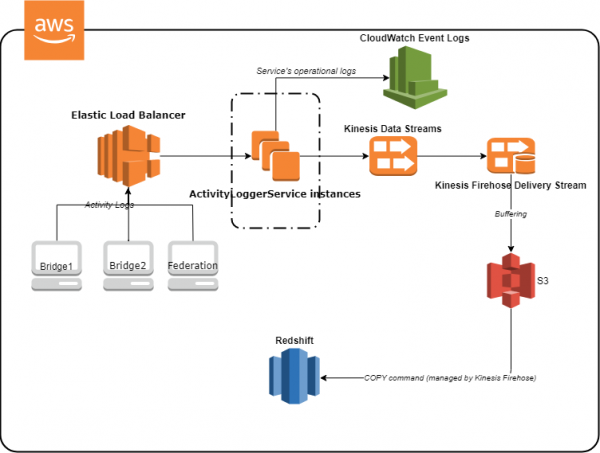
Radeći sa ovim različitim AWS servisima, želeo bih da znam šta sve imamo na raspolaganju i kako to najbolje koristiti.
Zamislite – imate stari, provereni sekiru koja dobro seče drveće i prilično dobro zakiva ekser. Tokom godina ste naučili kako se njome dobro rukuje, napravili ste kućicu za pse, par šupa i možda čak i kuću. Ponekad se javljaju problemi, recimo, zakretanje šrafa sekiricom ne ide uvek brzo, ali to se obično reši uz malo strpljenja i nekakve muke.
In the vicinity, a wealthy neighbor appears, possessing a plethora of various tools: electric saws, nail guns, screwdrivers, and who knows what else. He is ready to rent out this wealth 24/7. What to do? The option of grabbing an axe and redistributing wealth is dismissed as politically ignorant. The most sensible approach would be to learn about the tools, how they can complement each other for different tasks, and under what conditions they are rented out.
Since this motive was primary for me, the preparation was structured accordingly – to find a fundamental guide and study it diligently. And such a guide The book is written rather dryly, but this is unlikely to deter those who have studied math using Fichtenholz.
I read it cover to cover and believe that it fully meets its intended purpose – it provides a good overview of both the services themselves and more general concepts that may be encountered on the exam. Additionally, a nice bonus is the ability to go through a somewhat peculiar registration procedure on Sybex and answer the review questions and practice exams from the book online.
An important point: I studied using the 2016 edition of the book, but AWS changes rapidly, so look for the most recent edition available at the time of preparation. For example, questions about availability and durability for various classes of S3 and Glacier often appear in practice tests, but some of the figures have changed compared to 2016. Additionally, new ones have been added (for example, INTELLIGENT_TIERING or ONEZONE_IA).
The second motive: "65 shades of orange"
Intense thinking requires certain efforts. But it is no secret that many programmers experience sadistic pleasure from puzzling problems, questions, and sometimes even exams.
I believe this pleasure is largely akin to playing "What? Where? When?" or, let's say, a good game of chess.
In this sense, the current AWS Solutions Architect Associate exam is quite good. Although during my preparation, some of the review questions turned out to be rote-learning types, such asHow many elastic IP addresses can be held in a VPC?"ali "What is the availability of S3 IA?Na samem izpitu takih vprašanj ni bilo. V bistvu je skoraj vsak od 65 vprašanj predstavljal mini nalogo za načrtovanje. Tukaj je dovolj tipičen primer iz uradne dokumentacije:
Spletna aplikacija omogoča strankam nalaganje naročil v S3 vedro. Tako nastali dogodki Amazon S3 aktivirajo funkcijo Lambda, ki vstavi sporočilo v čakalno vrsto SQS. Ena sama instanca EC2 bere sporočila iz čakalne vrste, jih obdeluje in shranjuje v tabelo DynamoDB, razdeljeno po edinstveni identifikacijski številki naročila. Naslednji mesec pričakujemo povečanje prometa za faktor 10 in arhitekt rešitev pregleda arhitekturo zaradi morebitnih težav s povečevanjem zmogljivosti. Kateri komponent je NAJVERJETNEJE potreben ponovnega oblikovanja, da bi lahko skrbel za nov promet?
A. Funkcija Lambda B. Čakalna vrsta SQS C. Instanca EC2 D. Tabela DynamoDB
Kolikor vem, prejšnja različica izpita je vsebovala 55 vprašanj in za njo je bilo dodeljenih 80 minut. Sodeč po vsem, so se dobro potrudili: zdaj je tam 65 vprašanj in 130 minut nanje. Čas, ki ga porabimo na vprašanje se je povečal, a skoraj ni prehodnih vprašanj. Nad vsakim se je bilo treba zamisliti, včasih tudi več kot dve minuti.
Sicer pa je tukaj praktičen zaključek. Običajno zmagovalna taktika hitro preleteti vsa vprašanja in odgovoriti na tiste, ki jih lahko takoj. Pri SAA-C01 to v bistvu ne deluje, označiti je treba skoraj vsako vprašanje, sicer obstaja tveganje, da ne opazimo kakšne malenkosti in odgovorimo narobe. Na koncu sem odgovarjal, porabljal minuto ali dve na vsako vprašanje, nato pa sem se vrnil k označenim in preživel 20 minut na njih.
Motiv tretji: "Če bi mladost vedela, če bi starost znala"
Kot je znano, je ena najpogostejših razlogov za zavrnitve, ki jih programerji prejemajo po 40. letu, zmanjšana sposobnost učenja v primerjavi z mladimi.
Kljub temu imam občutek, da so se nekatere sposobnosti učenja pri meni celo izboljšale v primerjavi s študijskimi leti – zaradi večje vztrajnosti in izkušenj, ki omogočajo, da privabim znane analoge za malo znana vprašanja.
Toda občutki so lahko prevarant. Potreben je objektivni kriterij. Priprava na izpit in njegov uspeh – zakaj ne bi bila možnost?
Menim, da je preverjanje uspelo. Pripravljal sem se sam in priprava je potekala dokaj gladko. Ja, nekajkrat sem zaspal v hammoku, ko sem bral priročnik – a to se lahko zgodi vsakomur.
Zdaj imam certifikat in dostojne točke za izpit kot znak pripravljenosti.
In short, here's some motivation, although it probably wasn't the case for me.
Not the first motivation: "Money"
There are interesting that highlight which specialists with certain certifications are the highest paid in the world, and AWS SAA is in an honorable 4th place there.
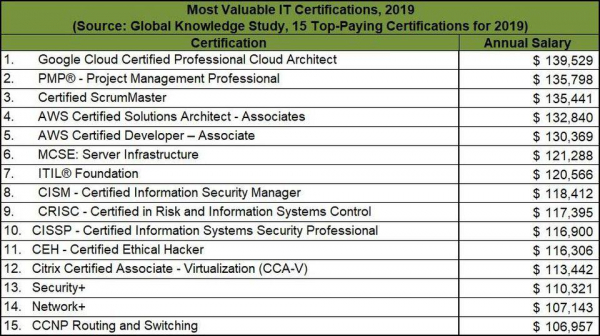
But, first of all, what’s the cause and what’s the effect? I suspect that these folks earn well
due to certain skills, and these same skills help them pass certification. Secondly, I have nagging doubts that anyone would be paid $130K a year outside the US, no matter how many certifications they hold.
And in general, it’s known that after satisfying the lower levels of the pyramid, salary ceases to be the main factor.
Not the second motivation: "Company Requirements"
Companies may encourage certifications or even require them (especially if they are needed for partnerships, for example, to enter AWS APN in Amazon's case).
But in our case, an independent product is being produced; moreover, we try to avoid vendor lock-in. So no certifications are required. They might praise and pay for the exam as recognition of certain efforts – that’s the whole formality.
Not the third motivation: "Employment"
Having certifications might be a plus for getting a job, all else being equal. But I have no plans to change jobs. I'm interested in working on a complex product that actively uses many modern approaches and AWS services. There’s plenty of that at my current job.
Of course, different cases occur: over my 23 years in IT, I've changed jobs about 5 times. It's not guaranteed that I won't have to switch again if I last another 20 years. But if they hit, we’ll cry.
Koristno
In conclusion, I’ll mention a few more materials that I used while preparing for the exam and just as "tools to sharpen the saw":
- Video courses in . The latter are said to be particularly good if you purchase a subscription with access to all practice exams. However, one of the conditions of my game was not to spend a cent on preparation, and buying a subscription didn't fit well with that. Moreover, I generally find the video format less dense in terms of information per unit of time. However, when I prepare for SA Professional, I will likely get a subscription.
- Toni uradžne dokumentacije, vključno s F.A.Q in WhitePapers.
- No in zadnja, a pomembna stvar – . Našel sem jih dva dni pred izpitom in se dobro pripravil. Na tem ni nič za branje, vendar je spletni vmesnik in komentarji k odgovorom dobri.
Izvor: habr.com
