

Karbon nanotubave iu gjet një përdorim tjetër. Disa ditë më parë, një artikull në revistën Nature Scientific Reports u publikua, ku shqyrtohet për herë të parë mundësia e përdorimit të nanotubave karbonike me shumë mure (Multiwall carbon nanotubes, MWCNT) në regjistrimin magnetic në hard diskë. Këto janë struktura të ndryshme komplekse CNT si "matryoshka", "skedë" dhe ndërtime të tjera. Detyra në çdo rast përqendrohet në një gjë - mbushjen e secilës nanotubë të tillë komplekse me nanopjesë magnetike. Çdo nanopjesë magnetike e vetme nuk do të japë efektin e regjistrimit të të dhënave. Ndryshimi i magnetizmit mund të bëhet vetëm me të gjithë tubin, por kjo do të jetë akoma më e dendur se regjistrimi në një domain plakë magnetike HDD të zakonshme. Shumë herë më e dendur.
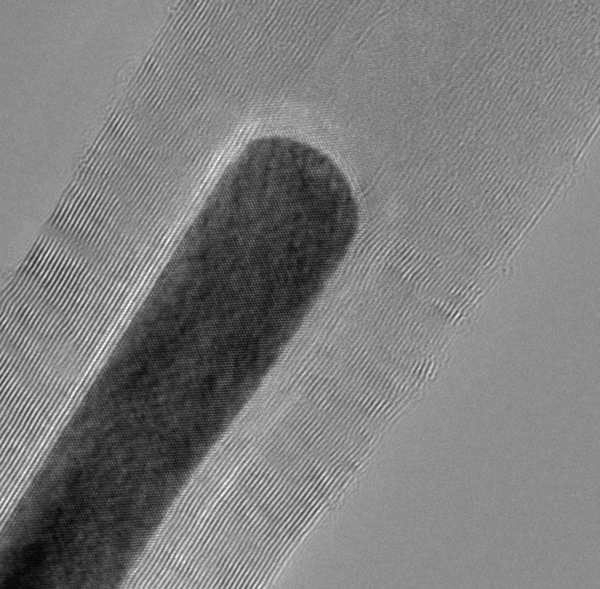
Studimi i regjistrimit magnetic në MWCNT u krye nga shkencëtarët e Universitetit të Alaskës (Fairbanks) dhe disa institucioneve të tjera kërkimore në Shtetet e Bashkuara dhe Republikën Çeke. Një nga drejtuesit e projektit ishte shkencëtari çeke Gunther Kletetschka. Specialist shpreh se metodat ekzistuese për të rritur densitetin e regjistrimit në disqet magnetike HDD nuk i përgjigjen më ritmit të rritjes së të dhënave. Për të kontrolluar rritjen e të dhënave, është e nevojshme që densiteti i ruajtjes së të dhënave në hard diskë të rritet çdo vit me 40%, ndërsa vitet e fundit ka pasur një rritje prej 10–15% në vit. Regjistrimi duke përdorur tubat magnetikë karboni mund të jetë përgjigjja ndaj sfidave të kohës informative, por për këtë ende duhen bërë shumë punë kërkimore.
The essence of the discovery lies in the fact that carbon nanotubes containing magnetic nanoparticles were subjected to an electromagnetic field of varying amplitude and frequency. The fabrication of nanoparticles-filled carbon tubes was conducted through deposition in a gaseous environment—nothing new here. When a magnetic field was applied at frequencies up to 10 kHz, nothing happened (the surface effect of the conductivity of carbon nanotubes was observed), but as the frequency exceeded 10 kHz and the amplitude of the field decreased, a magnetization effect occurred in the carbon nanotube with magnetic nanoparticles. Scientists believe that the external field matched the magnetic field of the individual particles, allowing the nanotube to achieve stable magnetization in a given direction.
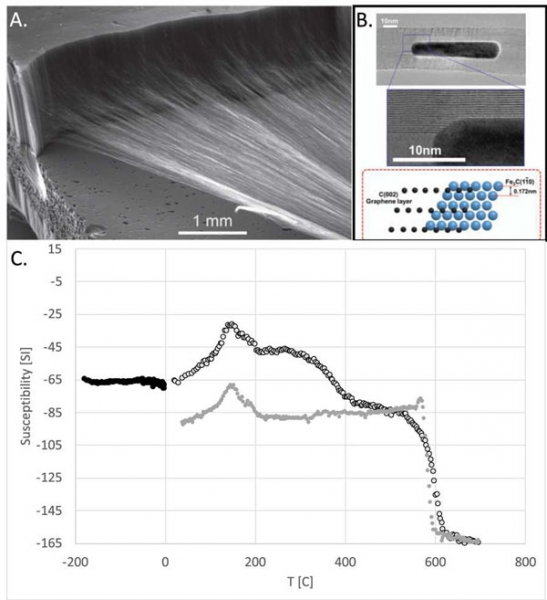
Scientists currently have no proposals on how to create writing and reading mechanisms for recording data on an array of carbon nanotubes, but they promise to work diligently in this area since, over time, data will not decrease.
Burimi: 3dnews.ru
