

Windows Terminal is a new, modern, fast, efficient, powerful, and productive terminal application for users of command-line tools and shells such as Command Prompt, PowerShell, and WSL.
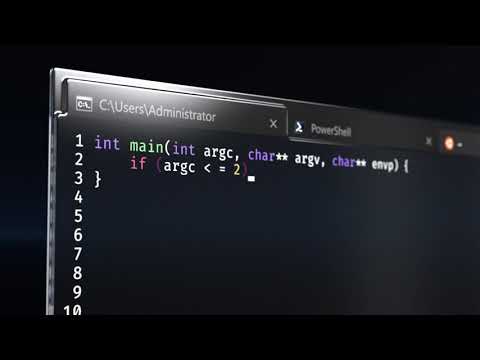
Windows Terminal will be available through the Microsoft Store on Windows 10 and will regularly receive updates, ensuring that you always stay up-to-date and can take advantage of the latest features and improvements with minimal effort.
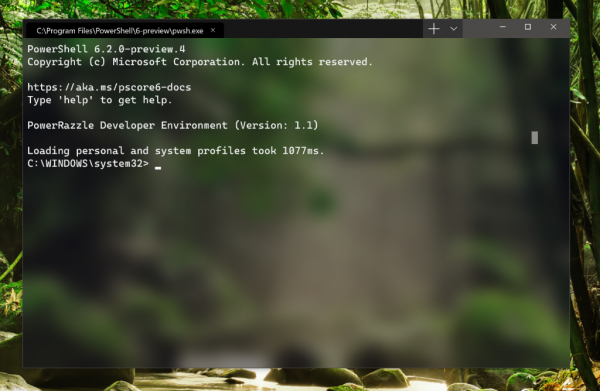
Key Features of Windows Terminal
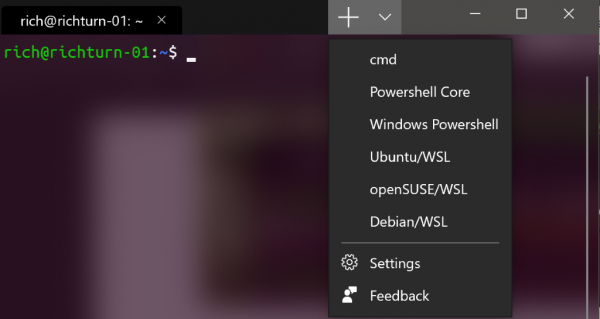
Multiple Tabs
You asked, and we listened! The most requested feature for the terminal is support for multiple tabs, and we are thrilled to finally provide this functionality. Now you can open any number of tabs, each connected to a command-line shell or application of your choice, such as Command Prompt, PowerShell, Ubuntu on WSL, Raspberry Pi via SSH, and more.
Beautiful Text
Windows Terminal uses GPU-accelerated DirectWrite/DirectX based on a text rendering engine. This new text rendering engine will display text characters, glyphs, and symbols found in the fonts on your PC, including CJK ideographs, emojis, powerline symbols, icons, programming ligatures, and more. This engine even renders text much faster than the previous console GDI engine!
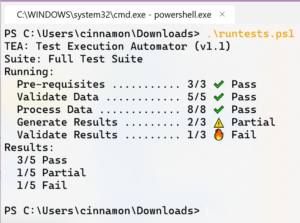
You will also have the option to use our new font! We wanted to create a fun, new monospaced font to enhance the modern look of the terminal. This font will not only include programming ligatures but will also have its own open-source repository. Stay tuned for more information on the upcoming font project!
Settings and Customizability
We have spoken with many command-line users who love to customize their terminals and command-line applications. Windows Terminal provides a wide range of settings and configuration options that give you substantial control over the appearance of the terminal and each of the shells/profiles that can be opened as new tabs. Settings are stored in a structured text file, making configuration easier for users and/or tools.
Using the terminal configuration mechanism, you can create multiple “profiles” for each shell/application/tool you want to use, whether it's PowerShell, Command Prompt, Ubuntu, or even SSH connections to Azure or IoT devices. These profiles can have their own combination of styles and font sizes, color themes, background blur/transparency levels, etc. Now you can create your own terminal in your style, personalized to your unique taste!
More!
After the release of Windows Terminal 1.0, we plan to start working on many features that are already in our backlog, as well as many features that you, as a community, will likely contribute!
When can I get it?
As of today, Windows Terminal and Windows Console are available as open source, so you can already clone, build, run, and test the code from the GitHub repository:
Also, this summer a preview version of Windows Terminal will be released in the Microsoft Store for early adopters to provide feedback.
And by winter, we plan to officially release Windows Terminal 1.0, and we will work with the community to ensure it is fully ready before we release it!

Wait... did you say open source?
Yes, that's right! We are excited to announce that we are open sourcing not only Windows Terminal, but also Windows Console, which contains the command line infrastructure in Windows and provides the traditional Console UX.
We can’t wait to work with you to enhance and expand the capabilities of the Windows command line!
That sounds amazing, but why not just improve the existing Windows Console?
The main goal of Windows Console is to maintain backward compatibility with existing command line tools, scripts, etc. While we have managed to add many key improvements to the console's functionality (like adding VT support and 24-bit color, etc. — see this blog post), we cannot make further significant improvements to the console UI without 'breaking the world'.  So it's time for a new, fresh approach.
That's why it's time for a new, fresh approach.
Windows Terminal installs and operates alongside the existing Windows Console application. If you directly launch Cmd/PowerShell/etc., they will connect to the traditional console instance just as before. This means that backward compatibility remains intact, and at the same time, you can use Windows Terminal whenever you choose to do so. Windows Console will continue to be included in Windows for decades to support existing/legacy applications and systems.
So, what about participating in an existing terminal or open-source application project?
We thoroughly examined this option during our planning and determined that our involvement in an existing project would necessitate changes to the project's requirements and architecture in a way that would be too disruptive.
Instead, by creating a new open-source terminal application and open-source Windows Console, we can invite the community to collaborate with us in improving the code and using it in their respective projects.
We believe there is plenty of room in the market for new/different ideas on what a terminal can and should do, and we aim to help the terminal (and related) application ecosystem thrive and grow by introducing new ideas, exciting approaches, and innovative solutions in this space.
Convinced! How can I participate?
Visit the repository at , to clone, build, test, and run the terminal! Additionally, we would appreciate it if you report bugs and share feedback with us and the community, as well as fix issues and make improvements on GitHub.
This summer, try installing and running Windows Terminal from the Microsoft Store. If you encounter any bugs, please share your feedback through the Feedback Hub or the Issues section on GitHub, which is designated for questions and discussions.
We are excited to work with you! If you have any questions or suggestions, feel free to reach out to Kayla and/or Rich on Twitter. We look forward to seeing the amazing improvements and features you bring to Windows Terminal and Windows Console.
Source: habr.com
