


Everything in a person should be perfect, but in a modern data center everything should work like a Swiss watch. Not a single component of the complex architecture of the engineering systems of the data center should be left without the attention of the operation service. It was these considerations that guided us at the Linxdatacenter site in St. Petersburg, preparing for the Uptime Management & Operations certification in 2018 and bringing all data center systems in line with the best world standards.
Today I will tell you how and why we implemented a system for remote control of pressure and “backup” of air in server rooms. Let me remind you that in the process of preparing for the Uptime Institute audit, one of the tasks to be solved was the issue of cleanliness. Our team worked in two areas: cleaning (previously my colleague about how we dealt with dust in server rooms) and pressure control in server rooms. I, as the chief engineer of the company, was just entrusted with the second.
What is it about
Any server room has a general ventilation system. It is arranged very simply: one ventilation machine works for the inflow of air inside, the second - for its exhaust to the outside. Both engines are controlled by frequency controllers, that is, you can change the frequency of their revolutions and thereby regulate the volume of air supplied / removed.
This system has two tasks:
- Provide the required air exchange for a comfortable stay of people in the server room (the number of people is set based on the specifics of the room),
- Provide positive air pressure in the server room so as not to draw dust particles into the room through open doors and maintain the necessary cleanliness.
The supply ventilation machine must supply more air to the server room than is removed by the hood. This ensures excess pressure in the server room in relation to neighboring rooms - the so-called "backup" of air. With such a system, air enters the server room only through the supply ventilation filters, and the supply of unfiltered air to the server room is excluded.
If suddenly everything happens the other way around - exhaust ventilation removes more air than supply air - then unfiltered air begins to enter the server room from adjacent rooms, which often causes dust on surfaces and equipment.
no controls
Everything seems to be simple. However, at the time of the start of work to improve the quality of cleaning in the data center, we did not have an effective tool to control the presence of backwater. We set the feed frequency higher than the exhaust frequency, and then made further adjustments “by eye”. The doors to the server room open with difficulty (as if they are drawn inward) - the backwater is negative. If, on the contrary, the closer does not cope with closing, then the backwater is very strong. Feeling for a certain balance between these two states, we stopped somewhere in the middle.
However, this approach is unreliable and we found it impossible to rely on it any further.
Why? Working “by eye”, it is impossible to take into account the influence of the condition of the air filters on the power of the supply ventilation. If the filter is clean, we will see certain indicators of resistance and volume of air supplied, but if the filter is dirty, then these indicators will differ markedly. By the dynamics of opening and closing the door, these nuances cannot be traced.
Typically, the filter is replaced according to a standard mechanical differential pressure gauge, which turns off ventilation at a certain stage of filter contamination (the pressure difference before and after the filter should not exceed a certain indicator corresponding to the filter cleanliness standard).
It turns out that there is a long period of filter life, while it gradually becomes dirty, and the regular differential ventilation pressure gauge considers it suitable for work. But the ventilation power and, consequently, the backwater force vary depending on the condition of the filter.
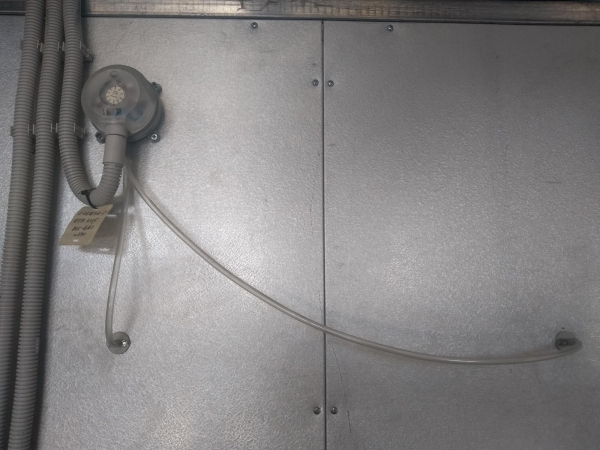
Standard ventilation differential pressure gauge.
As a result, we came to the conclusion that the process of setting up and controlling backwater in such a scenario is too complicated and, again, inefficient for the data center.
Solution
For the answer to the question “And what should we do?” we turned to the best world practices, which was helped by a trip to Stockholm with a tour of local data centers.
In one of data centers We saw the solution we needed: a mechanical differential pressure gauge was installed at the entrance to the server room and showed the pressure difference between the server room and the corridor.
Interestingly, the Swedish colleagues use differential pressure gauges at the entrance to the server rooms to control the contamination of the ventilation filter: they change the filters when the back pressure decreases, they did not wait for a signal from the standard differential pressure gauge of the ventilation system. The readings of the pressure gauge are visually controlled by those on duty at the bypasses.
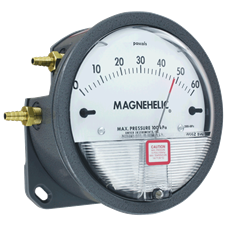
When we returned, we began to look for similar equipment in Russia. It turned out that similar differential pressure gauges are used in our so-called "clean rooms", that is, in operating rooms, laboratories, etc. Due to the special status of the premises, the prices for this equipment turned out to be exorbitant.
In addition, we needed not an analog device, but a digital one, preferably with a 4-20mA output, so that we could connect it to the data center monitoring system. This was important for setting thresholds for sending alerts, and for collecting and analyzing statistics.
Who seeks will always find
We were lucky - shortly after the start of the search, we managed to find the necessary device: a digital differential pressure gauge with a screen and an output for connecting to a BMS with a budget of about 10 rubles per unit.
We installed, configured and are surprised at only one thing - why we didn’t think of this ourselves before, and why this solution is not standard in data center projects.
It looks like this:
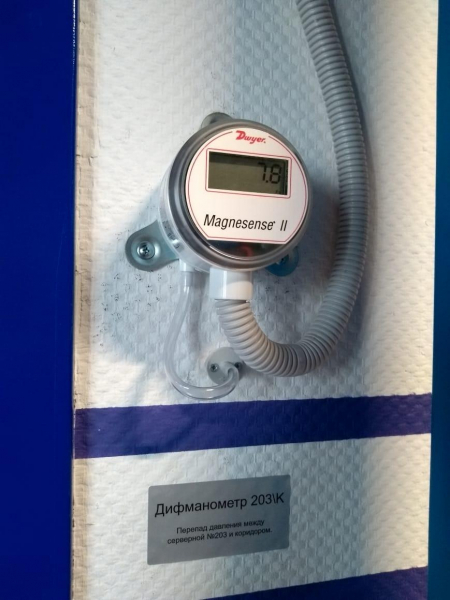
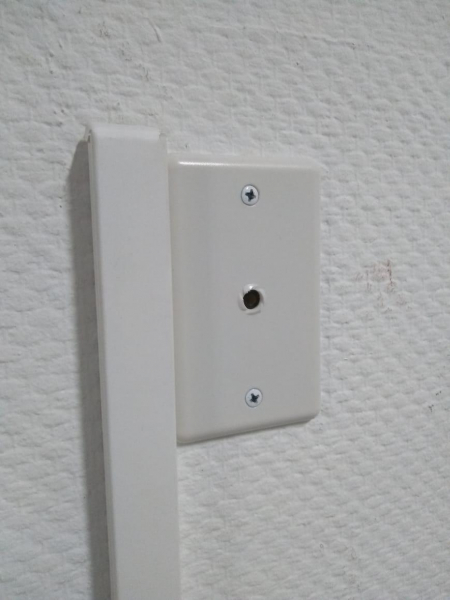
An electronic differential pressure gauge is located in the corridor outside the server room, the tube of one measuring channel is brought into the server room, the second channel measures the pressure in the corridor.
And this is how the device is displayed in the data center monitoring system:
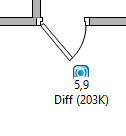
This is how the statistics of the pressure gauge readings in the monitoring system looks like:
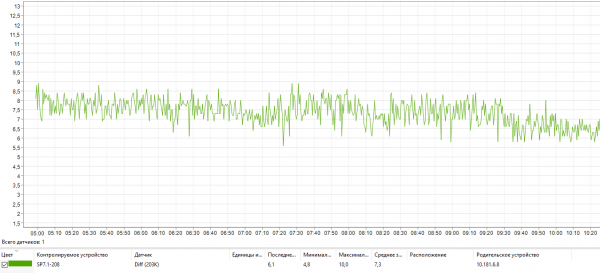
According to GOST R ISO 14644-4-2002 “Cleanrooms and related controlled environments”, which we took as a guideline, “for the smooth opening of doors and the exclusion of unforeseen oncoming air flow due to turbulence, as a rule, the pressure drop between cleanrooms or clean zones with different purity classes should be from 5 to 20 Pa.
It is this range that we have taken as the norm in the data center. As soon as a deviation occurs, it is immediately registered in the system - as shown in the graph below.
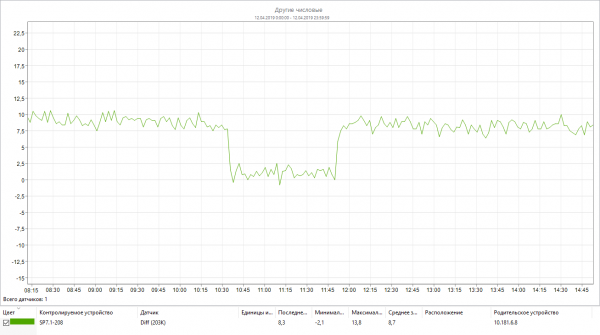
A sharp drop in pressure on the chart is an open door to the server room.
If the sensor readings are below the setpoint for more than 5 minutes, then something is wrong with the filter, some kind of accident has occurred, in a word, something out of the ordinary. Specifically, on this graph, the reason is the long opening of the door to bring equipment into the room.
What we got
At first, a new level of control and transparency of data center engineering systems.
Secondly, cleanliness control has become even more effective: the system allows you to prevent a decrease in back pressure and change air filters in advance or eliminate other causes of a decrease in back pressure.
Thirdly, all these processes are controlled by mathematically precise tools. We collect the history of observations in dynamics and have statistics on the actual life of air filters and all emergency situations.
The passed Management & Operations audit and our recent visit to European data centers showed that we are pioneers in this direction not only in Russia, but also in the EU - such solutions are not found in every data center market leader in Europe.
Of course, this system is not the key to the operation of the engineering systems of the site. At the same time, this is an extremely useful addition to the operations department and a great illustration of our data center's high standards. There are no small things in our industry.
Source: habr.com
