

Open Quantum Design (OQD), a non-profit organization founded by researchers from the Institute for Quantum Computing at the University of Waterloo (Canada), is developing the first open-source quantum computer. The working prototype of the open-source quantum computer is being developed as a collaborative project, pooling the resources, knowledge, and expertise of research groups from various universities, non-profit organizations, and private companies specializing in quantum computing.
It is noted that collaborative work enables faster progress, facilitates a comprehensive approach to problem-solving, and enables even small teams lacking the resources for independent research in quantum systems to participate. All project components, including the quantum computer simulator and application development stack, are distributed on GitHub under an Apache license. The project has also created a documentation website.
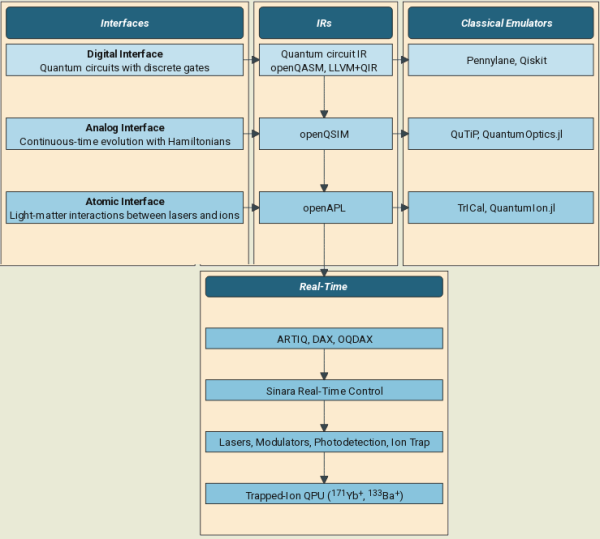
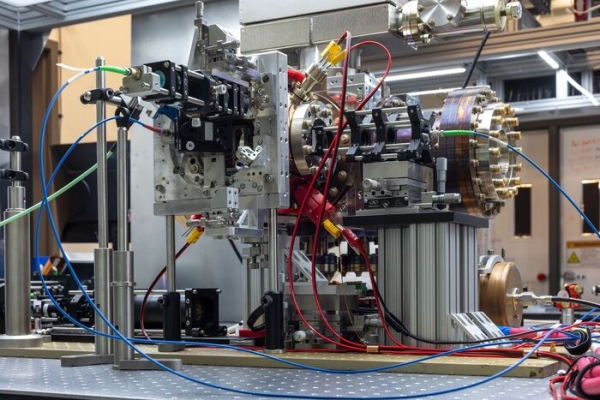
The hardware implementation of the quantum computer is currently being assembled and tested. The schematics and design files needed to build a similar system will be open sourced in accordance with Open Hardware principles under a license similar to Apache 2.0. Development will leverage contributions from existing open source projects in quantum physics, such as the ARTIQ (Advanced Real-Time Infrastructure for Quantum Physics) platform for conducting experiments with quantum systems and hardware solutions from the Sinara community.
Six working groups have been formed to work on the project. These groups focus on the software stack (quantum computer compiler, high-level algorithm translators, performance evaluation and verification utilities), error correction methods and noise reduction in quantum systems, simulation model development, training materials, AI technologies for optimizing and generating quantum algorithms, and an interface for remotely conducting experiments with a quantum computer.
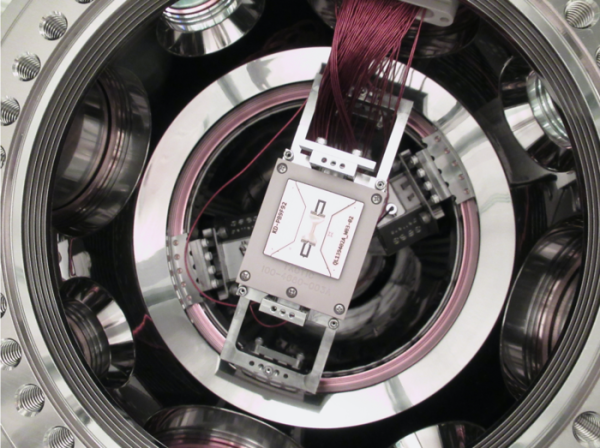
A hardware implementation of a quantum computing system using ion traps (Ion Trap) is being developed, in which atoms act as qubits. In the quantum computer being developed, ions are isolated from the external environment in a vacuum using electromagnetic fields and are converted to a quantum state by cooling to temperatures close to absolute zero. The ion state is altered using laser pulses, and the qubit state is determined by the intensity of the ion's luminescence under the laser beam. Prototypes are being developed using ytterbium (171Yb+) and barium (138Ba+) ions, with plans to implement 30-50 and 16 qubits, respectively.
Source: opennet.ru

