

It is reported that in China in the central part of Jiangsu province started work The world's largest compressed air energy storage (CAES) facility. This facility marks a significant milestone in the expansion of China's national energy infrastructure, supporting the "green transition" aimed at integrating renewable energy sources into the country's power grid.
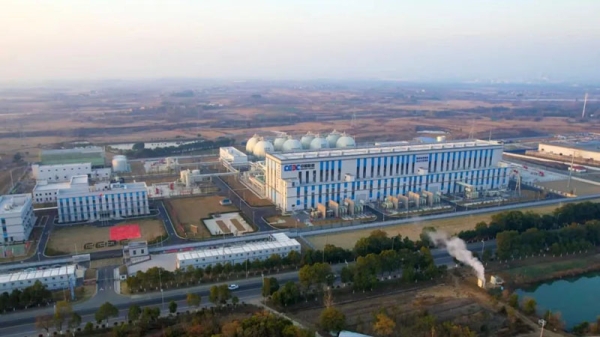
CAES technology stores excess solar and wind energy by compressing air and pumping it into underground reservoirs during peak energy production. At night, during calm weather, and during peak electricity demand, the air is extracted from the storage and directed to turbines, driving generators and generating electricity. This approach provides long-term energy storage at a lower cost than most battery technologies.
The commissioned facility has an energy storage capacity of 2,4 GWh and is capable of generating up to 600 MW of power using two separate 300 MW generators, enough to meet the annual demand of approximately 600,000 households. This makes the facility not only the largest in its class but also a key element in maintaining grid stability in the face of the growing share of wind and solar generation.
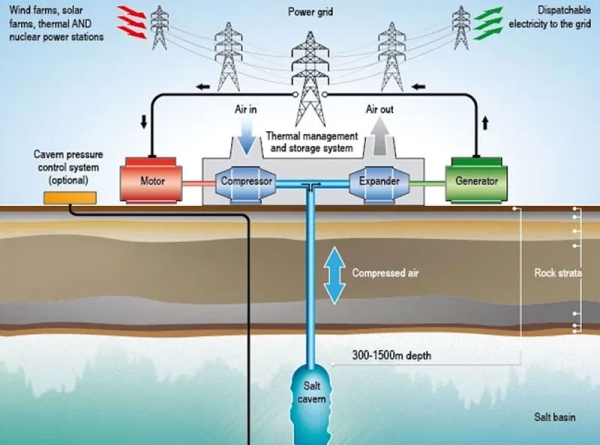
The complex pumps air into natural salt caverns in the ground. It utilizes advanced energy-saving technologies: compressing the air releases heat, which is then used to heat (expand) the air before feeding it to the turbines. The heat is stored and transferred using a heat accumulator made of molten salts and water as an intermediate coolant. By reusing the heat, the storage system's efficiency increases. reaches 71% is a record for this type of installation. Similar, smaller-capacity projects in Germany and the United States operate with efficiencies of 40% and 54%, respectively.
Harbin Electric Corporation supplied the compressed air energy storage equipment. More than ten similar smaller-capacity projects have been implemented in China to date, and their number will continue to grow. Renewable energy requires a buffer, and compressed air energy storage is one option.
Source:
Source: 3dnews.ru

