

The Russian government The import of foreign satellite terminals, including dual-use devices, into the country. According to the decree, the restrictions are in place for six months and apply to any equipment capable of receiving and transmitting signals from foreign communications spacecraft unless authorized for use by the State Commission on Radio Frequencies. This is done under the pretext of ensuring national security.
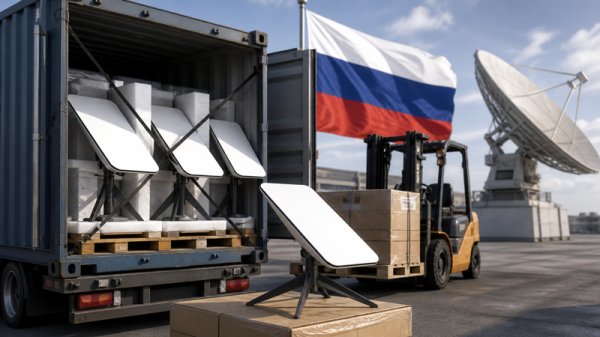
This decision fits into the Russian leadership's policy of limiting the uncontrolled spread of satellite systems like Starlink. Although the decree does not directly mention specific networks, it follows on from repeated statements by officials. In particular, Foreign Minister Sergey Lavrov emphasized that low-orbit system operators are obligated to respect the sovereignty and national laws of the countries in which they operate. To reinforce this position, Russia even initiated a special discussion of the issue at the UN Security Council in late 2025.
Essentially, the six-month ban accomplishes two goals: on the one hand, the state seeks to block channels for the uncontrolled import of equipment that could be used to bypass national communications systems; on the other, it serves as leverage over global operators, making it clear that operations in Russia or near its borders must be conducted according to clearly established rules and with official permission, and not at the discretion of the satellite constellation owner.
The Federal Customs Service and the FSB have been tasked with enforcing the ban. Russia does not yet have its own "Starlink." The first step in building its own satellite internet network was taken in March of this year, when the Russian aerospace company Bureau 1440 successfully launched batch launch of 16 low-orbit communication satellites of the Rassvet group.
Source:
Source: 3dnews.ru
