

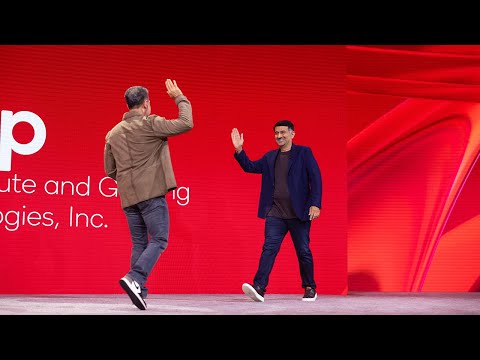
Sameer Samat, Google's President of the Data Ecosystem Android, in a speech at the Qualcomm summit, spoke about the work on merging platforms Android and Chrome OS, the results of which will be delivered to users in 2026. The main platform will remain Android, whose capabilities will be expanded with tools for working on laptops and PCs. The results of this work are already visible in the releases Android 15 and 16, which introduced desktop mode and adaptations for larger screen devices. Ultimately, Chromebook users will be offered the familiar Chrome OS experience, but adapted to the technologies Android.
Reasons for migration to technology Android mentions the integration of the environment for PCs and laptops with the ecosystem Android and the desire to use Gemini's AI services, which have been actively developed recently, on a larger number of devices Android. Transition to Android will also allow you to use the available in laptops Android tools for virtual and augmented reality. In the past, Google employees cited the merger as a reason Android and Chrome OS mentioned a desire to increase competition with the iPad and to use engineering resources more efficiently so as not to spread efforts across two operating systems.
By default, Chrome OS encrypts disk partitions containing user data (using fscrypt), and system partitions are mounted in read-only mode, verified by a digital signature, and updated atomically (two root partitions, the working one and the one for installing the update, are swapped). Display is handled using the Freon graphics stack and the Aura window manager (the project is also developing a composite window manager). server Exo is a Wayland-based network running on top of Aura. The source code is distributed under the Apache 2.0 license.
Source: opennet.ru
