

I want to share with you some of the non-fiction books I've read over the past few years. However, while compiling the list, an unexpected selection problem arose. These are books meant for a broad audience, easily read even by completely unprepared readers and that can compete with fiction in terms of engaging storytelling. Some books are for more thoughtful reading, requiring a little brainpower to understand, as well as textbooks (collections of lectures) for students and those who wish to delve deeper into certain topics. This list presents the first part — books for the widest possible readership (although this is, of course, quite subjective). I intentionally decided against providing my own descriptions for the books and left the original annotations even in cases where I was not satisfied with them, so as not to influence the selection process for further reading. As always, if you would like to add something to this list — feel free to leave a comment.
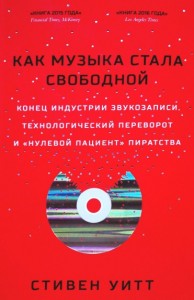
1. How Music Became Free [The End of the Record Industry, a Technological Revolution, and the 'Zero Patient' of Piracy]
Author. Stephen Witt
"How Music Became Free" presents a captivating tale interwoven with obsession, greed, music, crime, and money. This story is told through the lens of visionaries and criminals, moguls and teenagers creating a new digital reality. It's a story about the greatest pirate in history, the most influential executive in the music industry, a revolutionary invention, and an illegal site that surpassed the iTunes Music Store in size by four times.
Journalist Stephen Witt traces the hidden history of digital music piracy, starting with the invention of the mp3 format by German audio engineers, guiding the reader through a factory in North Carolina where CDs were produced, from which one worker leaked about 2,000 albums over a decade, to the skyscrapers of Manhattan, where the powerful Doug Morris ruled the music business by monopolizing the global rap market, and from there into the depths of the internet — the dark web.

2. Phenethylamines I Have Known and Loved [ZhZL]
Author. Alexander Shulgin
An outstanding American pharmacologist of Russian descent lived an extraordinary life, comparable perhaps only to the achievements of Louis Pasteur. However, unlike Pasteur, Shulgin was not testing new serums but rather compounds he synthesized, the legal and social status of which is currently problematic—psychoactive substances. Challenging the "new inquisition" that restricted humanity's right to understand itself, Dr. Shulgin, despite various legal obstacles, continued his research for forty years, accomplishing a sort of scientific feat whose significance will only be appreciated by future generations.
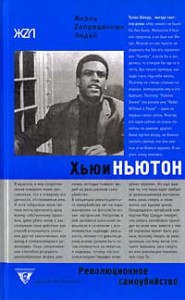
3. Revolutionary Suicide [ZhZL]
Author. Huey Percy Newton
The legendary figure of the American press, founder of the Black Panthers, philosopher, propagandist, political prisoner, and professional revolutionary Huey Percy Newton wrote his autobiography shortly before his tragic demise. "Revolutionary Suicide" is not only a detective story of the life of a rebel who befriended Cuban revolutionaries, Chinese Red Guards, and the controversial Parisian playwright Jean Genet, but also a rare opportunity to feel the atmosphere of those "crazy" years when black uprisings in ghettos, student takeovers of universities, and "actions" against the police were perceived by intellectuals as the beginning of irreversible and long-awaited changes in the structure of Western civilization.
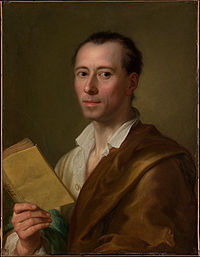
4. Gods, Graves, and Scholars
Author. Kurt Walter Kram
The book by the German writer K.W. Kram (1915-1973), "Gods, Graves, and Scholars," gained worldwide fame and has been translated into 26 languages. Based entirely on facts, it reads like a riveting novel. The book tells of the mysteries of long-past centuries, of amazing adventures, fateful failures, and well-deserved victories of those who made the greatest archaeological discoveries in the 19th and 20th centuries. This journey through millennia introduces readers to the existence of other civilizations older than the Egyptian and Greek.
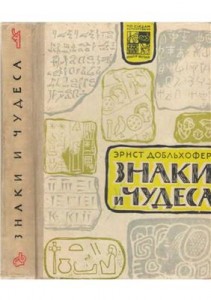
5. Signs and Wonders: Stories About How Forgotten Scripts and Languages Were Deciphered
Author. Ernst Doblhoffer, published in 1963 (Unfortunately, only available in djvu on Flibusta)
The book discusses how forgotten scripts and languages were deciphered. In the main part of his book, E. Doblhofer thoroughly outlines the process of deciphering ancient writing systems from Egypt, Iran, Southern Mesopotamia, Asia Minor, Ugarit, Byblos, Cyprus, Minoan-Mycenaean Linear A and the ancient Turkic runic script. Thus, it covers the deciphering of almost all the forgotten writing systems of antiquity over the centuries.
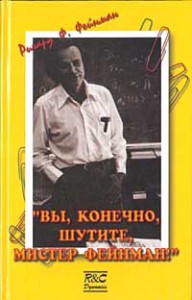
6. You must be joking, Mr. Feynman!
Author. Richard Phillips Feynman.
The book tells the story of the life and adventures of the famous physicist, one of the creators of the atomic bomb, and a Nobel laureate, Richard Phillips Feynman. This book will completely change your view of scientists; it describes not a cold and dull scholar as most people envision, but a person: charming, artistic, bold, and far from one-dimensional as he dared to consider himself. The author's wonderful sense of humor and easy conversational style will make reading the book not only informative but also an engaging activity.

7. The Death and Life of Great American Cities
Author. Jane Jacobs
Written 50 years ago, Jane Jacobs' book 'The Death and Life of Great American Cities' has long become a classic, yet it has not lost its revolutionary value in the history of urban thought. It was here that the arguments against urban planning driven by abstract ideas and ignoring the daily lives of city dwellers were first systematically formulated.

8. On Photography
Author. Susan Sontag
Susan Sontag's collection of essays 'On Photography' was first published as a series of articles in the New York Review of Books between 1973 and 1977. In the book that made her famous, Sontag concludes that the widespread proliferation of photography creates a state of 'chronic voyeurism' between man and the world, resulting in everything happening being leveled and acquiring the same meaning.
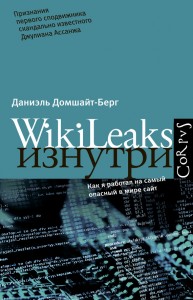
9. WikiLeaks Inside
Author. Daniel Domscheit-Berg
Daniel Domchait-Berg is a German web designer and cybersecurity expert, the first and closest associate of Julian Assange, the founder of the world-renowned whistleblowing platform WikiLeaks. "WikiLeaks from the Inside" is a detailed account by an eyewitness and active participant about the history, principles, and structure of the planet's most controversial website. Domchait-Berg systematically analyzes key WL publications, their causes, consequences, and societal impact, as well as paints a vivid and dynamic portrait of Assange, recalling years of friendship and the disagreements that eventually led to their final break. Currently, Domchait-Berg is working on creating a new platform, OpenLeaks, aiming to refine the idea of internet whistleblowing and ensure maximum protection for whistleblowers.
All the books listed here are available on LibGen.
Source: habr.com
