

The release of the Forgejo 12.0 collaborative development platform has been published. It allows you to deploy a system for collaborative work with Git repositories on your servers, similar in its tasks to GitHub, Bitbucket, and Gitlab. Forgejo is a fork of the Gitea project, which in turn branched off from the Gogs platform. Forgejo was separated in 2022 after attempts to commercialize Gitea and the transfer of control to a commercial company. The Forgejo project adheres to the principles of independent management and community control. Git hosting Codeberg.org has switched to using Forgejo. The project code is written in Go and is distributed under the GPLv3 license.
The key features of the platform are low resource consumption (can be used on the Raspberry Pi board or in low-cost VPS) and a simple installation process. Standard project management features are provided, such as task management, issue tracking, pull requests, wiki, tools for coordinating developer teams, release preparation, automated package placement in repositories, access rights management, integration with continuous integration platforms, code search, authentication via LDAP and OAuth, repository access via SSH and HTTP/HTTPS protocols, webhooks for integration with Slack, Discord, and other services, support for Git hooks and Git LFS, tools for migrating and mirroring repositories. A special feature is the ability to use the ActivityPub protocol to unite individual projects into a federated network. servers developers.
Major changes:
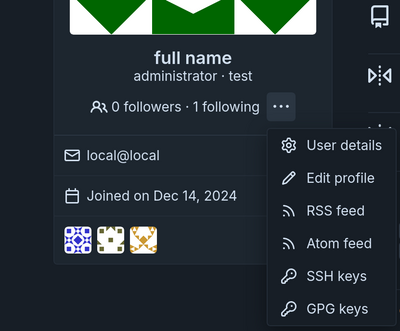
- The user profile page has been redesigned. Additional actions have been added to the profile menu.
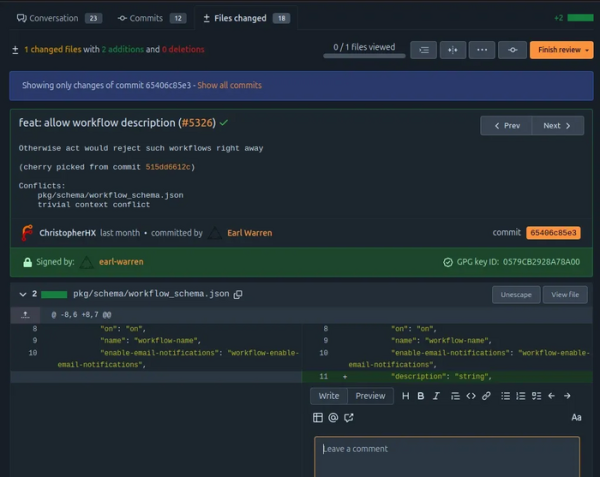
- Improved interface for reviewing pull requests at the commit level (instead of a full changelog covering all commits, in this mode individual commits are reviewed sequentially). Forward and back buttons have been added for navigating through commits during review. The use of the end review button for individual commits has been allowed. The commit explanation text has been left visible on review pages.
- Added an option to send email notifications about failures when executing scheduled jobs (Forgejo Actions).
- Optimized the process of checking for conflicts with open pull requests when pushing new commits to the target branch. Previously, such a check resulted in an I/O load proportional to the number of open pull requests due to the operation being applied to the working tree. Switching to the "git merge-tree --write-tree" command allowed merging without accessing the working tree, which significantly reduced the load in large deployments.
- Added the ability to use SSH for tasks previously tied to OpenPGP. To sign commits after editing files or accepting changes, an SSH key can now be used instead of a GPG key (the signature is generated in the TPM via ssh-agent).
- By default, a robots.txt file is added to inform bots about sections that should not be indexed.
- Added a feature to keep the fork in sync with the main project.

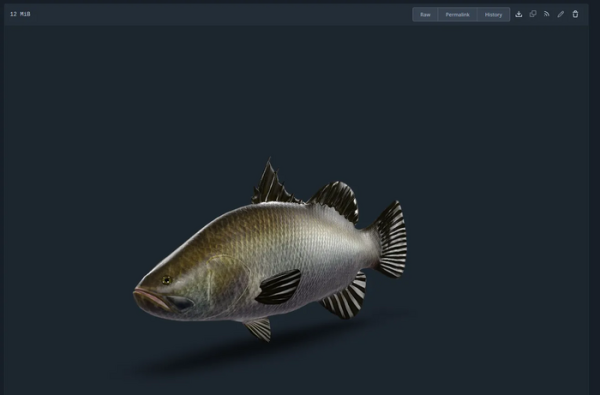
- Added support for previewing 3D models in glTF format.
- The comment editor now allows you to indent using the Tab key.
- Based on Alpine 3.22, a ready-to-use container image for running Forgejo 12 has been created, using Git 2.49.1, GnuPG 2.4.7, SQLite 3.49.2 and OpenSSH 10.0.
Source: opennet.ru

