

Scientists from Northwestern University in the United States held A unique study in robotics, they applied artificial intelligence to robot design based on evolutionary development algorithms. Instead of the traditional engineering approach—preparing specifications and designing—they used algorithms that quickly iterated through millions of variants, selecting the most successful ones using natural selection. And it worked.
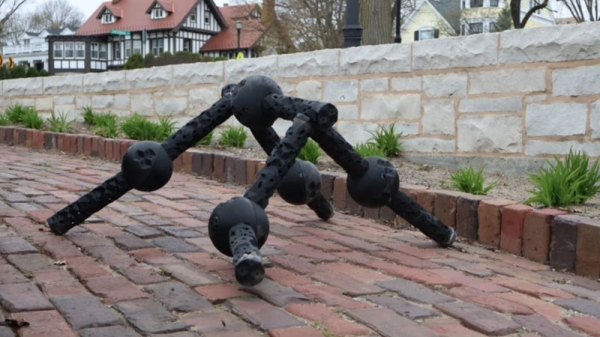
The simulator's AI tested design variants under challenging conditions: obstacles, injuries, and randomly selected environments for movement. The result was unusual configurations and movement patterns, often unobvious to humans, that ensured maximum mobility and survivability.

Ultimately, the algorithm produced modular "legged metamachines"—robots assembled from autonomous units, each a fully functional mini-robot with a motor, battery, and computer. This work is claimed to be the first time a robot that evolved entirely in a virtual environment successfully entered the real world and demonstrated an unparalleled ability to adapt to various conditions.

Each module of this robot has a simple design: a central ball with two rotating "arms-legs," allowing it to roll, jump, or spin independently. By connecting several modules (like building blocks), complex configurations can be created—from quadrupedal forms to reptiles or structures that have no real-world description.

The most impressive feature of these evolved robots is their incredible difficulty in destroying them. These mechanisms continue to move even after serious damage: the loss of one or more "legs," being cut in half, or even into multiple pieces. In such cases, the remaining modules instantly reorganize, change their gait, or continue on as separate "individuals." They continue to move like the dismembered Terminator from the franchise of the same name—slowly, unsightly, but inexorably. And it's quite a terrifying sight.

Although the speed and grace of the robot's movements remain modest, the research opens up prospects for the creation of autonomous systems of the future. Such modular and indestructible robots could find application in rescue operations and the exploration of extreme environments (space, the deep ocean, disaster zones), especially when performing tasks in swarms. While they are currently blind and unable to see their surroundings, the scientists have promised to correct this shortcoming and equip them with sensors so they can understand and detect their target. Unleashing a hundred of these robots through a forest at night and handing over control to AI... It's terrifying to even imagine.
Source:
Source: 3dnews.ru
