

Almost three years after the last major release, a new release has been published LinuxMageia 10, a fork of the Mandriva project developed by an independent community of enthusiasts. 32- and 64-bit installer builds (5.6 GB) and a set of Live builds (4.5-5.1 GB) based on GNOME, KDE, and Xfce are available for download.
Key improvements:
- Requirements for 32-bit systems have been increased, requiring a CPU with SSE2 support. The architecture name for 32-bit ISO images has been changed from i586 to i686.
- For desktop wallpapers, the JXL format has been replaced with JPG. The resolution has been increased to 3840×2160, but thanks to more efficient compression, disk space consumption remains the same.
- The installer now prompts for the time zone when starting the installation, adds support for wireless connections, and improves the recovery mode for a previously installed system.
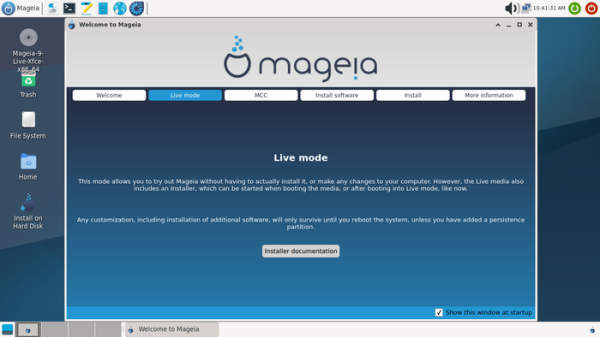
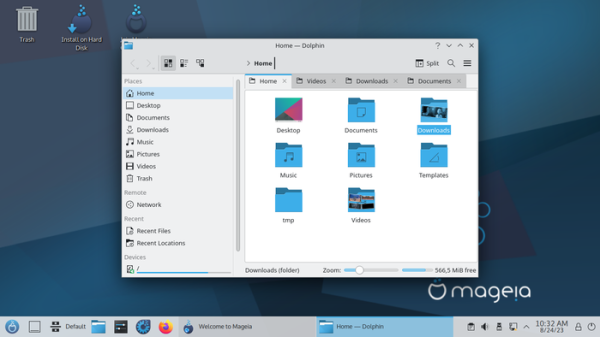
- Live builds of GNOME and KDE Plasma now offer Wayland-based sessions by default. Options for falling back to X11 and using proprietary drivers have been implemented. Preliminary support for DisplayLink has been added, requiring the displaylink-native-evdi package. The draklive2 interface has been expanded, simplifying configuration of localization, time zones, services, and the firewall, and a summary page has been added.
- The RPM-MD (RPM MetaData) repositories provide AppStream metadata used by the GNOME Software and Plasma Discover application managers for searching and managing applications.
- In Mageia Control Center, the draksound sound configurator has simplified switching between sound modes. servers PulseAudio and PipeWire (PulseAudio continues to be used by default). Parental control functionality (drakguard) has been removed and requires rework.
- The graphical interfaces for utilities for burning ISO images (isodumper), managing packages (dnfdragora), and configuring the firewall (manafirewall) have been redesigned using python-manatools. Python-manatools provides a framework for creating universal interfaces that can be rendered in graphical mode using Qt6 and GTK4, and in text mode using ncurses.
- The remove-old-kernels package has been added, providing tools for removing old kernels from the system, leaving only the three most recent kernel package updates. The cleanup runs automatically once a week or can be initiated via the "Tools" -> "System tools" menu.
- The DHCP client dhcp-client has been replaced by dhcpcd, and the memory testing tool PCMemTest has been replaced by Memtest86+.
- The note-taking app Knotes has been replaced by Marknote. The NoComprendo voice input and voice command recognition package has been migrated to libraries and models from the Vosk project.
- The set includes browsers for the Gemini protocol: Lagrange (SDL), Kristall (Qt), Offpunk (CLI).
- The Chromium package has been discontinued due to the high maintenance costs. It is recommended to use the flatpak package or the official Chrome RPM package from Google.
- Access to the dmesg utility is now restricted to administrators.
- Updated package versions, including the kernel Linux 6.18, RPM 4.20.1, DNF 5.4 (as an alternative to urpmi), Docker 29.1.3, GRUB 2.12, Glibc 2.42, GCC 15.2, GDB 16.3, LLVM 20.1, Firebird 5.0.3
QEMU 10.2.2, Xen 4.20.2, VirtualBox 7.2.8, Python 3.13, Perl 5.42,
Ruby 3.4.7, Rust 1.95.0, PHP 8.5. - Updated graphics stack components: Mesa 3D 26.0.8, X.Org 21.1.23, XWayland 24.1.12, Qt 6.10.0, GTK4 4.20.4.
- User applications updated: LibreOffice 26.2.3, Blender 4.5.8, Firefox 140 ESR, Vim 9.2, NeoVim 0.11.5.
- Updated desktop versions: KDE Plasma 6.5.5 (with Wayland by default) + KDE Gear 25.12.1, GNOME 49. Xfce 4.20, LXQt 2.3, MATE 1.28, Cinnamon 6.6, Enlightenment E27.1.
Source: opennet.ru
