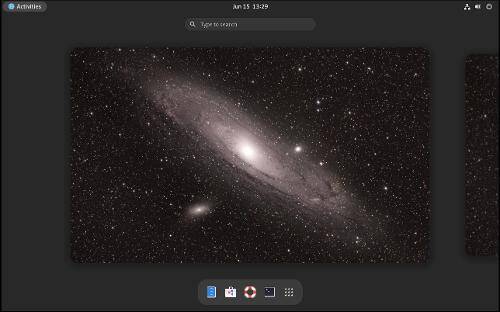
In short: atomic distribution based on AlmaLinux (an Enterprise-class Linux distribution available without restrictions).
Some of FAQ
What is HeliumOS?
It is an atomic desktop operating system based on AlmaLinux, which inherits its stability, security and compatibility with the Enterprise ecosystem Linux.
What does HeliumOS offer?
GNOME, the Flatpak package store, and 10 years of support to last the life of your computer.
Why is it called "atomic"?
System updates are distributed via LEISURE-compatible images BootCAs a result, even if the power is cut off during the update, it will not affect the system's performance in any way.
Comparison with other distributions
Ubuntu
Unlike UbuntuHeliumOS does not use snap packages and belongs to a family of distributions that are based on Red Hat Enterprise. Linux.
Fedora
Fedora and the project UniversalBlue offer atomic operating systems based on Fedora, but Fedora has a 13-month life cycle, while HeliumOS is supported for 10 years.
AlmaLinux
HeliumOS is directly based on AlmaLinux and uses many of its components, but unlike AlmaLinuxHeliumOS is focused on providing an atomic desktop operating system that is suitable for all users.
Now some history of the creation of the distribution from the words of its creator, published in Alma's blog:
My goal is to create an operating system for desktop computers based on Linux, which will be easy to use, stable and reliable.
At first I used for this purpose Debian, however, some problems arose:
- Debian It has been supported for 3-5 years, and while it is quite stable compared to other distributions, I wanted something more stable.
- Unexpected interruption during traditional package update in Linux may cause the system to fail to boot or to operate incorrectly.
A couple of months ago I found out about Image mode for RHEL — is a new RHEL deployment method that uses OCI images for updates. Migrating to Enterprise Linux and the use of bootc (the technology underlying Image mode for RHEL) would solve both problems that I found in DebianIn general, after a series of experiments, we announced the alpha version of HeliumOS based on CentOS Stream.
Despite solving several problems, the transition to CentOS Stream led to new ones:
- CentOS Stream is rolling, which can create difficulties for supporting programs or drivers that require, for example, a specific kernel version.
- CentOS Stream is only supported for 5 years, which may be acceptable in some cases, but limits the use of HeliumOS in situations where longer support is required.
It became clear that the transition to the Enterprise distribution Linux with fixed updates, such as AlmaLinux, would solve both problems.
Thanks to the collaboration in chats with the guys from AlmaLinux and Fedora, we have configured workflows for creating images AlmaLinux bootc, so updates and new releases of HeliumOS will be delivered via bootc images obtained from AlmaLinux.
The bright face of the main developer: Isaac Beverly
Source: linux.org.ru